Gujarat CM Reaffirms Education Pledge, Credits Modi's Foundation
Synopsis
Gujarat's Chief Minister on 12 August 2026 reaffirmed the state's commitment to universal quality education, credited PM Modi's foundational reforms from 2001-2014, highlighted near-zero dropout rates and rising science enrolment among girls, and linked a 'Viksit Gujarat' to India's 2047 development vision.
Key Takeaways
Gujarat's Chief Minister credited PM Narendra Modi's 2001-2014 tenure as Chief Minister for laying the state's education foundation.
The state government committed to eliminating economic barriers so no child is denied education due to family poverty.
The dropout ratio in Gujarat has been reduced to near-negligible levels, according to the Chief Minister.
Awareness and enrolment of girls in the science stream has risen significantly, the CM noted.
The address framed a 'Viksit Gujarat' — built on educated youth — as the state's contribution to the national Viksit Bharat 2047 vision.
The Chief Minister called for collective effort toward empowerment through education.
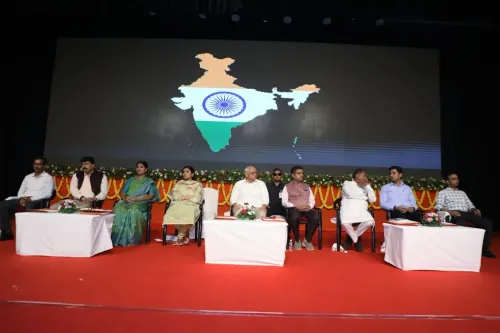
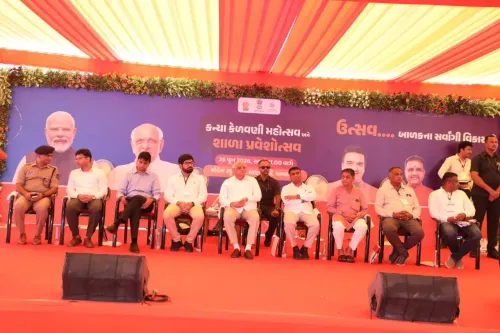
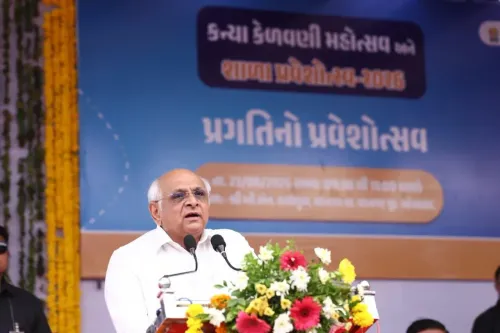
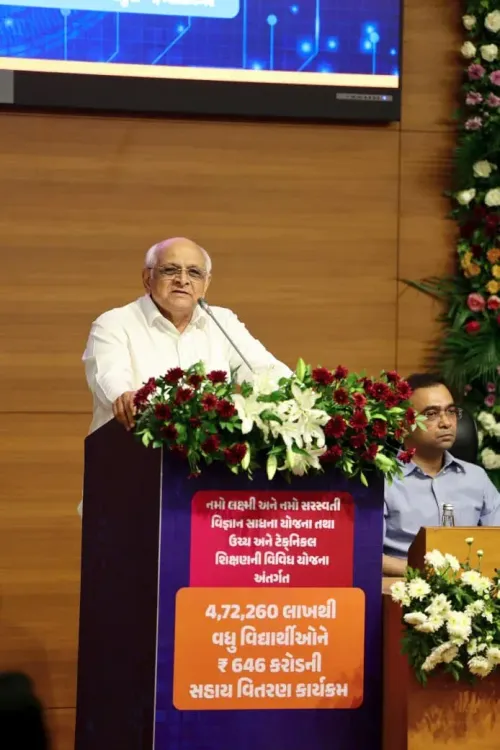
Every child in Gujarat — regardless of family income — deserves a quality education. That was the unambiguous pledge the Chief Minister of Gujarat made on Wednesday, 12 August 2026, at an event where he outlined the state's education agenda and traced its roots to the groundwork laid by Prime Minister Narendra Modi during his tenure as the state's Chief Minister.
Modi's Education Legacy as the Starting Point
The Chief Minister said that the 'strong foundation of education' laid by Narendra Modi during his years as Gujarat's Chief Minister — a stretch that ran from 2001 to 2014 — has given the state's education sector a new direction today. It was not an incidental remark; it was the frame for everything that followed. One of the signature programmes of that era, the Kanya Kelavani Abhiyan, was a door-to-door campaign to enrol and retain girls in school, and its continuity across successive governments tells the story of how policy outlasts the politician who starts it.
No Child Left Out — The Economic Barrier Argument
The Chief Minister was direct about what still blocks children from the classroom: family finances. He committed the Gujarat government to removing economic barriers so that no child is denied an education because of poverty. The framing matters — it positions the state not as a passive provider of schools but as an active guarantor of access, a subtle but significant shift in accountability.
Girls in Science and a Falling Dropout Rate
Two data points anchored the optimism: a measurable rise in girls choosing the science stream, and a dropout ratio that has become, in the Chief Minister's own words, 'negligible.' Nahi-vat banel drop-out ratio — nearly zero — is the phrase the post uses, and it signals genuine progress in a metric that has historically exposed the gap between enrolment and completion. The emphasis on science education for girls is also a deliberate signal: STEM participation is increasingly the dividing line between states that produce knowledge workers and those that do not.
Viksit Gujarat as the Building Block of Viksit Bharat
The Chief Minister closed with a call for collective effort toward empowerment through education, expressing confidence that a 'bright and educated youth' of Gujarat will realise the resolve of a Viksit Gujarat — a developed Gujarat — as the foundation of Prime Minister Modi's national vision of Viksit Bharat 2047. The link is deliberate: state-level human capital is being cast as the indispensable input for India's 2047 ambitions. Gujarat's sustained education continuity, aligned now with the National Education Policy 2020 framework, gives that claim more than rhetorical weight.
The next test is in the numbers — whenever UDISE data on Gujarat's science-stream enrolment and dropout figures is released, it will either validate the confidence or complicate it.
Point of View
With an eye on national benchmarks. The explicit Viksit Bharat 2047 link elevates a state-level event into a national-vision story, making it harder for critics to frame education gaps as governance failures without engaging the broader development argument. The real accountability moment comes when UDISE data is published — that is when rhetoric meets record.
NationPress
12 Aug 2026
Frequently Asked Questions
What did Gujarat's Chief Minister say about education on 12 August 2026?
The Chief Minister reaffirmed the Gujarat government's commitment to ensuring quality education for every child, pledged to remove economic barriers for poor families, and credited PM Narendra Modi's 2001-2014 tenure as Chief Minister for laying the state's education foundation.
What is Kanya Kelavani Abhiyan and how does it relate to this announcement?
Kanya Kelavani Abhiyan was a girl-child enrolment and retention campaign launched under Narendra Modi during his Gujarat Chief Ministership. It is part of the policy lineage the current CM cited as the basis for the state's improved education outcomes, including rising science-stream enrolment among girls.
What is the dropout rate situation in Gujarat's schools?
The Chief Minister described Gujarat's dropout ratio as having become 'negligible,' indicating significant progress in keeping enrolled students — particularly girls — in school through to completion.
How does Gujarat's education push connect to Viksit Bharat 2047?
The Chief Minister explicitly linked a 'Viksit Gujarat' — built on educated and bright youth — to PM Modi's national vision of a developed India by 2047, framing state-level human capital development as a direct input into the country's broader economic goals.
Are more girls in Gujarat studying science today?
According to the Chief Minister's address, awareness and enrolment of girls in the science stream has risen markedly, though specific enrolment figures were not cited in the post. Independent UDISE data would be the authoritative source for exact numbers.