CM Vishnu Dev Sai Observes Hareli Tihar at Nava Raipur Residence
Synopsis
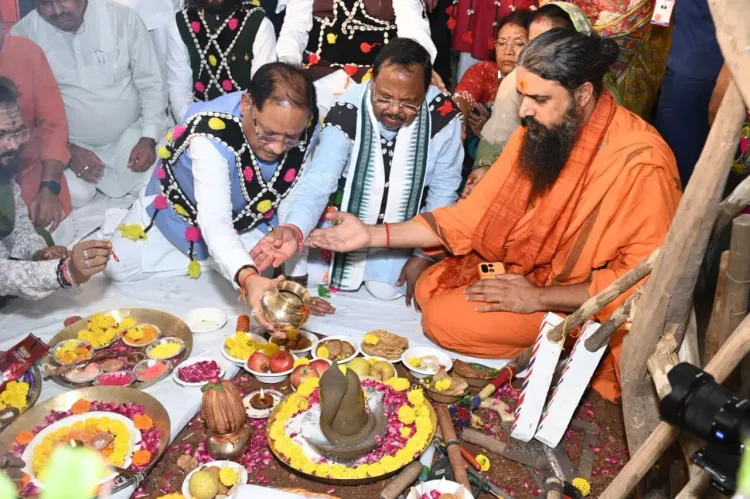
Chief Minister Vishnu Dev Sai observed Hareli Tihar at his Nava Raipur residence on August 12, 2026, performing rituals for Gauri-Ganesh, Navagraha, and Lord Shiva before worshipping farming implements including the plough and hoe, honouring Chhattisgarh's deep agrarian traditions.
Key Takeaways
CM Vishnu Dev Sai observed Hareli Tihar at the Chief Minister's residence in Nava Raipur on August 12, 2026 .
Rituals included worship of Gauri-Ganesh , the Navagraha , and Lord Shiva , followed by prayers for the state's prosperity.
Farming implements — the nagar (plough), rapa (leveller), and kudal (hoe) — were ritually worshipped, reflecting Chhattisgarh's agrarian heritage.
Hareli Tihar falls in the Shravan month and is Chhattisgarh's first major festival of the agricultural calendar.
The observance reflects the BJP-led state government's emphasis on Chhattisgarhi cultural identity under the #ViksitChhattisgarh vision.
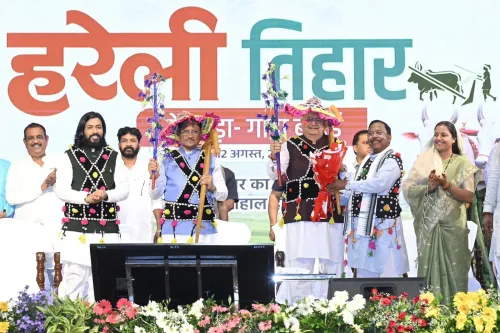
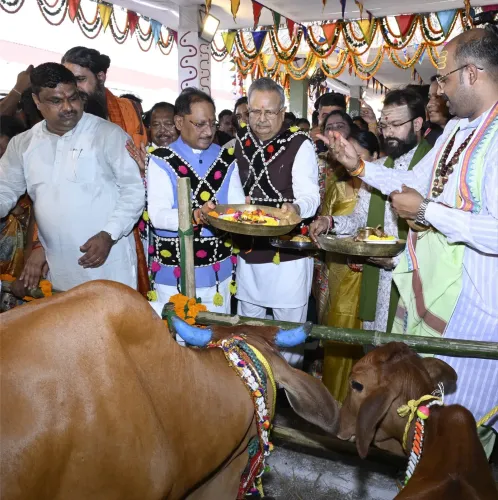
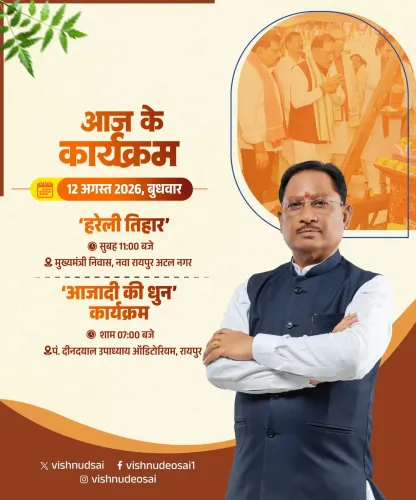
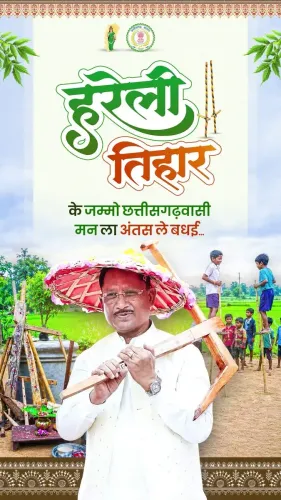
At the Chief Minister's residence in Nava Raipur on Wednesday, August 12, 2026, ancient Chhattisgarhi tradition met the seat of state power. Chief Minister Vishnu Dev Sai performed rituals marking Hareli Tihar — Chhattisgarh's first major festival of the agricultural calendar — offering prayers for the state's prosperity and well-being.
The Chief Minister's Office of Chhattisgarh shared that Sai conducted vidhi-vidhan se pooja-archana (worship performed with full ritual observance), invoking Gauri-Ganesh, the Navagraha, and Lord Shiva. Then came the moment most rooted in Chhattisgarh's agrarian soul: the ritual worship of farming implements — the nagar (plough), rapa (leveller), and kudal (hoe) — an act of reverence for the tools that sustain millions of farming families across the state.
What Hareli Tihar Means to Chhattisgarh
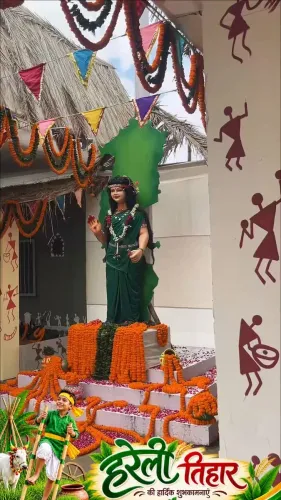
Hareli Tihar falls in the Shravan month of the Hindu calendar and holds a special place in Chhattisgarh's cultural life. In a state where agriculture and tribal traditions run deep, Hareli marks the point in the monsoon season when fields are green and sowing is underway. Farmers clean and worship their tools, seeking divine blessing for a good harvest — a practice passed down through generations in rural and tribal communities alike. The festival's name derives from hariyali, meaning greenery — a direct nod to the lush fields that define Chhattisgarh's landscape during the monsoon. The worship of implements like the plough is not merely ceremonial; it is an acknowledgement that the land and the labour of those who till it are sacred.Nava Raipur as a Stage for Folk Tradition
The choice of the Chief Minister's official residence in Nava Raipur — the state's planned capital, also known as Atal Nagar — as the venue for these rituals carries its own significance. State governments across India have long used official residences to publicly observe regional festivals, a practice that signals solidarity with local custom and rural identity. For CM Sai, who has led the state since December 2023 under the Bharatiya Janata Party, the observance aligns with a broader political emphasis on Chhattisgarhi cultural pride, reflected in hashtags like #ViksitChhattisgarh and #Sushasansarkar accompanying the official post. The ritual prayers were directed at the state's sukh-samridhi, khushhali aur unnati — happiness, prosperity, and progress — language that bridges the spiritual and the political in the way only a harvest festival can. Hareli Tihar is not a one-day spectacle; it is a cultural pulse that returns every monsoon, reminding the state's leadership — and its people — that Chhattisgarh's identity is inseparable from its soil.Point of View
Placing agriculture at the symbolic centre of the government's self-image. As the state pursues its 'Viksit Chhattisgarh' development narrative, moments like Hareli Tihar serve as cultural anchors that ground modernisation rhetoric in lived, local tradition.
NationPress
12 Aug 2026
Frequently Asked Questions
What is Hareli Tihar and why is it celebrated in Chhattisgarh?
Hareli Tihar is Chhattisgarh's first major festival of the agricultural year, observed during the Shravan month. Farmers worship their tools — including ploughs and hoes — and offer prayers to deities for a good harvest. The name comes from 'hariyali', meaning greenery, reflecting the lush monsoon fields.
What did CM Vishnu Dev Sai do on Hareli Tihar 2026?
CM Vishnu Dev Sai performed ritual worship of Gauri-Ganesh, the Navagraha, and Lord Shiva at his official residence in Nava Raipur on August 12, 2026. He also worshipped farming implements including the plough, leveller, and hoe as part of the Hareli Tihar tradition.
Where is the Chief Minister's residence in Chhattisgarh?
The Chief Minister's official residence is located in Nava Raipur, the planned capital city of Chhattisgarh, also known as Atal Nagar.
Who is the Chief Minister of Chhattisgarh in 2026?
Vishnu Dev Sai of the Bharatiya Janata Party is the Chief Minister of Chhattisgarh. He has held the position since December 2023.
Which farming tools are worshipped during Hareli Tihar?
During Hareli Tihar, farmers and public figures worship agricultural implements such as the nagar (plough), rapa (leveller), and kudal (hoe), honouring the tools that sustain Chhattisgarh's farming communities.