CM Sukhu: 150 HP Govt Schools Now CBSE, Fees Cut to Rs 2,000
Synopsis
Himachal Pradesh CM Sukhvinder Singh Sukhu says 150 government schools are now CBSE-affiliated, annual fees slashed from Rs 50,000 to Rs 2,000, and 24,000 students enrolled. Principals appointed via written exams in 90% of schools; CM cites a five-year consolidation plan.
Key Takeaways
150 Himachal Pradesh government schools have been affiliated with CBSE under the Sukhu administration.
Annual fees have been reduced from approximately Rs 50,000 to Rs 2,000 — a 96 per cent cut.
24,000 students have enrolled in these CBSE-affiliated government schools.
90 per cent of the schools have appointed principals through merit-based written examinations.
Teachers in English, Mathematics, and Physics have been recruited and have joined duty.
CM Sukhu has stated the government needs five more years to fully consolidate the reform.
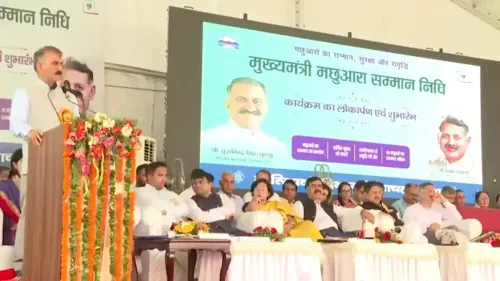
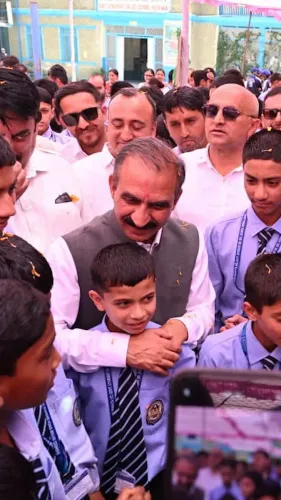
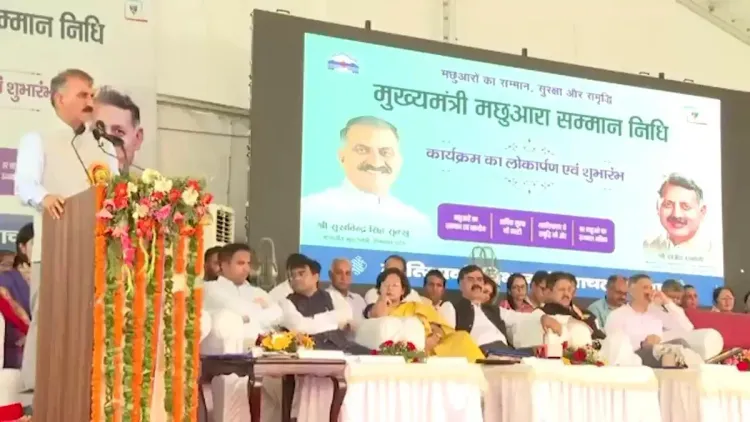
When a government school in Himachal Pradesh once meant paying Rs 50,000 a year for a CBSE education, parents had little choice but to look elsewhere. Himachal Pradesh Chief Minister Sukhvinder Singh Sukhu announced on Wednesday, 12 August 2026 that the state has now affiliated 150 government schools with CBSE and slashed annual fees to just Rs 2,000 — a 96 per cent reduction — with 24,000 children already enrolled.
From Rs 50,000 to Rs 2,000: The fee arithmetic that changes everything
The numbers are stark. Where CBSE schooling in the state previously carried a fee burden of roughly Rs 50,000 annually, the state government's intervention has compressed that to Rs 2,000 per year — making a nationally recognised curriculum accessible to families in Himachal Pradesh's largely rural districts who could never have afforded it before. 24,000 students have already taken admission under this restructured system, signalling early demand the government is now racing to meet.
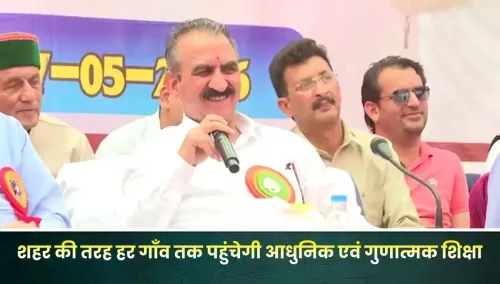
CM Sukhu acknowledged the road was not smooth: 'अनेक चुनौतियाँ आईं, लेकिन हमने हर चुनौती को अवसर में बदला' ('many challenges came, but we turned every challenge into an opportunity'). That framing — challenge as opportunity — has defined the administration's pitch on public education since it took office in December 2022.
Merit-based principals and subject teachers already in place
Affiliation without staffing is an empty promise. The state has moved to close that gap: 90 per cent of the newly affiliated schools have appointed principals through written examinations — a merit-based process that departs from older discretionary norms. Teachers in English, Mathematics, and Physics — the three subjects most commonly cited as weak points in government schools — have also been recruited and have joined duty.
The hires matter because CBSE affiliation requires schools to meet the board's staffing and infrastructure norms before students can sit national examinations. Getting qualified subject teachers into classrooms before the academic cycle solidifies is the difference between a policy announcement and an actual reform.
Five more years: Sukhu's explicit timeline and what it demands
The Chief Minister was candid about the horizon: the government needs five more years to fully consolidate the transformation — to build government schools strong enough that, in his words, 'your children face no difficulty in moving forward.' That is both a governance commitment and an implicit electoral argument ahead of the next Himachal Pradesh assembly cycle.
Himachal Pradesh is not alone in this direction. Several Indian states have affiliated clusters of government schools with CBSE in recent years, responding to a long-standing parental drift toward private institutions. The National Education Policy 2020 encouraged exactly this kind of standardisation — aligning state government schools with a national curriculum to improve learning outcomes and equity. What distinguishes the Himachal model, at least in its stated form, is the combination of deep fee reduction with simultaneous merit-based hiring, rather than affiliation alone.
Whether 24,000 enrollments grow, whether infrastructure keeps pace, and whether the five-year plan survives political cycles — those are the questions that will determine if this is a genuine inflection point for public education in the hills, or a well-intentioned start that stalls.
Point of View
Not a one-term announcement. If the enrollment and staffing numbers hold, it could become a reference model for other hill states seeking to align government schools with national boards without pricing out rural families. The political risk is equally clear: a half-built reform hands the opposition a ready critique if infrastructure and teacher quality lag behind the affiliation certificates.
NationPress
12 Aug 2026
Frequently Asked Questions
How many government schools in Himachal Pradesh are now affiliated with CBSE?
According to CM Sukhvinder Singh Sukhu, 150 government schools in Himachal Pradesh have been affiliated with CBSE.
What is the annual fee for CBSE education in Himachal Pradesh government schools?
The annual fee has been reduced to Rs 2,000 , down from approximately Rs 50,000 that students previously paid for CBSE schooling in the state.
How many students have enrolled in HP's CBSE government schools?
24,000 children have taken admission in the newly affiliated CBSE government schools in Himachal Pradesh, as stated by CM Sukhu.
How are principals being appointed in Himachal Pradesh's new CBSE schools?
In 90 per cent of the affiliated schools, principals have been appointed through written examinations, replacing older discretionary appointment methods.
What is CM Sukhu's plan for Himachal Pradesh government schools going forward?
CM Sukhu has stated that the government needs five more years to fully consolidate the reforms so that government schools are strong enough that students face no barriers to progress.