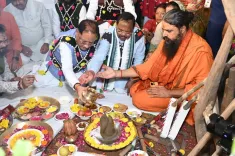
Chhattisgarh CM observes Hareli Tihar with prayers at Nava Raipur
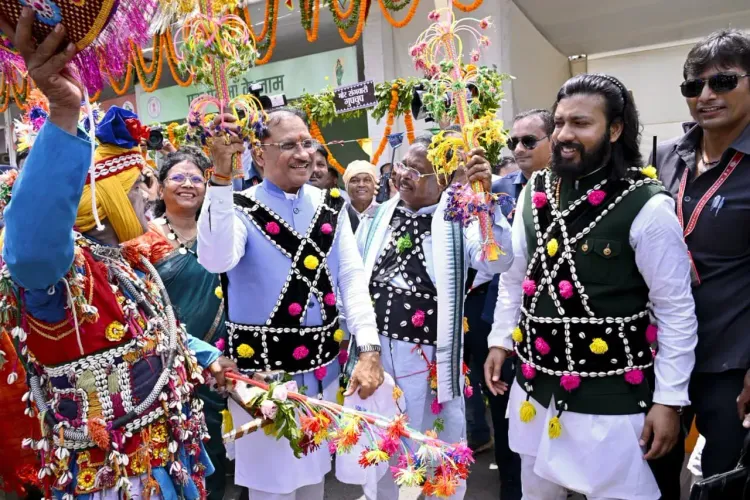
Synopsis
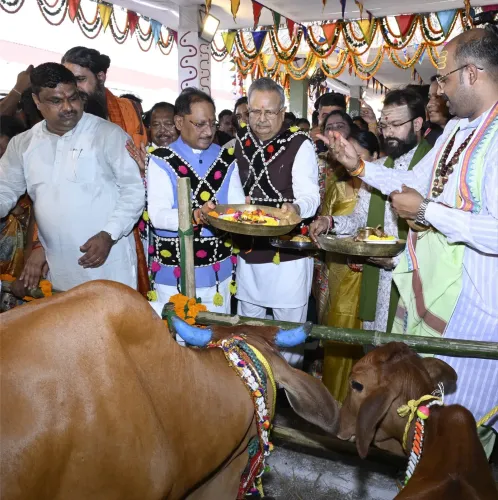
The Chief Minister's Office of Chhattisgarh observed Hareli Tihar on 12 August 2026 with a ceremonial puja at the CM's residence in Nava Raipur, sharing blessings for the state's farmers and rural families during the sacred Shravan month.
Key Takeaways
Hareli Tihar was observed on 12 August 2026 with a ceremonial puja at the Chief Minister's residence, Nava Raipur .
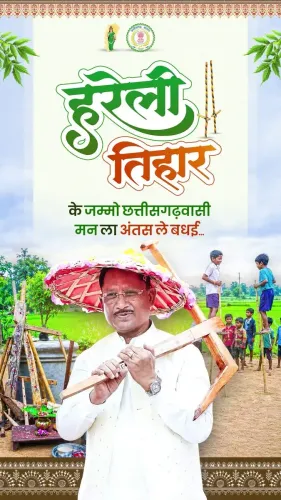
The post was shared in Chhattisgarhi , the regional mother tongue, reflecting a cultural connect with the state's rural population.
Hareli is the first major festival of the Chhattisgarhi calendar, rooted in agricultural worship during the Shravan month .
The festival holds special significance for farmers as it falls during the critical phase of the kharif crop cycle .
Governance hashtags like #Sushasansarkar and #ViksitChhattisgarh linked the cultural observance to the state administration's development narrative.
Fields green, prayers offered, and the fragrance of prosperity in the air — the Chief Minister's Office of Chhattisgarh marked Hareli Tihar on 12 August 2026 with a ceremonial puja at the Chief Minister's residence, Nava Raipur, sharing blessings for the state's farmers and families as the monsoon season deepens.
The post, shared in Chhattisgarhi — the region's mother tongue — carried a verse that translates as: 'Jay Chhattisgarh Mahtari' ['Victory to Mother Chhattisgarh']. The lines spoke of farms greening under good governance and every household finding joy in the festival's sacred light.
What Hareli Tihar means to Chhattisgarh's farming heartland
Hareli — derived from the word for 'green' — is the first major festival of the Chhattisgarhi calendar, observed during the Shravan month of the Hindu lunar year. It is rooted in agricultural ritual: farmers worship their tools, cattle, and the earth itself, seeking blessings before the kharif crop cycle enters its most critical phase. For a state where a significant share of the population depends on rain-fed agriculture, the timing is not symbolic — it is existential.
Chhattisgarh's distinct tribal and rural cultural fabric gives Hareli a reach that cuts across communities. The festival is less a religious observance than a collective affirmation of the land's centrality to life in the state.
Official residence as a stage for cultural continuity
State governments across India have increasingly used official social media to document cultural observances, anchoring governance messaging to local identity. The choice of the Chief Minister's official residence in Nava Raipur — the planned capital built to project a modern, administrative Chhattisgarh — as the venue for the puja carries its own signal: tradition and contemporary statecraft sharing the same courtyard.
The post's hashtags, including #Sushasansarkar ['good governance government'] and #ViksitChhattisgarh ['developed Chhattisgarh'], weave the cultural moment into a broader governance narrative — a pattern common to state administrations seeking to connect rural sentiment with developmental ambition.
As Shravan rains continue to fall across the Chhattisgarh plains, Hareli's prayer for a green and prosperous harvest season has now been formally echoed from the highest office in the state.
Point of View
Signalling a deliberate appeal to regional identity. The pairing of cultural celebration with governance slogans like 'Sushasansarkar' and 'ViksitChhattisgarh' reflects a broader pattern of anchoring development messaging in rural and tribal sentiment. With a significant farming population and monsoon-dependent agriculture, the timing of such outreach — at the start of the kharif cycle — is politically as well as culturally calculated.
NationPress
12 Aug 2026
Frequently Asked Questions
What is Hareli Tihar and why is it celebrated in Chhattisgarh?
Hareli Tihar is the first major festival of the Chhattisgarhi calendar, observed during the Shravan month. It is an agricultural festival in which farmers worship their tools, cattle, and the earth, seeking blessings for a good kharif harvest. The name comes from the Chhattisgarhi word for 'green', reflecting the lush monsoon landscape.
Where did the Chhattisgarh CM observe Hareli Tihar in 2026?
The ceremonial puja for Hareli Tihar 2026 was held at the Chief Minister's official residence in Nava Raipur, the planned capital of Chhattisgarh.
What does 'Jay Chhattisgarh Mahtari' mean?
'Jay Chhattisgarh Mahtari' translates from Chhattisgarhi as 'Victory to Mother Chhattisgarh.' It is a popular invocation of the state's identity, treating Chhattisgarh as a mother figure.
Why is Hareli Tihar important for farmers in Chhattisgarh?
Hareli falls at a critical point in the kharif crop cycle when monsoon-fed fields are at their greenest. Farmers use the occasion to worship agricultural tools and cattle, seeking divine blessing before the harvest season's most demanding phase begins.
What is Nava Raipur?
Nava Raipur is the newly planned capital city of Chhattisgarh, built to house key government offices including the Chief Minister's official residence. It is distinct from the older city of Raipur.