China's debt crisis: How financial repression of households fuelled a historic debt surge
Synopsis
China's towering debt pile didn't materialise overnight — it traces directly to a hidden tax on ordinary savers used to bail out insolvent state banks two decades ago. A Carnegie Endowment analysis warns that repeating that playbook today would deepen the structural imbalances already straining the global economy.
Key Takeaways
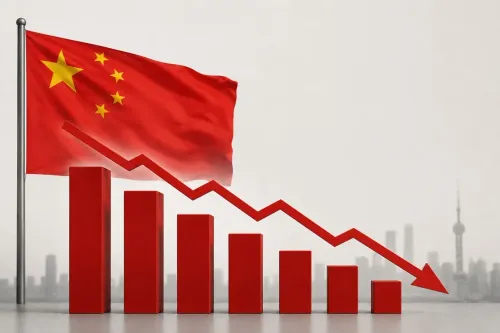
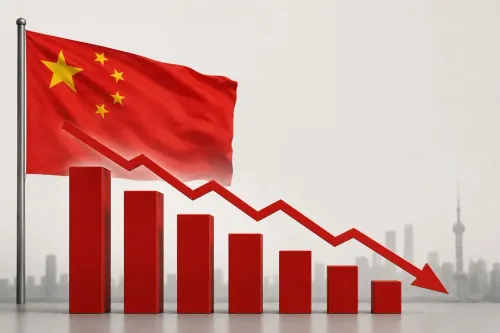
China's debt-to-GDP ratio is now second only to Japan's among major economies, after one of the fastest debt surges in history over 10–15 years .
The crisis traces to the 2000 banking cleanup, when the Big Four state banks held non-performing loan ratios of 25–50 percent by various estimates.
Beijing resolved that crisis primarily through financial repression — keeping household deposit rates below inflation to recapitalise banks at savers' expense.
Household consumption fell from 63.9 percent of GDP in 2000 to just 49.4 percent by 2010 — the lowest ever recorded in a major economy.
The resulting export dependence has flooded global markets with cheap Chinese goods, hurting industries worldwide.
A Carnegie Endowment analysis by Professor Michael Pettis warns that repeating the same household-burden approach risks deepening structural imbalances further.
China's debt-to-GDP ratio has climbed to one of the highest levels among major economies — second only to Japan — after a surge in borrowing over the past 10 to 15 years that analysts describe as among the fastest in recorded history. According to an analysis published by the Carnegie Endowment for International Peace, the pace of debt accumulation has rendered further growth on the current trajectory unsustainable.
Roots of the Crisis: The 2000 Banking Cleanup
The seeds of today's debt problem were sown in how Beijing handled its earlier banking crisis around 2000. By the late 1990s, China's Big Four state-owned banks were technically insolvent, weighed down by massive quantities of non-performing loans. Official estimates placed non-performing loan ratios at 25 to 30 percent of total portfolios, while independent analysts — including the World Bank — believed the true figure was closer to 40 to 50 percent.
As the Carnegie analysis by Professor Michael Pettis notes, moving bad loans from one balance sheet to another does not eliminate them. It merely redistributes who ultimately bears the loss.
Financial Repression: Households Paid the Price
Contrary to widespread perception, the Chinese government did not primarily absorb those losses through the public budget. Instead, Beijing relied overwhelmingly on financial repression — a mechanism that shifted the burden almost entirely onto the Chinese household sector.
Deposit rates on household savings were kept well below nominal GDP growth and, for extended periods, even below inflation. Because households made up the overwhelming majority of net savers, they earned extraordinarily low — and often negative — real returns on their bank deposits. Meanwhile, businesses, state-owned enterprises, and local governments borrowed at artificially suppressed interest rates, effectively receiving a hidden subsidy at savers' expense.
The banking system was recapitalised, but the cost was borne by ordinary Chinese households — largely without their awareness. This, Professor Pettis argues, makes the common claim that China resolved its banking crisis at 'little cost' deeply misleading.
Consumption Collapse and Structural Imbalance
The consequences were dramatic. As late as 2000, household consumption represented 63.9 percent of China's GDP. Rather than rising — as most economists expected following the completion of the initial industrialisation phase — it collapsed. By 2010, household consumption had fallen to just 49.4 percent of GDP, the lowest share ever recorded in any major economy, according to the analysis.
Household income declined as a share of GDP, dragging consumption down with it. At the same time, businesses and local governments gained access to exceptionally cheap capital, accelerating investment even as household purchasing power weakened. This structural imbalance has left China heavily dependent on exports to sustain growth.
That export dependence has had global consequences. The flood of competitively priced Chinese goods has hurt industries across the world, stoking trade tensions and prompting tariff responses from multiple economies.
The Risk of Repeating the Same Mistake
China now confronts what the Carnegie analysis describes as an enormous new debt overhang. The critical question, according to Professor Pettis, is whether policymakers will attempt to resolve this crisis the same way they resolved the last one.
'If policymakers attempt to resolve today's debt burden in the same way they resolved the last one — by once again transferring resources from households to producers and governments — they may stabilise the financial system temporarily, but they will also deepen the very structural imbalances that have made China's adjustment so difficult and contributed to the rapid accumulation of debt over the past fifteen years,' the analysis concludes.
The warning signals that without a genuine rebalancing toward household income and consumption, any near-term financial stabilisation risks laying the groundwork for an even larger crisis ahead.
Point of View
Engineered through interest rate suppression. The fact that consumption's share of GDP fell to a historic low of 49.4 percent by 2010 is not incidental; it is the direct arithmetic result of that policy. What makes the current moment dangerous is the policy reflex: under pressure, Chinese authorities have historically defaulted to protecting producers and governments at households' expense. If that reflex holds again, the structural export surplus that is already straining trade relations globally will widen further — making China's adjustment problem not just a domestic challenge but a systemic one for the world economy.
NationPress
12 Oct 2026
Frequently Asked Questions
Why is China's debt so high compared to other major economies?
China's debt-to-GDP ratio has risen to one of the highest in the world — second only to Japan — after a borrowing surge over the past 10 to 15 years that analysts describe as among the fastest in recorded history. According to a Carnegie Endowment for International Peace analysis, this trajectory makes further growth on current terms unsustainable.
How did China's 2000 banking crisis lead to today's debt problem?
In the late 1990s, China's Big Four state banks were technically insolvent, with non-performing loan ratios estimated at 25–50 percent. Rather than absorbing losses through the government budget, Beijing used financial repression — suppressing household deposit rates — to quietly recapitalise the banks at savers' expense, creating the structural imbalances that underpin today's debt overhang.
What is financial repression and how did it affect Chinese households?
Financial repression refers to policies that keep interest rates on savings artificially low, effectively transferring wealth from depositors to borrowers. In China, household deposit rates were held below nominal GDP growth and often below inflation, meaning ordinary savers earned negative real returns while businesses and state entities borrowed cheaply.
Why did China's household consumption fall so sharply?
Household income declined as a share of GDP because financial repression suppressed the returns savers received. Consumption followed income downward, falling from 63.9 percent of GDP in 2000 to just 49.4 percent by 2010 — the lowest share ever recorded in a major economy, according to the Carnegie analysis.
What does the Carnegie Endowment warn could happen next?
The Carnegie Endowment analysis by Professor Michael Pettis warns that if China attempts to resolve its current debt overhang the same way it resolved the 2000 crisis — by transferring resources from households to producers and governments — it may achieve short-term financial stability but will deepen the structural imbalances that have already made adjustment difficult and fuelled the debt surge of the past 15 years.