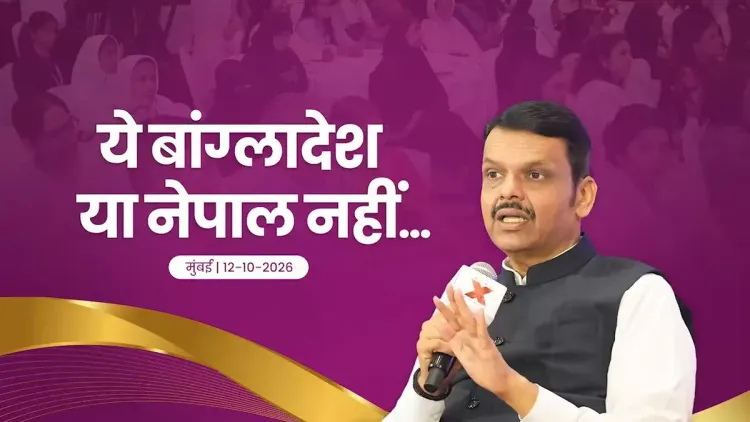
CM Fadnavis at Mumbai conclave: 'This is India, not Bangladesh or Nepal'
Synopsis
At the We Women Want Conclave and Shakti Puraskar Ceremony in Mumbai, Maharashtra CM Devendra Fadnavis made a pointed declaration — 'This is India, not Bangladesh or Nepal' — invoking national identity on a women's empowerment platform on 12 October 2026.
Key Takeaways
Devendra Fadnavis , Chief Minister of Maharashtra, spoke at the We Women Want Conclave and Shakti Puraskar Ceremony 2026 in Mumbai on 12 October 2026 .
He declared in both Marathi and Hindi: 'This is India, not Bangladesh or Nepal' — a bilingual, nationally pitched statement.
The remark was made on a women-focused platform, framing India's identity in the context of women's rights and national standing.
The invocation of Bangladesh and Nepal comes amid significant political instability and rights concerns in both neighbouring countries.
The statement reflects a BJP pattern of contrasting India's democratic institutions with those of neighbours currently in flux.
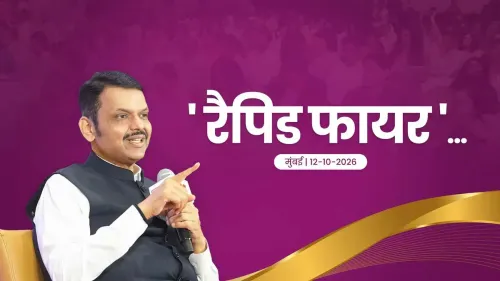
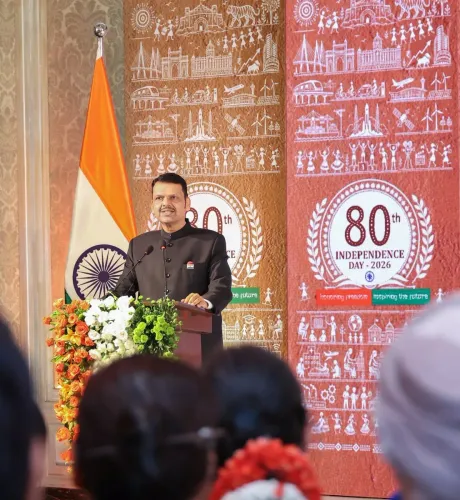
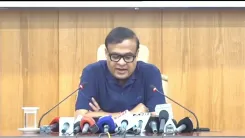
A single line landed like a thunderclap at a Mumbai auditorium on Monday. Maharashtra Chief Minister Devendra Fadnavis, addressing the We Women Want Conclave and Shakti Puraskar Ceremony 2026 in Mumbai on 12 October 2026, declared in both Marathi and Hindi: 'हा भारत आहे, बांगलादेश किंवा नेपाळ नाही' — 'This is India, not Bangladesh or Nepal.'
The line that defined the evening
The statement, delivered at a women-focused conclave organised by @WeWomenWantOffc, was bilingual by design — first in Marathi, then in Hindi — signalling a message meant for both a local and a national audience. The phrase asserts India's distinct identity and, by implication, its standards of governance and the security and rights it affords its citizens, particularly women. Fadnavis did not elaborate further in the post, but the deliberate invocation of Bangladesh and Nepal — two neighbouring nations — carries unmistakable political weight at a moment when cross-border comparisons around minority rights, women's safety, and democratic stability have dominated South Asian discourse.
Shakti Puraskar: honouring women on a Mumbai stage
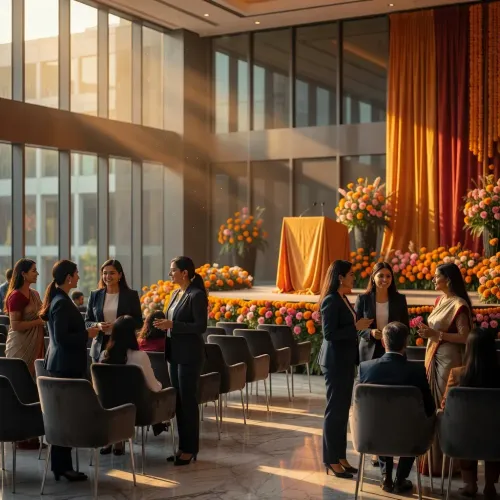
The setting amplifies the message. The Shakti Puraskar Ceremony — shakti meaning strength or power — is an awards platform that recognises women's achievement and contribution. For the Chief Minister of Maharashtra to use such a stage for a pointed assertion of national identity suggests the remark was framed as an affirmation of Indian women's constitutional standing and state protection. Mumbai's #MumbaiPodium branding for the event further positions the city as a venue for consequential public conversations.
Why the Bangladesh and Nepal reference resonates now
The invocation of Bangladesh is politically charged in the current climate. Since mid-2024, Bangladesh has undergone significant political turbulence, including the ouster of Prime Minister Sheikh Hasina, reports of violence against minorities, and questions about women's rights under transitional governance. Nepal, meanwhile, has faced its own cycles of political instability. Fadnavis's implicit contrast — positioning India as a more stable, rights-respecting republic — taps into a BJP narrative that frames India's democratic institutions as superior to those of neighbours currently in flux. The remark, short as it is, is a political statement dressed in national pride.
Whether the line is received as a confident assertion of India's constitutional values or as a pointed dig at neighbouring nations, one thing is clear: a Chief Minister chose a women's empowerment stage to make it — and that choice is a statement in itself.
Point of View
Making it harder to dismiss as mere political point-scoring. The explicit naming of Bangladesh — a country that has seen minority violence and women's-rights rollbacks since its 2024 political upheaval — gives the line its sharpest edge, and aligns with BJP's broader 2026 electoral messaging around national security and cultural identity. Delivering it bilingually, in Marathi then Hindi, signals the Chief Minister was speaking simultaneously to his Maharashtra base and to a national audience watching the clip circulate. The choice of venue over a press conference or rally is itself a piece of political stagecraft — grounding a nationalist assertion in the credibility of women's rights advocacy.
NationPress
12 Oct 2026
Frequently Asked Questions
What did CM Devendra Fadnavis say at the We Women Want Conclave 2026?
Fadnavis declared, in both Marathi and Hindi, 'This is India, not Bangladesh or Nepal' — asserting India's distinct national identity at the We Women Want Conclave and Shakti Puraskar Ceremony in Mumbai on 12 October 2026.
Why did Fadnavis mention Bangladesh and Nepal in his speech?
Fadnavis invoked Bangladesh and Nepal as implicit contrasts to India, referencing countries that have faced recent political instability and concerns over minority and women's rights, to frame India as a more stable, rights-respecting republic.
What is the We Women Want Conclave and Shakti Puraskar Ceremony?
It is a women-focused conclave and awards ceremony organised by @WeWomenWantOffc that recognises women's achievements and contributions, held in Mumbai on 12 October 2026.
What is the Shakti Puraskar award?
The Shakti Puraskar — 'shakti' meaning strength or power — is an award that honours women for their achievements and contributions, presented at the annual We Women Want conclave platform.
Is Fadnavis's statement a political remark or a governance message?
The remark operates on both levels: as a governance assertion about India's constitutional protections for women, and as a political statement contrasting India with neighbours currently experiencing instability — consistent with BJP's broader national identity messaging.