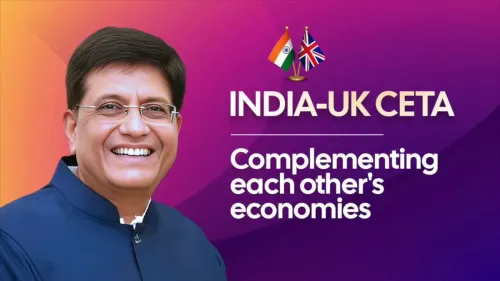
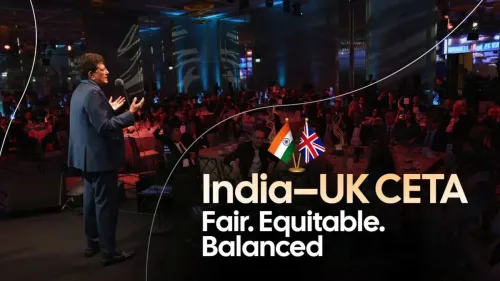
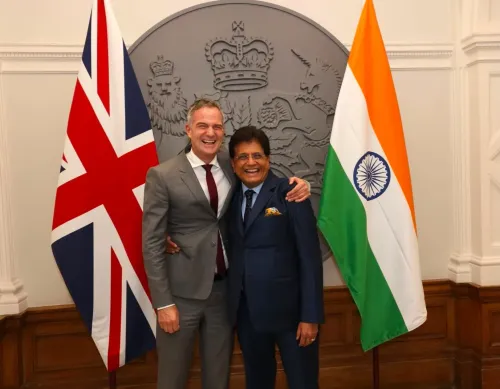
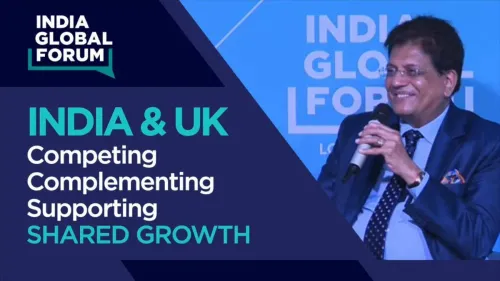
Piyush Goyal pushes to double India-UK trade by 2030 at JETCO meet
Synopsis
With CETA barely 100 days old, Commerce Minister Piyush Goyal used the India-UK JETCO platform to set an ambitious target: double bilateral trade by 2030 across five strategic pillars — clean energy, advanced manufacturing, tech, financial services, and healthcare. The real test is whether governments can translate zero-duty access into commercial momentum before the window narrows.
Key Takeaways
Commerce Minister Piyush Goyal called for doubling India-UK bilateral trade by 2030 at the 16th JETCO session in New Delhi .
The India-UK CETA grants zero-duty access in the UK for most Indian exports and opens significant opportunities for UK exporters.
India's key exports under CETA include smartphones, pharmaceuticals, jewellery, textiles, and auto components ; UK strengths lie in petroleum products, electronics, motor cars, and Scotch whisky .
Goyal outlined five cooperation pillars : clean energy, advanced manufacturing, technology and innovation, financial services, and healthcare.
City of London and GIFT City, Gandhinagar identified as key nodes for financial services collaboration.
UK's Jonathan Reynolds confirmed CETA has been in force for nearly 100 days , with early business uptake visible across multiple sectors.
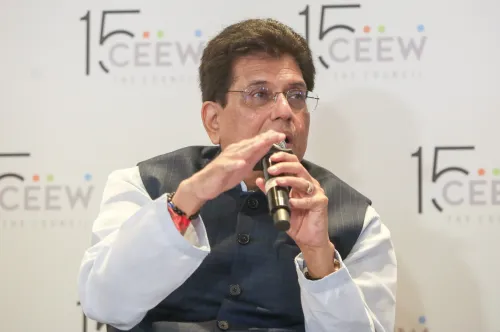
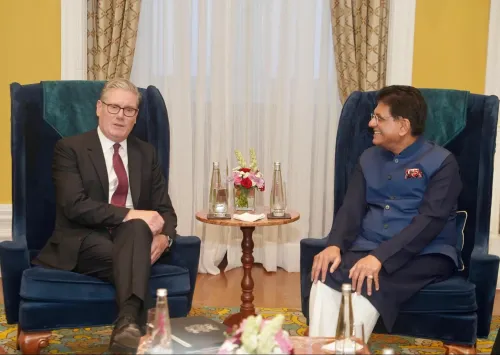
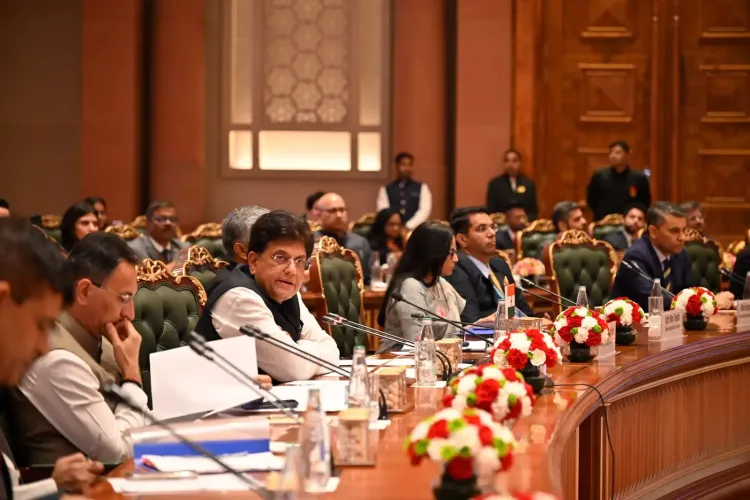
Commerce and Industry Minister Piyush Goyal on Monday, 13 October 2025, called on businesses across India and the United Kingdom to capitalise on the newly concluded India-UK Comprehensive Economic and Trade Agreement (CETA), urging both sides to double bilateral trade by 2030 and elevate the India-UK Vision 2035 into a binding framework for economic ambition. The call came at the 16th Session of the India-UK Joint Economic and Trade Committee (JETCO), held in New Delhi.
What CETA Unlocks
Goyal described CETA as a landmark milestone, noting that the agreement grants zero-duty access in the UK market for most Indian exports while opening significant avenues for UK exporters across multiple sectors. He further highlighted that the Social Security Double Contribution Convention, a parallel accord, could enhance service-sector competitiveness and improve profitability for both economies by enabling the supply of services at more competitive prices.
India and the UK, he argued, are complementary economies with substantial untapped potential — from expanding existing trade volumes to diversifying product categories and developing entirely new export corridors.
India's Export Strengths and UK Opportunities
Goyal identified India's major export categories under the agreement as smartphones, pharmaceutical products, jewellery, textiles, leather goods, rice, iron and non-alloy steel, machinery parts, and auto components. On the UK side, he pointed to potential in petroleum value chain products, electronics and electrical equipment, medicaments, motor cars, and Scotch whisky as sectors well-placed to benefit from expanded access to the Indian market.
Five Priority Areas for Cooperation
The minister outlined five strategic pillars for deepening the bilateral relationship. The first was infrastructure and clean energy — encompassing project development, renewable energy, transmission lines, and utility financing. The second was advanced manufacturing and resilient supply chains, with a focus on electric vehicles, batteries, electronics, and precision engineering.
The third priority was technology and innovation, where Goyal called for stronger ties between research institutions, technology companies, and start-ups, with specific emphasis on semiconductors, quantum computing, and artificial intelligence. The fourth was financial services — particularly collaboration between the City of London and GIFT City in Gandhinagar, Gujarat, covering fintech, insurance, cross-border payments, and trade finance. The fifth was healthcare and consumer sectors, spanning generic pharmaceuticals, branded and innovative medicines, diagnostics, food processing, and consumer goods.
UK's Response: Businesses Must Drive the Agreement
Addressing the same session, UK Secretary of State for Business, Innovation, Science and Trade Jonathan Reynolds noted that CETA had been in force for nearly 100 days and that early signs were encouraging — with businesses on both sides beginning to actively explore new opportunities in advanced manufacturing, clean energy, life sciences, technology, services, and creative industries. Reynolds emphasised that the agreement's ultimate success would hinge on businesses using it to expand exports, deepen investment, and build lasting partnerships.
What Comes Next
With CETA barely three months old, the JETCO session signals that both governments are keen to move swiftly from treaty text to commercial reality. The 2030 bilateral trade doubling target and the Vision 2035 framework will now serve as the benchmarks against which progress is measured. Industry bodies, trade associations, and financial institutions on both sides are expected to operationalise the five priority areas in the months ahead.
Point of View
But the base is modest — India-UK trade has long punched below its weight relative to the size of both economies. CETA's zero-duty provision is the most tangible accelerant, yet tariff removal alone rarely drives trade surges; implementation quality, mutual recognition of standards, and investment facilitation matter far more. The GIFT City–City of London link is the understated gem here — if financial services integration deepens, it could reshape how Indian capital markets access global pools. The five-pillar framework is sensible, but without a scorecard tied to the Vision 2035 benchmarks, it risks becoming a list of good intentions rather than a delivery roadmap.
NationPress
12 Oct 2026
Frequently Asked Questions
What is the India-UK CETA?
The India-UK Comprehensive Economic and Trade Agreement (CETA) is a bilateral free trade deal that grants zero-duty access in the UK market for most Indian exports while opening significant new opportunities for UK exporters across multiple sectors. The agreement also includes a Social Security Double Contribution Convention aimed at boosting services trade competitiveness.
What is the India-UK bilateral trade target set at JETCO 2025?
Commerce Minister Piyush Goyal called for doubling India-UK bilateral trade by 2030 at the 16th JETCO session held in New Delhi. The India-UK Vision 2035 framework was proposed as the overarching structure for this expanded economic ambition.
What are the five priority areas for India-UK cooperation?
The five pillars outlined by Goyal are: infrastructure and clean energy; advanced manufacturing and resilient supply chains; technology and innovation (including semiconductors, quantum computing, and AI); financial services (centred on City of London and GIFT City collaboration); and healthcare and consumer sectors including pharmaceuticals and food processing.
How long has the India-UK CETA been in force?
As of the JETCO session, the India-UK CETA had been in force for nearly 100 days, according to UK Secretary of State Jonathan Reynolds. He noted encouraging early signs of businesses on both sides beginning to use the agreement to explore new trade and investment opportunities.
Which Indian and UK goods benefit most from CETA?
India's primary export beneficiaries include smartphones, pharmaceutical products, jewellery, textiles, leather goods, rice, iron and non-alloy steel, machinery parts, and auto components. UK exports expected to gain ground in India include petroleum value chain products, electronics and electrical equipment, medicaments, motor cars, and Scotch whisky.