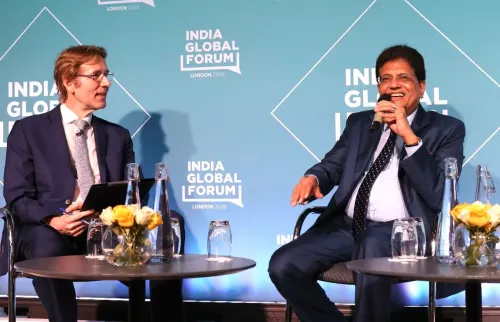
Piyush Goyal Hails India-UK CETA Enforcement on July 15
Synopsis
Commerce Minister Piyush Goyal announced the India-UK Comprehensive Economic and Trade Agreement and Double Contribution Convention will come into force on 15 July 2026, opening new export opportunities for textiles, leather, engineering, and processed food sectors while supporting the Viksit Bharat 2047 vision.
Key Takeaways
The India-UK CETA and Double Contribution Convention are set for simultaneous enforcement on 15 July 2026 .
Key beneficiary sectors include textiles, leather, marine products, engineering goods, and processed food .
The Double Contribution Convention addresses social-security contributions for workers deployed between India and the UK.
The deal is framed as supporting the 'Viksit Bharat 2047' goal of making India a developed economy by its centenary of independence.
India-UK FTA negotiations were formally relaunched in January 2022 , building on a decades-long diplomatic effort.
The agreement follows similar bilateral trade deals India signed with the UAE and Australia in 2022 .
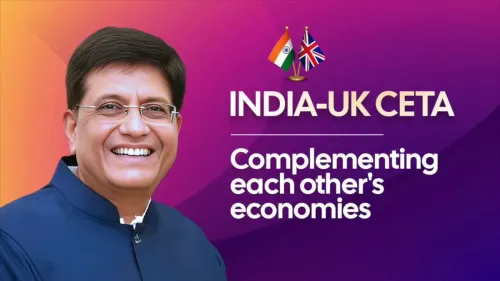
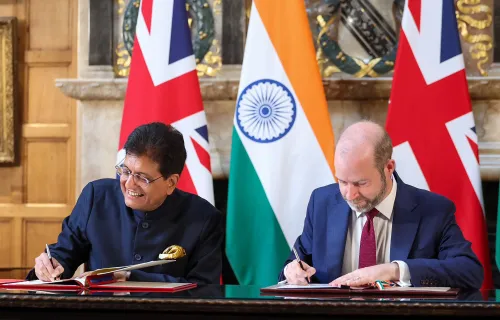
Union Commerce and Industry Minister Piyush Goyal on Wednesday, June 17, 2026, welcomed the simultaneous enforcement of the India-UK Comprehensive Economic and Trade Agreement (CETA) and the Double Contribution Convention, set to take effect on 15 July 2026, calling it 'a major stride for India's global economic engagement.'
Context
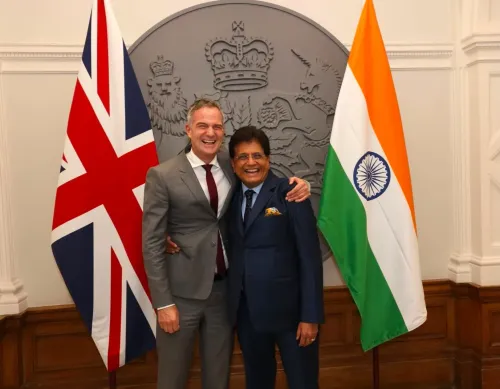
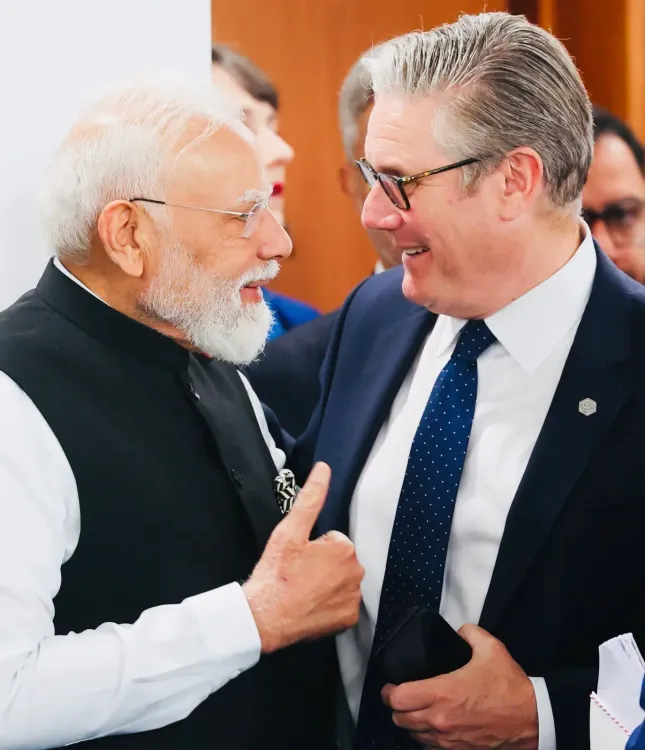
Goyal congratulated Prime Minister Narendra Modi and UK Prime Minister Keir Starmer for their 'leadership in realising the people-centric agreement that delivers benefits across all strata of society.' The minister described the pact as a 'next-generation' agreement that opens 'significant new opportunities for India's exports.' Sectors specifically named include textiles, leather, marine, engineering, and processed food.
The agreement is also framed as providing a 'level-playing field' for Indian producers entering one of the world's premier consumer markets. Alongside the trade agreement, the Double Contribution Convention — a social-security arrangement — enters force simultaneously, facilitating worker mobility between the two countries.
Policy Backdrop
India and the United Kingdom formally relaunched free-trade negotiations in January 2022, reviving talks that had been suspended for nearly two decades. The push for the agreement fits into a broader pattern of India accelerating bilateral trade pacts after 2020, following similar deals with the UAE and Australia in 2022, aimed at diversifying export markets and reducing dependence on China-centric supply chains.
The CETA is positioned as a vehicle to leverage India's 'manufacturing prowess, service capabilities, and grassroots production' directly into the UK market. Parallel social-security conventions have accompanied several of India's recent trade agreements, making the Double Contribution Convention a structurally consistent feature of this diplomatic push.
Stakeholders and Impact
Indian exporters in labour-intensive industries stand to gain the most immediate benefit. The explicit mention of textiles, leather, marine products, engineering goods, and processed food signals that the tariff concessions secured are concentrated in sectors where Indian manufacturers already hold competitive advantages but have historically faced higher duties in the UK market.
Service-sector professionals and workers deployed between the two countries are also direct beneficiaries of the Double Contribution Convention, which is designed to prevent double taxation of social-security contributions. Goyal's post underlines that the agreement 'delivers benefits across all strata of society,' suggesting the government intends to communicate its gains broadly, including to small and medium enterprises and grassroots producers.
What's Next
With the enforcement date set at 15 July 2026, the immediate focus will shift to parliamentary and regulatory processes in both countries, along with the notification of phased tariff-reduction schedules. Goyal linked the agreement explicitly to the 'Viksit Bharat 2047' vision — the government's long-term goal of achieving developed-economy status by India's centenary of independence — framing trade liberalisation as a structural pillar of that ambition. The UK deal is expected to serve as a template as India continues negotiations with other major economies.
Point of View
And its pairing with a Double Contribution Convention signals a more sophisticated, worker-inclusive approach to trade diplomacy. By anchoring the announcement to 'Viksit Bharat 2047,' the government is deliberately embedding trade liberalisation within its long-term developmental narrative, making it politically harder to roll back. The explicit callout of labour-intensive sectors — textiles, leather, marine — suggests the deal was structured to generate visible, ground-level employment gains ahead of the political calendar. How quickly phased tariff cuts translate into measurable export growth will determine whether the agreement delivers on its ambitious framing.
NationPress
16 Sept 2026
Frequently Asked Questions
What is the India-UK CETA and when does it come into effect?
The India-UK Comprehensive Economic and Trade Agreement (CETA) is a bilateral trade pact between India and the United Kingdom aimed at reducing tariffs and expanding market access. It is set to come into effect on 15 July 2026 , alongside the Double Contribution Convention.
Which Indian sectors benefit most from the India-UK trade deal?
The agreement is expected to benefit India's textiles, leather, marine products, engineering goods, and processed food sectors by providing a level-playing field and reducing trade barriers in the UK market.
What is the Double Contribution Convention between India and the UK?
The Double Contribution Convention is a social-security arrangement that prevents workers deployed between India and the UK from paying social-security contributions in both countries simultaneously, making worker mobility more practical and cost-effective.
How does the India-UK CETA relate to Viksit Bharat 2047?
' Viksit Bharat 2047 ' is India's government vision to achieve developed-economy status by 2047, the centenary of independence. The CETA is being framed as a structural pillar of that vision by integrating India more deeply into global trade and consumer markets.
When did India and UK restart free trade negotiations?
India and the UK formally relaunched free-trade negotiations in January 2022 , reviving talks that had been dormant for nearly two decades.