India-UK trade pact a 'force multiplier' for global economy: Piyush Goyal
Synopsis
Commerce Minister Piyush Goyal used London's UK-India Week 2026 to frame the India-UK Comprehensive Economic and Trade Agreement not just as a bilateral deal but as a stabilising force for the global economy — combining India's manufacturing and services scale with Britain's innovation and investment strengths at a moment when multilateral trade frameworks are under strain.
Key Takeaways
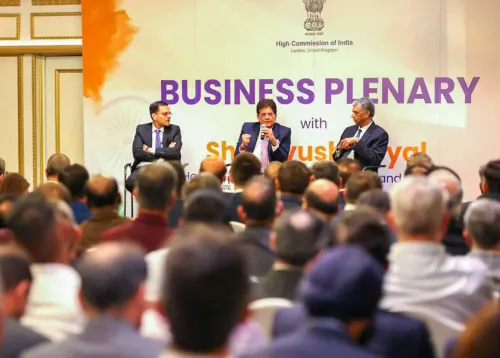
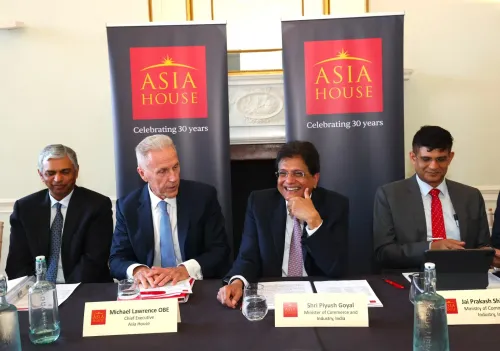
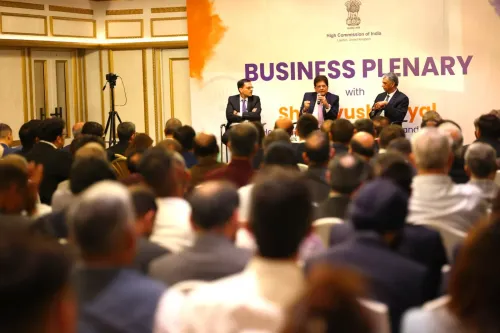
Commerce Minister Piyush Goyal addressed the India Global Forum's UK-India Week 2026 in London on 25 June 2026 .
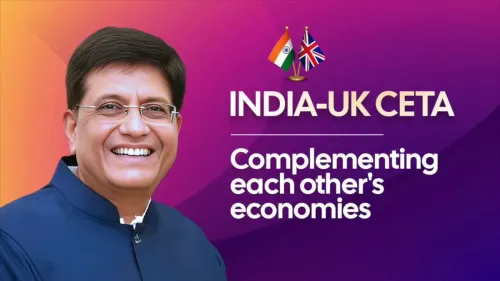
He described the India-UK Comprehensive Economic and Trade Agreement (CETA) as a 'force multiplier' for the global economy.
The bilateral partnership now spans trade, investment, technology, defence, and critical minerals , beyond traditional trade ties.
Goyal said the pact will help Indian industries move up the value chain and enhance global competitiveness.
Both countries are collaborating in multilateral forums to promote fair business practices and are aligned on counter-terrorism objectives.
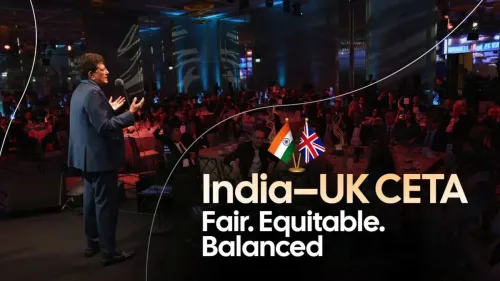
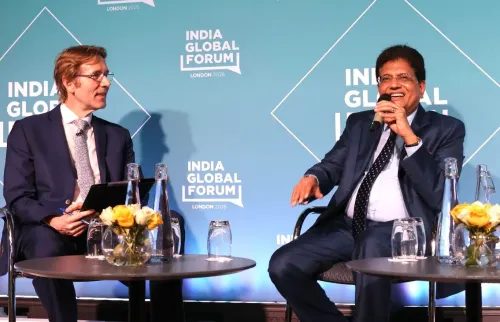
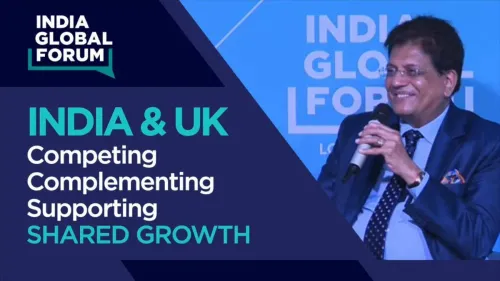
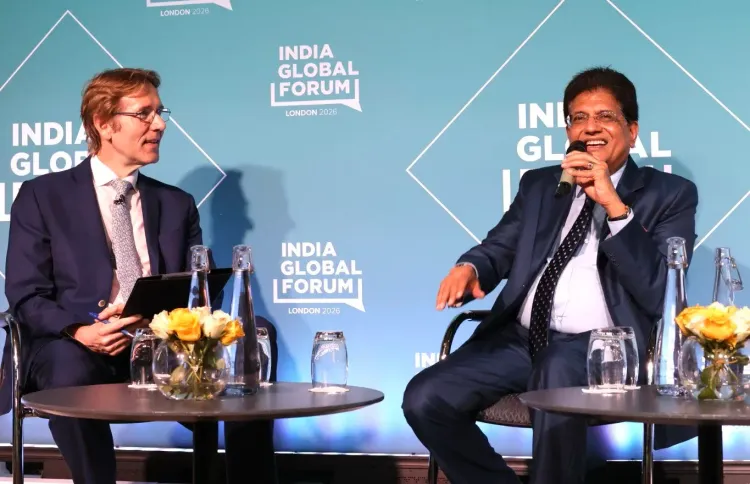
Union Commerce and Industry Minister Piyush Goyal on Thursday, 25 June 2026 declared that the India-UK Comprehensive Economic and Trade Agreement (CETA) will serve as a force multiplier for the global economy, strengthening bilateral cooperation across trade, investment, technology, and strategic sectors. Goyal made the remarks at the India Global Forum's UK-India Week 2026 in London, underscoring the growing depth of the India-United Kingdom partnership.
What Goyal Said
Addressing delegates at the high-profile forum, Goyal described the India-UK relationship as having evolved well beyond conventional trade ties into a highly strategic partnership spanning technology, investments, defence, and critical minerals. 'The India-UK Comprehensive Economic and Trade Agreement will act as a force multiplier to support the global economy,' he said.
He added that the pact would help Indian industries move up the value chain and sharpen their global competitiveness, enabling Indian businesses to both compete with and collaborate alongside British counterparts in sectors where their strengths are complementary.
Strategic Dimensions of the Partnership
Goyal highlighted that the bilateral engagement now extends into multilateral forums, where both countries are working to promote fair and equitable business practices and a level playing field for all nations. He also noted shared objectives in combating terrorism and advancing global peace and stability — dimensions that go beyond the purely economic framing of the agreement.
This comes amid a broader global push by India to diversify its trade relationships, with free trade agreements concluded or under negotiation with several major economies. The India-UK CETA has been years in the making, with negotiations that were repeatedly delayed before reaching their current stage.
Economic Opportunity and Value Chains
The minister emphasised that the agreement would encourage both nations to become integral parts of global value chains, allowing businesses on either side to support each other's economies and generate mutual growth. He pointed to the complementary strengths of the two countries — India's manufacturing and services base combined with the United Kingdom's innovation and investment ecosystem — as the foundation for this potential.
Notably, the India-UK bilateral trade relationship is already substantial, and a comprehensive agreement is widely expected by industry bodies to significantly expand market access in goods and services, including professional mobility provisions that have been a key sticking point in past negotiations.
What Comes Next
The India Global Forum event in London served as a platform for signalling political intent at the highest levels. With the CETA framework now in focus, attention will shift to the pace of ratification and the timeline for implementation. Industry stakeholders in both countries are watching closely to see how quickly the agreement translates from diplomatic momentum into actionable trade policy.
Point of View
And the gap between political rhetoric at forums like UK-India Week and ratified, implemented policy has historically been wide. Professional mobility and services access — areas where India has the most to gain — remain the most contested chapters. Until those are resolved and a ratification calendar is confirmed, 'force multiplier' risks remaining a conference-hall phrase rather than a trade-floor reality.
NationPress
24 Sept 2026
Frequently Asked Questions
What is the India-UK Comprehensive Economic and Trade Agreement?
The India-UK Comprehensive Economic and Trade Agreement (CETA) is a bilateral trade pact under negotiation between India and the United Kingdom, aimed at expanding market access across goods, services, investment, and strategic sectors. Commerce Minister Piyush Goyal described it as a 'force multiplier' for the global economy at UK-India Week 2026 in London.
What did Piyush Goyal say at UK-India Week 2026?
Goyal said the India-UK trade agreement would help Indian industries move up the value chain and enhance their global competitiveness. He also highlighted shared objectives on counter-terrorism and the two countries' collaboration in multilateral forums to promote fair business practices.
Why does the India-UK trade agreement matter?
The agreement is expected to significantly expand bilateral trade and investment flows, integrate both economies deeper into global value chains, and open new avenues for collaboration in technology, defence, and critical minerals. India views it as a key plank of its broader strategy to diversify trade partnerships.
Which sectors does the India-UK partnership now cover?
According to Goyal, the partnership has expanded beyond traditional trade to include technology, investments, defence, and critical minerals. The agreement also aims to foster cooperation in multilateral forums on equitable business practices.
What are the next steps for the India-UK trade deal?
Following the political signalling at the India Global Forum in London, attention will turn to the pace of formal ratification and implementation timelines. Key outstanding issues reportedly include professional mobility and services-sector access, which have been contentious in past negotiating rounds.