Goyal-Kyle talks: India eyes trade gains from India-UK CETA
Synopsis
Commerce Minister Piyush Goyal's virtual meeting with UK trade secretary Peter Kyle signals India's push to activate the India-UK CETA, signed in July 2025. With India's FTA-partner trade growing 92% in four years — more than double its overall trade growth — the bilateral conversation is less diplomatic courtesy and more a race to capture first-mover gains from a landmark deal.
Key Takeaways
Piyush Goyal held a virtual meeting with UK Secretary of State Peter Kyle on 1 May to deepen bilateral trade ties under the India-UK CETA .
The India-UK CETA was signed in July 2025 and is now in the implementation phase.
India's trade with strategic FTA partners grew 92% between FY 2020-21 and FY 2024-25 — more than double the 41.5% rise in overall merchandise trade.
India now has nine FTAs spanning 38 countries , with the most recent being the India-EU FTA announced on 27 January 2026 .
Goyal also separately advocated for a balanced WTO that addresses the needs of developing nations and LDCs .
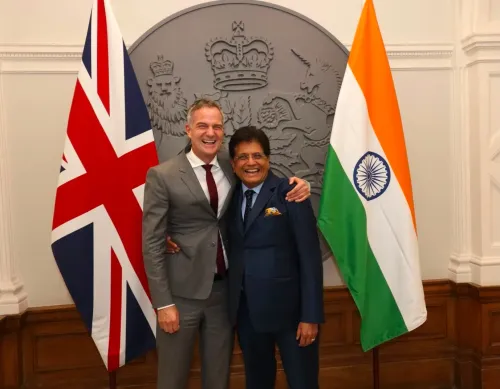
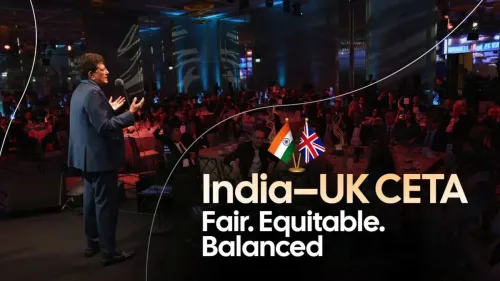
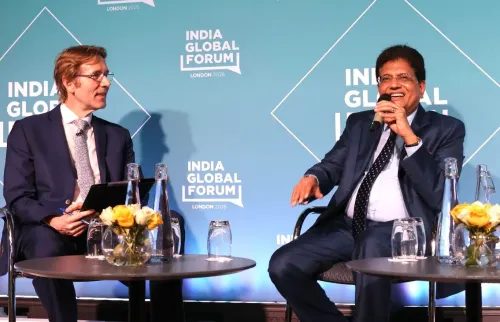
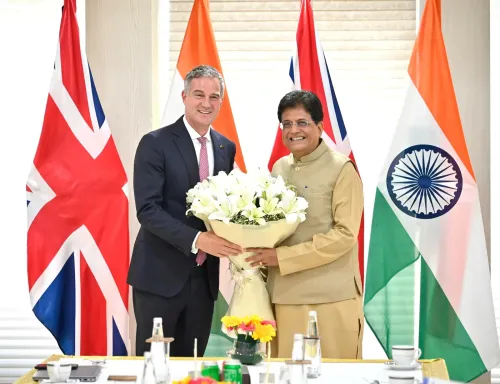
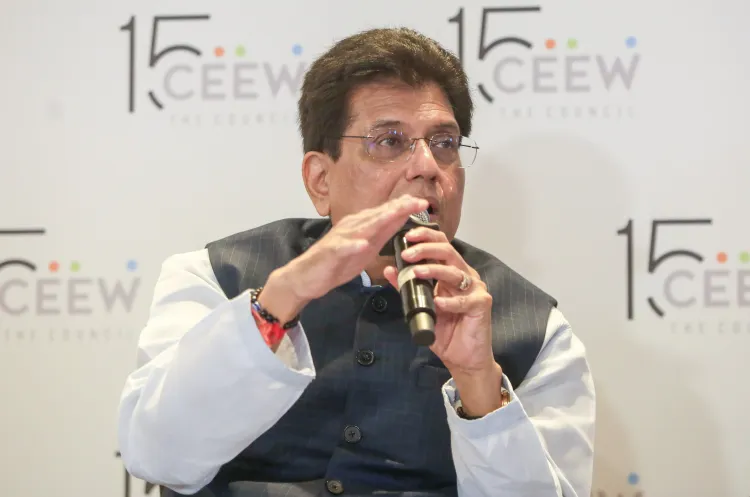
Union Minister of Commerce & Industry Piyush Goyal on Friday, 1 May held a virtual meeting with UK Secretary of State for Business and Trade Peter Kyle to explore ways of deepening bilateral trade and investment ties under the newly signed India-UK Comprehensive Economic and Trade Agreement (CETA). Goyal shared details of the interaction via a social media post, describing it as a focused effort to fully leverage the landmark agreement.
What the Talks Covered
Both ministers discussed strategies to enhance trade and investment flows between the two nations, with the India-UK CETA — signed in July 2025 — serving as the central framework for the conversation. The dialogue comes at a time when India is actively working to operationalise a series of free trade agreements concluded over the past several years. Goyal did not disclose specific agenda items beyond the broad goal of deepening bilateral economic engagement.
India's Expanding FTA Network
The bilateral talks are part of a broader Indian trade strategy. According to a recent report, India has steadily expanded its network of free trade agreements to reach nine FTAs spanning 38 countries. Crucially, these agreements are being pursued with economies where trade corridors and supply chains are already forming — functioning, the report noted, as accelerators of existing economic momentum rather than attempts to create trade from scratch.
Between FY 2020-21 and FY 2024-25, India's trade with strategic FTA partners grew by 92% — more than double the 41.5% increase in India's overall merchandise trade with the rest of the world, according to the report. In a fragmented global trading system, this targeted approach appears particularly resilient, it added.
Timeline of India's FTA Milestones
India's FTA push gained momentum starting with the India-Mauritius agreement in 2021, followed by the India-UAE Comprehensive Economic Partnership Agreement (CEPA) in May 2022 and the India-Australia Economic and Trade Agreement in December 2022. The India-EFTA Trade and Economic Partnership Agreement (TEPA), signed on 10 March 2024, entered into force on 1 October 2025.
More recently, the India-Oman CEPA was concluded in December 2025, the India-New Zealand FTA was announced on 22 December 2025, and the India-EU FTA followed on 27 January 2026. The pace of deal-making signals a deliberate shift in India's trade posture toward structured, bilateral engagement.
WTO Stance and Broader Context
In the previous week, Goyal had separately emphasised the need for a balanced and responsive World Trade Organization (WTO) that effectively addresses the aspirations of all members — particularly developing countries and Least Developed Countries (LDCs). The dual focus on multilateral reform and bilateral deal-making reflects India's twin-track approach to global trade diplomacy.
With the India-UK CETA now in place and implementation discussions underway, both governments are expected to move toward sector-specific roadmaps in the months ahead.
Point of View
And sector-level sensitivities around mobility, financial services, and whisky tariffs have not been fully resolved. The Goyal-Kyle call is a positive signal, but the real test lies in how quickly both sides move from framework to enforceable sector roadmaps. India's dual track — bilateral FTAs plus WTO reform advocacy — is strategically coherent, but risks spreading negotiating bandwidth thin as the EU deal, New Zealand FTA, and CETA all demand simultaneous attention.
NationPress
17 Sept 2026
Frequently Asked Questions
What is the India-UK CETA?
The India-UK Comprehensive Economic and Trade Agreement (CETA) is a bilateral free trade deal signed in July 2025, aimed at expanding goods, services, and investment flows between India and the United Kingdom. It is currently in the implementation phase, with both sides working on sector-specific guidelines.
Why did Piyush Goyal meet UK trade minister Peter Kyle?
Commerce Minister Piyush Goyal held a virtual meeting with UK Secretary of State for Business and Trade Peter Kyle on 1 May to explore ways to deepen bilateral trade and investment ties and fully leverage the India-UK CETA. Goyal shared details of the interaction through a social media post.
How much has India's trade grown with FTA partner countries?
According to a recent report, India's trade with strategic FTA partners grew by 92% between FY 2020-21 and FY 2024-25 — more than double the 41.5% increase in India's overall merchandise trade with the rest of the world over the same period.
How many FTAs does India currently have?
India now has nine FTAs spanning 38 countries. The network includes agreements with Mauritius, UAE, Australia, the EFTA bloc, the UK, Oman, New Zealand, and the EU, with the most recent — the India-EU FTA — announced on 27 January 2026.
What is India's stance on the WTO?
In the week preceding the Goyal-Kyle talks, Commerce Minister Goyal emphasised the need for a balanced and responsive WTO that effectively addresses the needs and aspirations of all members, particularly developing countries and Least Developed Countries (LDCs).