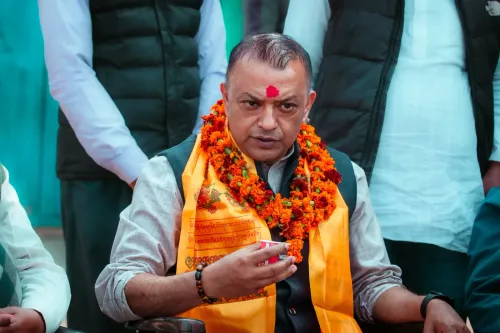
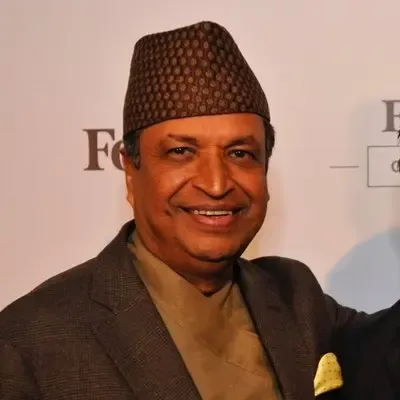
Binod Chaudhary, Nepal's only billionaire, elected Nepali Congress VP
Synopsis
Nepal's only billionaire just climbed higher in politics despite losing a parliamentary seat months ago. Binod Chaudhary — worth $2.1 billion, spanning noodles to Taj-affiliated luxury hotels — has been elected Vice-President of the Nepali Congress at its 15th general convention, narrowly defeating a rival by 87 votes. It is the most senior party role he has held, and a striking comeback from an election loss that would have sidelined most politicians.
Key Takeaways
Binod Chaudhary , Nepal's only Forbes-listed billionaire, was elected Vice-President of the Nepali Congress at its 15th general convention on 12 October 2026 .
He secured 1,745 votes under the inclusive quota, narrowly defeating rival Jeevan Pariyar who received 1,658 votes .
Chaudhary's reported net worth stands at $2.1 billion in 2026; his business interests include an instant noodles brand, a Nepali bank, and Taj-affiliated luxury hotels.
He lost his Nawalparasi West parliamentary seat to an RSP candidate in the 5 March general election.
His political career began in 2008 with the CPN-UML before he joined the Nepali Congress in 2017 .
At 70, Chaudhary has previously led both the Federation of Nepalese Chambers of Commerce and Industry and the Confederation of Nepalese Industries .
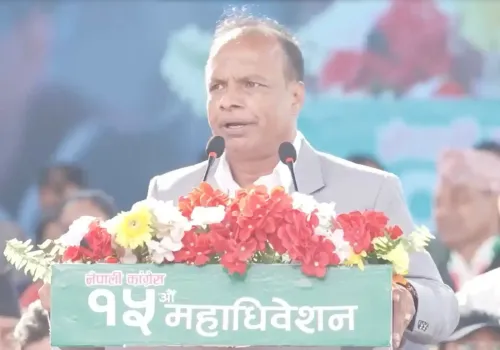
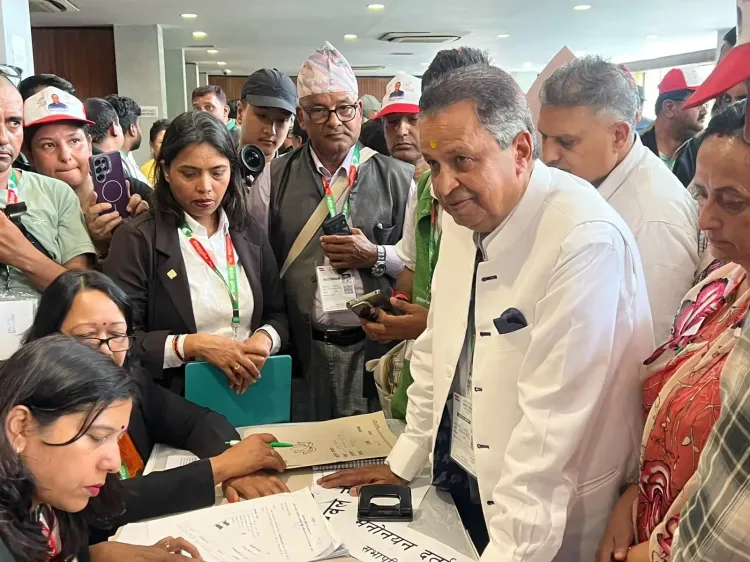
Nepal's sole billionaire, Binod Chaudhary, has been elected as one of the Vice-Presidents of the Nepali Congress at the party's 15th general convention held in Kathmandu on 12 October 2026. The election marks a significant rise for the business magnate within Nepal's largest democratic party, even as he continues to recover from a parliamentary election defeat earlier this year.
The Election Result
Chaudhary secured the vice-presidential post under the inclusive quota, receiving 1,745 votes, according to the Nepali Congress Central Election Committee. His nearest challenger, Jeevan Pariyar, polled 1,658 votes — a margin of just 87 votes. The outcome underlines Chaudhary's enduring influence among party delegates despite losing his parliamentary seat months earlier.
After the results were declared, Chaudhary thanked convention delegates for their support. He had stated prior to the vote that he was contesting to establish the Nepali Congress as a party capable of steering Nepal's economic transformation — a pitch that appeared to resonate with the party's grassroots.
From Noodles to National Politics
Chaudhary is the only Nepali to feature on Forbes magazine's global billionaires list, with a reported net worth of $2.1 billion in 2026. His business empire includes a widely recognised instant noodles brand, hospitality assets across multiple countries, a Nepali bank, and several luxury hotels affiliated with India's Taj hotel chain, according to Forbes. His net worth had stood at $1.3 billion in 2017 before climbing, then dipping during the Covid-19 pandemic years of 2020 and 2021.
The 70-year-old has also led two of Nepal's most influential private-sector bodies: the Federation of Nepalese Chambers of Commerce and Industry and the Confederation of Nepalese Industries. His dual standing as a business leader and political figure makes him a rare crossover personality in South Asian politics.
A Winding Political Journey
Chaudhary's political career spans nearly two decades and straddles ideologically contrasting parties. He first entered politics in 2008 as a member of the Constituent Assembly representing the Communist Party of Nepal (Unified Marxist-Leninist), known as CPN-UML, through the proportional-representation list. In 2017, he formally switched allegiance and joined the Nepali Congress as an elected lawmaker under the proportional quota.
At the Nepali Congress's 14th general convention in 2021, he was elected to the party's central committee under the Madhesi quota, securing 2,206 votes. In the 2022 parliamentary election, he won the House of Representatives seat from Constituency No. 1 in Nawalparasi West district as a Nepali Congress candidate.
Parliamentary Loss and Political Resilience
Chaudhary's recent setback came in the parliamentary election held on 5 March this year, which followed the Gen-Z movement that swept Nepal's political landscape. He lost his Nawalparasi West constituency to Bikram Khanal, a candidate from the Rastriya Swatantra Party (RSP) — now the dominant force in parliament with close to a two-thirds majority in the lower house.
Notably, several other Nepali Congress opposition leaders faced similar losses in that election. Chaudhary's decision to contest the party's vice-presidential post — and win — signals that the electoral defeat has not diminished his standing within the organisation. The Nepali Congress is widely credited with anchoring Nepal's democratic transition over decades, and his alignment with the party appears to be a long-term strategic commitment.
What Comes Next
As vice-president of the Nepali Congress, Chaudhary will be positioned at the heart of party strategy as Nepal navigates a new political era defined by the RSP's rise and the Gen-Z movement's influence. Whether his business credibility can be translated into an electoral comeback — and a distinct economic agenda for the party — will be closely watched in the months ahead.
Point of View
But the party has been making similar claims since its democratic-transition years. Delivering a credible economic platform — rather than a billionaire's biography — will be the real test of his vice-presidency.
NationPress
12 Oct 2026
Frequently Asked Questions
Who is Binod Chaudhary and why is he significant in Nepal?
Binod Chaudhary is Nepal's only billionaire and the sole Nepali to appear on Forbes magazine's global billionaires list, with a reported net worth of $2.1 billion in 2026. His business empire spans an instant noodles brand, a bank, and Taj-affiliated luxury hotels. He has now added the role of Vice-President of the Nepali Congress to his profile.
How did Binod Chaudhary win the Nepali Congress vice-president election?
Chaudhary was elected under the inclusive quota at the party's 15th general convention, securing 1,745 votes against rival Jeevan Pariyar's 1,658 votes — a margin of 87 votes. The result was declared by the Nepali Congress Central Election Committee.
Why did Binod Chaudhary lose his parliamentary seat in 2026?
In the parliamentary election held on 5 March this year, Chaudhary lost his Nawalparasi West constituency to Bikram Khanal of the Rastriya Swatantra Party (RSP), which now commands close to a two-thirds majority in Nepal's lower house. The election came after the Gen-Z movement reshaped the country's political landscape.
What is Binod Chaudhary's political history before the Nepali Congress?
Chaudhary entered politics in 2008 as a Constituent Assembly member representing the Communist Party of Nepal (Unified Marxist-Leninist) through the proportional-representation list. He formally joined the Nepali Congress in 2017 and won a House of Representatives seat in the 2022 general election from Nawalparasi West.
What role does Chaudhary hope to play as Nepali Congress vice-president?
Chaudhary has said he contested the vice-presidential post to position the Nepali Congress as a party capable of leading Nepal's economic transformation. The party is widely credited with anchoring Nepal's democratic transition, and Chaudhary's stated aim is to add a strong economic policy dimension to that legacy.