Gagan Thapa re-elected Nepali Congress president by landslide, split looms
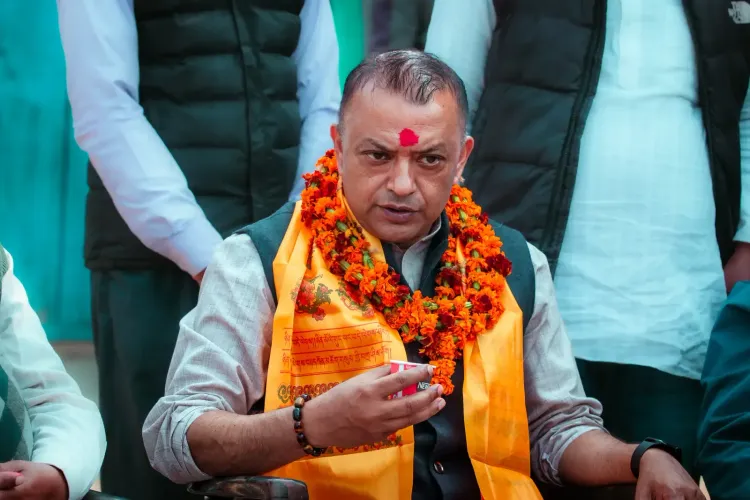
Synopsis
Gagan Thapa won a landslide — 6,584 votes to 375 — at the Nepali Congress's 15th general convention, but his mandate rings hollow against a backdrop of a lost constituency, a distant second-place finish in Nepal's March elections, and a rival Deuba faction preparing its own competing convention in December. The Supreme Court has yet to say who the real Nepali Congress is.
Key Takeaways
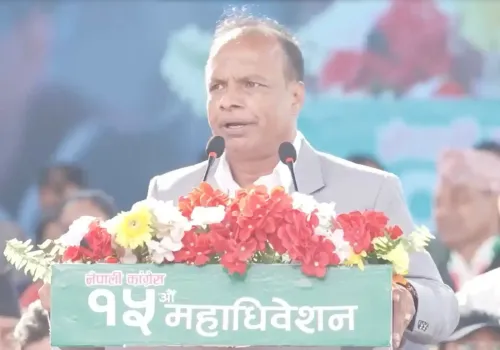
Gagan Thapa was re-elected president of the Nepali Congress at the party's 15th general convention on 10 October 2026 .
Thapa secured 6,584 votes against 375 for rival Shyam Krishna Khadgi , out of 7,013 total ballots cast.
The rival faction led by former Prime Minister Sher Bahadur Deuba plans to hold its own 15th general convention from 7 to 9 December 2026 .
The Supreme Court is reviewing the legitimacy of both factions; the Election Commission previously recognised the Thapa-led group ahead of the 5 March 2026 elections.
The Rastriya Swatantra Party (RSP) won the March elections with nearly a two-thirds majority in the 275-member House of Representatives , with Nepali Congress finishing a distant second.
Thapa, 50 , rose to prominence during the 2006 people's movement and lost his own constituency in the March 2026 elections.
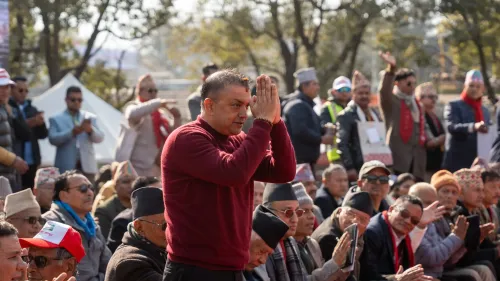
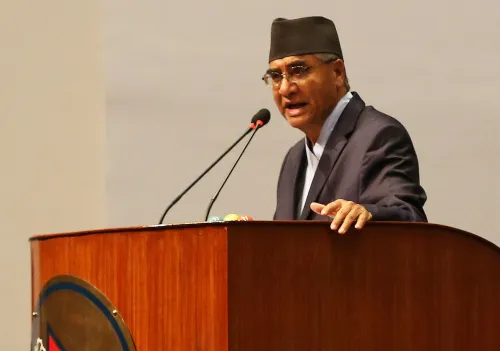
Gagan Thapa was re-elected president of the Nepali Congress by an overwhelming margin at the party's 15th general convention on 10 October 2026, even as a rival faction led by former Prime Minister Sher Bahadur Deuba prepares to hold its own competing convention in December. The result, announced by the Nepali Congress Central Election Committee, underscores a deepening schism in Nepal's oldest democratic party.
The Election Result
Thapa secured 6,584 votes against 375 for his rival, Shyam Krishna Khadgi, in an election that saw 7,013 total ballots cast — of which 54 were declared invalid. His close ally Bishwa Prakash Sharma, who co-initiated the Special General Convention (SGC) push with Thapa, was elected senior vice-president. The result gives Thapa a commanding internal mandate, though that mandate is contested from without.
The Rival Faction and the Threat of a Split
The Deuba-led faction of the party has scheduled its own 15th general convention from 7 to 9 December, claiming to represent the legitimate Nepali Congress. The Supreme Court has yet to rule definitively on which faction holds legal primacy. Ahead of the 5 March parliamentary elections, the Election Commission had recognised the Thapa-led group as the legitimate party, allowing it to contest the polls — but that recognition has not ended the internal dispute. A formal party split, once unthinkable in Nepali Congress's history, now appears a distinct possibility.
A Difficult Political Context
Thapa's re-election comes against a bruising electoral backdrop. The Nepali Congress finished a distant second in the 5 March parliamentary elections, during which the relatively new Rastriya Swatantra Party (RSP) emerged as the largest party in the 275-member House of Representatives, securing nearly a two-thirds majority. Thapa himself lost his own constituency in that contest — a significant personal setback for a sitting party president. The result raised urgent questions about the party's direction and generational relevance.
Thapa's Rise: From Student Activist to Party Chief
Thapa, 50, first came to national prominence during the 2006 people's movement, when his speeches denouncing the monarchy and advocating a republic struck a chord with younger Nepalis — at a time when the Nepali Congress mainstream was still adhering to the 'two-pillar theory' of constitutional monarchy and multiparty democracy. He entered the legislature through the party's proportional representation list in the 2008 Constituent Assembly election, then contested and won the Kathmandu-4 constituency in 2013, retaining the seat in both 2017 and 2022. His path to the party presidency was not linear: he lost his first bid for general secretary at the 13th general convention in 2016, won the post at the 14th convention in 2021, and then challenged Deuba for the parliamentary party leadership after the 2022 elections — again losing. The SGC convened in January by his faction proved to be the turning point, catapulting him to the presidency before the March elections, a move Deuba's camp termed illegitimate.
What Comes Next
The Supreme Court's pending ruling on factional legitimacy will be pivotal. If the court sides with the Deuba faction, Thapa's electoral mandate could be legally complicated. If it upholds the Thapa-led Nepali Congress, the December convention risks producing a formally recognised breakaway party. Either outcome will reshape Nepal's opposition landscape at a time when the RSP already controls parliament. The coming weeks will test whether the party's internal divisions can be resolved before they become permanent.
Point of View
584 to 375 looks decisive on paper, but Thapa's re-election settles nothing about the Nepali Congress's existential crisis. He leads a party that lost its president's own constituency in the March elections and was routed by a party barely a few years old. The deeper problem is structural: the Deuba faction's December convention means the country may soon have two organisations both claiming the Nepali Congress name, and the Supreme Court's silence so far has allowed ambiguity to harden into entrenched rivalry. Mainstream coverage focuses on the convention numbers; what it misses is that a fractured Nepali Congress is also a gift to the RSP, which can consolidate its parliamentary dominance while the opposition remains consumed by internal litigation.
NationPress
10 Oct 2026
Frequently Asked Questions
Who is Gagan Thapa and why is his re-election significant?
Gagan Thapa, 50, is the president of the Nepali Congress, Nepal's oldest democratic party. His re-election at the 15th general convention on 10 October 2026, with 6,584 votes against 375 for his rival, is significant because it comes despite a poor party performance in the March 2026 elections and an ongoing challenge from a rival faction led by former Prime Minister Sher Bahadur Deuba.
What is the dispute between the Thapa and Deuba factions of Nepali Congress?
The Deuba faction contests the legitimacy of the Thapa-led leadership, which was established through a Special General Convention in January 2026 that Deuba's camp deemed irregular. The Deuba faction plans to hold its own 15th general convention from 7 to 9 December 2026 and claims to represent the authentic Nepali Congress. The Supreme Court is reviewing the legitimacy of both factions.
Which party won Nepal's March 2026 parliamentary elections?
The Rastriya Swatantra Party (RSP) emerged as the largest party in Nepal's 275-member House of Representatives in the 5 March 2026 general elections, securing nearly a two-thirds majority. The Nepali Congress finished a distant second, and Thapa himself lost his own constituency.
Has the Election Commission or the Supreme Court decided which Nepali Congress faction is legitimate?
Ahead of the March 2026 elections, the Election Commission recognised the Thapa-led faction as the legitimate Nepali Congress, allowing it to contest the polls. However, the Supreme Court is still reviewing the question of factional legitimacy, and no final judicial ruling has been issued.
What happens if the Deuba faction holds its own convention in December?
If the Deuba faction proceeds with its 7–9 December 2026 convention, Nepal could effectively have two rival organisations both claiming the Nepali Congress name and leadership. The outcome will likely depend on the Supreme Court's pending ruling, which will determine which faction holds the party's legal recognition going forward.