Panjab University team patents water bacteria test

Synopsis
Panjab University researchers have patented a method that captures bacteria on glass and uses fluorescent quantum dots to indicate their presence. Demonstrated against E. coli, the technology is intended as the basis for a portable drinking water test, though no launch date has been specified.
Key Takeaways
Panjab University researchers secured patent 610483 for a waterborne pathogen detection technology.
The patent was granted on 20 November following an application filed on 14 February 2019 .
The method captures targeted bacteria on functionalised glass and uses fluorescent quantum dots to indicate their presence.
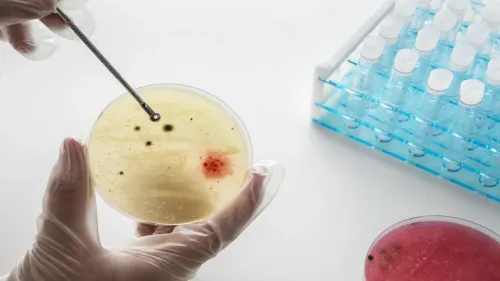
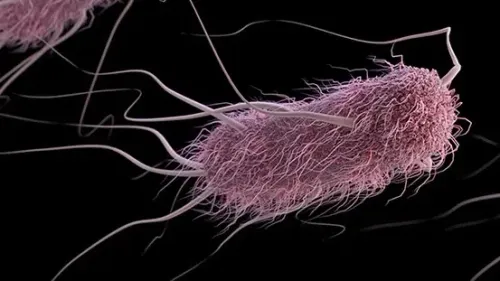
The approach has been demonstrated against E. coli , a bacterium associated with gastrointestinal infections and waterborne illnesses.
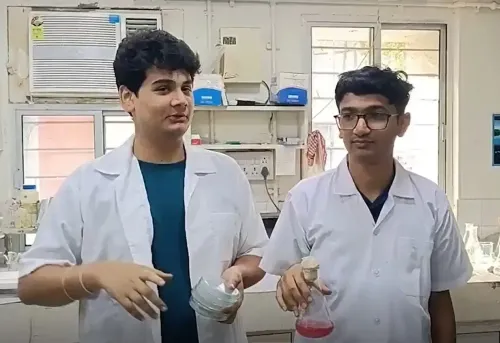
The research was led by Dr Gurpal Singh and Prof Bhupinder Singh Bhoop , with collaborators from UIPS and Lovely Professional University .
Panjab University scientists in Chandigarh have secured a patent for a quantum dot-based technology designed to detect disease-causing bacteria in drinking water using fluorescent signals. The approach, demonstrated against Escherichia coli (E. coli), could support faster and more accessible microbial testing.
The patent, numbered 610483, was granted on 20 November after an application filed on 14 February 2019. The technology is intended to form the basis of a portable, user-friendly water-testing kit.
How the bacteria detection technology works
The invention combines a specially functionalised glass surface with fluorescent quantum dots. The glass matrix captures targeted bacteria, while the quantum dots produce a signal indicating their presence.
Its patent is titled “Selective Capturing and Detection of Pathogens on Glass Matrix Using Affinity Moiety Coupled Quantum Dots”. The approach has been demonstrated against E. coli, a bacterium associated with gastrointestinal infections and waterborne illnesses.
The capture and signalling components have distinct roles: one holds the target on the glass surface, and the other helps make its presence detectable. The source does not specify a detection time or compare the method's accuracy with existing tests.
Researchers behind the patent
The research was led by Dr Gurpal Singh, Assistant Professor at the University Institute of Pharmaceutical Sciences (UIPS), and Prof Bhupinder Singh Bhoop, formerly of UIPS.
The team also included Taranvir Kaur and Anjali Pant of UIPS, along with Dr Ashish Suttee of Lovely Professional University.
Potential role in drinking water monitoring
Bacterial contamination may not be apparent from water's appearance, smell or taste. A method that identifies targeted bacteria through a fluorescent signal could therefore provide an additional tool for monitoring drinking water safety.
The researchers envisage applications in drinking water surveillance and public health monitoring, particularly where timely detection of microbial contamination matters. The source describes these as potential applications rather than evidence that a kit is already in use.
The platform could also be adapted to other pathogens using recognition molecules designed to capture specific targets. The reported demonstration against E. coli, however, does not establish how the technology would perform against every pathogen.
From patent to a portable test
The intended portable kit could make microbial screening easier to access, but the patent grant is distinct from a completed product or a public rollout. The source does not provide a launch date or details of field deployment.
Questions about performance in different water samples, testing time and practical use remain relevant to any future kit. Further information on development and validation will help clarify how the patented approach might be used in drinking water surveillance.
Point of View
But it is not proof that a portable test is ready for public use. The practical value will depend on validation in varied water samples, affordability and ease of use. Clear evidence on those points would help drinking water authorities assess whether the technology can improve surveillance.
NationPress
24 Nov 2026
Frequently Asked Questions
What water testing technology did Panjab University scientists patent?
The scientists patented a method that captures targeted bacteria on a functionalised glass surface and uses fluorescent quantum dots to indicate their presence. It is intended to form the basis of a portable water-testing kit.
Which bacterium has the technology been tested against?
The approach has been demonstrated against Escherichia coli, or E. coli. The bacterium is associated with gastrointestinal infections and waterborne illnesses.
Why could the water bacteria detection technology matter?
The technology could provide an additional tool for detecting bacterial contamination in drinking water. Such contamination cannot necessarily be identified by sight, smell or taste.
Can the patented method detect other pathogens?
The platform can potentially be adapted to other pathogens using specific recognition molecules. The source reports a demonstration against E. coli but does not detail tests against other pathogens.
When will the portable water-testing kit be available?
No launch date for a portable kit has been specified. The patented technology is intended to form the basis of such a kit.