Vadodara Students Make Groundbreaking Discovery of Glowing Bacteria in Ratnagiri Waters
Synopsis
In an impressive scientific achievement, two students from Vadodara have uncovered glowing bacteria in Ratnagiri's waters. This discovery not only highlights their dedication but also opens up exciting possibilities for future research in marine microbiology and biotechnology.
Key Takeaways
Discovery of bioluminescent bacteria by Vadodara students.
Research conducted at M.K.
Significant implications for marine microbiology .
Potential applications in environmental diagnostics and biotechnology.
Encouragement from the Gujarat government for scientific innovation.
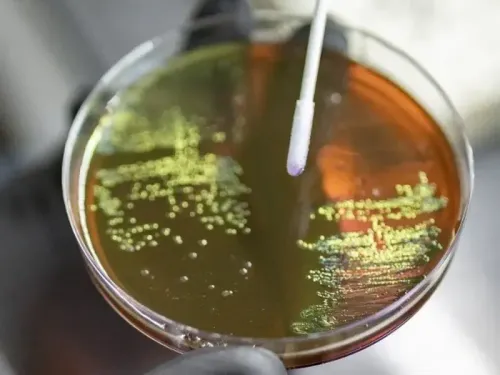
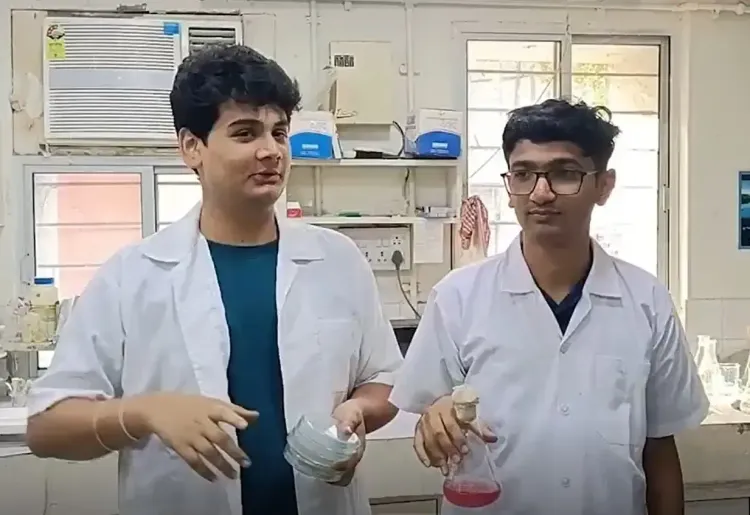
New Delhi, April 19 (NationPress) In a significant scientific breakthrough, two B.Sc. Microbiology students from M.K. Amin College in Vadodara, Gujarat, namely Arnav Dhamdhere and Hariom Pathak, have successfully isolated bioluminescent bacteria from seawater samples taken off the coast of Ratnagiri, Maharashtra.
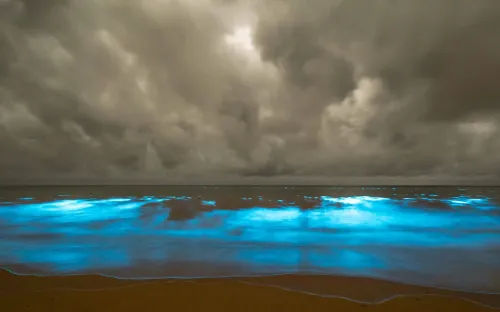
These bacteria possess the unique ability to emit light in darkness, marking a rare biological occurrence with extensive scientific implications.
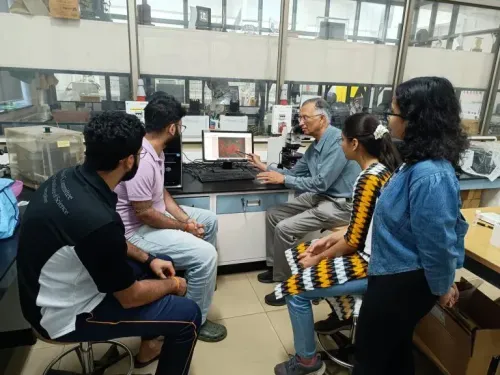
Their groundbreaking findings were achieved under the expert supervision of Prof. Devarshi Gajjar and Dr. Priya Mishra after nearly 11 months of dedicated laboratory research, experimentation, and microbial analysis. The students gathered seawater samples from various coastal areas, including Ratnagiri, and adeptly isolated the glowing bacteria through a comprehensive scientific methodology.
Describing the inspiration behind their project, student Hariom Pathak mentioned, “While studying molecular biology, we learned that oceans illuminate at night due to bioluminescent bacteria. This sparked our interest in conducting this experiment.” He added that samples were collected from coastal waters during field excursions, including a visit to Goa.
“At our college, we organize an open house annually to engage with school students. We aimed to do something innovative to pique their curiosity, which led us to explore bioluminescent bacteria,” he explained, noting that the research demanded ongoing experimentation over an extended timeframe.
Arnav Dhamdhere, the other student involved, shared, “We experimented with various samples to isolate the bacteria. We achieved success in April of last year, with the entire process spanning around a year, including the identification phase.”
The research involved thorough laboratory procedures and continuous examination to isolate and verify the existence of these luminous microorganisms. Experts highlight that such bacteria hold considerable potential for applications in pollution monitoring, environmental diagnostics, medical research, and biotechnology.
The samples are currently being subjected to further pathological analysis to explore broader scientific applications.
This research was undertaken at M.K. Amin College, which is affiliated with the Maharaja Sayajirao University system in Vadodara.
This achievement is viewed as a significant advancement for student-led scientific innovation. The Gujarat government, under the leadership of Chief Minister Bhupendra Patel, is actively fostering research and innovation, encouraging young scientists to engage in advanced studies.
This discovery is poised to enrich future research in marine microbiology and unlock new avenues in bio-luminescence-based scientific applications.
Point of View
This discovery showcases the innovative spirit of students in India, particularly in the field of microbiology. The isolation of bioluminescent bacteria not only reflects their hard work but also emphasizes the importance of supporting scientific research among youth. The potential applications in environmental science and biotechnology could lead to significant advancements.
NationPress
19 Sept 2026
Frequently Asked Questions
What is bioluminescent bacteria?
Bioluminescent bacteria are microorganisms that can produce and emit light, a natural phenomenon that has various applications in science.
Where were the bacteria discovered?
The bioluminescent bacteria were isolated from seawater samples collected off the coast of Ratnagiri, Maharashtra.
Who guided the students during their research?
The students conducted their research under the supervision of Prof. Devarshi Gajjar and Dr. Priya Mishra.
What are the potential applications of this discovery?
The findings could have significant applications in pollution monitoring, environmental diagnostics, medical research, and biotechnology.
How long did the research take?
The research took nearly 11 months from the initial collection of samples to the isolation of the bacteria.