India and Israel on parallel counter-terrorism paths: Report
Synopsis
A geopolitical analysis in The Algemeiner argues India and Israel are on near-identical counter-terrorism trajectories — same adversaries, same doctrines, but starkly different global reactions. The report flags that India's information-domain strategy post-Operation Sindoor may offer Israel a model it has yet to adopt.
Key Takeaways
A report in The Algemeiner by consultant Paushali Lass argues India and Israel share near-identical counter-terrorism doctrines and threat environments.
Pakistan-based terrorists killed 26 civilians in Pahalgam , prompting India's Operation Sindoor and the suspension of key aspects of the Indus Waters Treaty .
Lass cites Article 62 of the Vienna Convention as legal basis for India's treaty suspension under "fundamental change in circumstances." Despite comparable responses, Israel faces sustained global criticism while India's actions against Pakistan-based terror have drawn relatively less international outrage, the report notes.
The report argues Israel should adopt India's information-domain strategy — presenting outcomes over sensationalism and countering disinformation through media literacy.
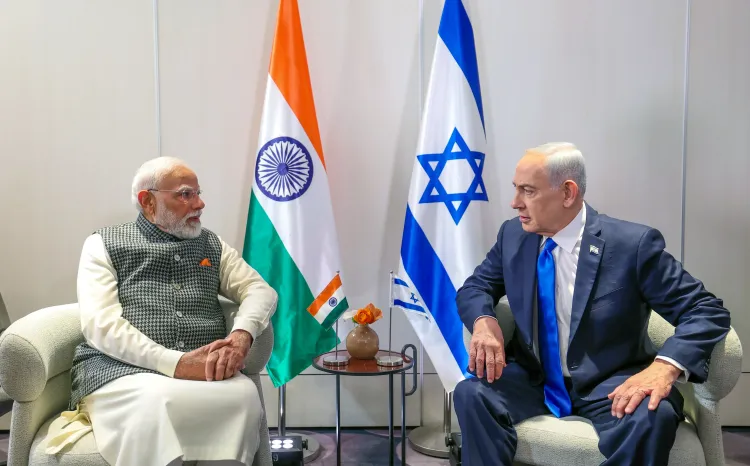
A new analysis published in the US-based journal The Algemeiner argues that the India–Israel partnership functions primarily as an operational counter-terrorism cooperation aimed at saving lives and dismantling terror networks. Both nations, the report contends, face strikingly similar security environments and have adopted comparable doctrines emphasising surgical strikes, deterrence, and minimising civilian harm.
Shared Threat Environments
The report, authored by Paushali Lass, an Indian-German intercultural and geopolitical consultant, draws a direct line between the security challenges confronting both countries. She notes that adversaries in both cases exploit civilians, use human shields, and operate across international borders — posing challenges that conventional military responses alone cannot resolve.
Lass invoked Israel's recent back-to-back observance of Memorial and Independence days as a reminder that, in her words,
Point of View
Whatever its imperfections, has been more coherent than Israel's. The harder question the report does not fully address is whether India's relatively lighter international criticism reflects genuine diplomatic capital or simply a lower level of global media attention on the subcontinent. That distinction matters enormously for long-term strategic positioning.
NationPress
18 Sept 2026
Frequently Asked Questions
What does the report say about India and Israel's counter-terrorism cooperation?
The report, published in The Algemeiner, argues that the India–Israel partnership is primarily an operational counter-terrorism cooperation aimed at saving lives and dismantling terror networks. Both nations face similar adversaries who exploit civilians and operate across borders, and have adopted comparable doctrines of surgical strikes and deterrence.
What was Operation Sindoor and how does it relate to the Pahalgam attack?
Operation Sindoor was India's military response following the Pahalgam terror attack, in which Pakistan-based terrorists killed 26 civilians in front of their families. The operation marked a significant shift in India's counter-terrorism posture and was accompanied by the suspension of key aspects of the Indus Waters Treaty.
Why did India suspend the Indus Waters Treaty after the Pahalgam attack?
India suspended key aspects of the Indus Waters Treaty — including the sharing of hydrological data critical to Pakistan's agriculture — following the Pahalgam terror attack. Author Paushali Lass cites Article 62 of the Vienna Convention on the Law of Treaties, which permits suspension under a 'fundamental change in circumstances', including sustained terrorism that undermines the basis of trust.
Why does Israel face more global criticism than India despite similar counter-terrorism responses?
According to the report, global reactions to comparable counter-terrorism actions vary sharply. The author cites commentator Soraya Deen's observation that the Palestinian cause has, in some contexts, taken on the role of a 'sixth pillar of Islam', capable of mobilising mass global sentiment — a dynamic that does not apply to India's conflict with Pakistan-based terrorism in the same way.
What information-domain lessons does the report suggest Israel learn from India?
The report argues that India has managed the information domain effectively by presenting Operation Sindoor's outcomes through strategic communication rather than sensationalism, while also exposing Pakistan-based disinformation networks and building public resilience through media literacy. Lass suggests Israel adopt a similar approach, stating that intelligence and defence technology are 'no longer enough if they are not accompanied by clarity in communication.'