Is the Nepali Congress Facing a Split Amid Ongoing Tensions?
Synopsis
As internal tensions escalate within the Nepali Congress, the party is on the verge of division. This article explores the ongoing disputes between factions, the implications for upcoming elections, and the potential consequences for the party's future. Could this internal rift result in a significant political shift as the elections approach?
Key Takeaways
The Nepali Congress is facing potential division amid factional disputes.
Key figures include Sher Bahadur Deuba, Gagan Thapa, and Bishwa Prakash Sharma.
The party's future is uncertain with elections approaching.
Compromise efforts may hinge on Deuba's exit from leadership.
Historical context indicates past splits could repeat.
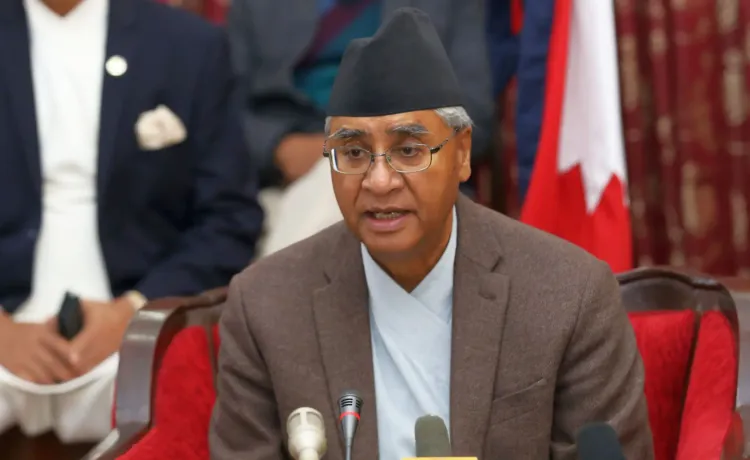
Kathmandu, Jan 13 (NationPress) The Nepali Congress is teetering on the brink of division as internal disputes between two factions escalate over the ongoing Special General Convention (SGC). Despite ongoing attempts to maintain party unity, the discord was palpable throughout Tuesday.
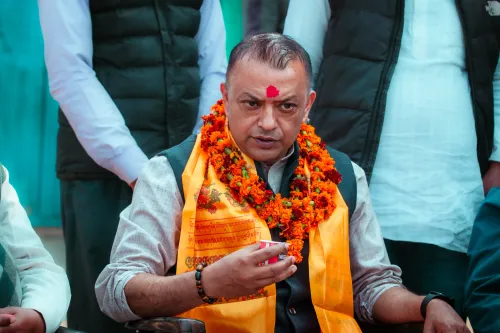
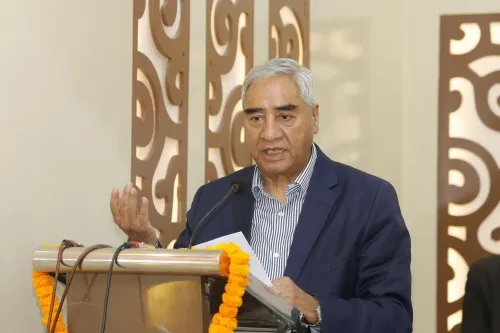
The party is currently divided between two factions: one led by party president and former Prime Minister Sher Bahadur Deuba, and the other led by General Secretaries Gagan Thapa and Bishwa Prakash Sharma. Tensions have flared regarding the SGC convened in Kathmandu at the behest of Thapa and Sharma, which Deuba did not authorize.
This conflict arises just a few months before the scheduled House of Representatives elections on March 5, raising concerns among party leaders and members about its potential repercussions on their electoral viability.
The Thapa–Sharma faction asserts that a majority of elected members of the General Convention have engaged in the SGC, which is set to hold elections for a new Central Working Committee on Wednesday, signaling a potential end to Deuba’s leadership that has persisted since 2016.
Thapa is positioned as the leading candidate for the role of party president. During the closed session of the SGC on Tuesday, General Secretary Sharma expressed his support for Thapa as both party president and the Nepali Congress’s candidate for prime minister in the forthcoming government. However, Thapa’s ascent may come at the risk of a party split, given that a considerable faction still aligns with Deuba, who opposes the SGC.
Multiple discussions involving leaders from both factions took place on Tuesday, yet significant divisions on critical issues remained.
As per sources close to Thapa and Sharma, a compromise in leadership could be entertained if the establishment faction led by Deuba conceded to specific conditions.
Subas Pokharel, a supporter of the SGC, outlined three prerequisites for achieving consensus: First, Deuba must relinquish all responsibilities as party president. Second, he should refrain from contesting the upcoming House of Representatives elections. Third, the party leadership must formally endorse the SGC.
The faction is adamant that Deuba should not participate in the future management of the party and has insisted that acting president Purna Bahadur Khadka be granted full executive powers.
Local media reports indicate that while Deuba is open to taking ownership of the SGC, he remains hesitant to accept the other preconditions discussed in various meetings on Tuesday.
“It is evident that the Thapa–Sharma faction intends to exclude Deuba from any role in candidate selection for the upcoming elections,” Govinda Raj Pokharel, who claims independence from both factions, conveyed to IANS. “Thapa seeks to fortify his position within the party through the SGC and has not relented on Deuba's removal from party matters.”
He cautioned that ousting Deuba could instigate a split within the party, with both factions vying for leadership legitimacy before the Election Commission. “Ultimately, it would fall to the Election Commission or possibly the judicial system to make a determination. A rift just before elections poses a significant risk to electoral prospects,” he added.
The Nepali Congress has previously experienced splits. In 2002, the party fractured after Deuba, serving as prime minister, dissolved the House of Representatives. Following this conflict, he was ousted from the party, subsequently establishing the Nepali Congress (Democratic).
The NC and NC (Democratic), which had allied against the rule of then King Gyanendra Shah, reconciled in September 2007 following the successful 2006 people’s movement. Now, Deuba—who can no longer seek the party presidency according to party statutes—finds himself at the center of another dispute threatening yet another split.
Despite a majority of elected members from the Central General Convention having requested the party leadership as early as October last year to convene an SGC in response to the Gen Z movement that led to the downfall of the KP Sharma Oli-led government supported by the Nepali Congress, the leadership declined to entertain the proposal.
As per party regulations, if 40 percent of elected members of the Central General Convention submit a written request citing special reasons, an SGC must be convened within three months.
Instead, the Central Working Committee—dominated by Deuba loyalists—opted to hold the party's regular 15th General Convention in Kathmandu from May 11 to 14.
In retaliation, Thapa and Sharma proceeded with the SGC despite attempts by the Deuba faction to halt it. With neither side willing to back down, the Grand Old Party stands on the precipice of division once more.
“Given the assertion that a majority of Central General Convention members attended the SGC, the Thapa–Sharma faction may secure a victory both politically and morally,” Pokharel noted. “However, whether the SGC and its decisions will gain legal acknowledgment from the Election Commission and the courts remains to be seen.
Point of View
The unfolding situation within the Nepali Congress presents a significant challenge to the party's stability and electoral prospects. As factions clash over leadership and direction, it is crucial to consider the broader implications for Nepal's political landscape. The party must navigate these tensions carefully to avoid alienating its base and compromising its position in the upcoming elections. The integrity of the Nepali Congress is at stake, and its leaders must prioritize unity to maintain their influence in Nepal's democracy.
NationPress
28 Sept 2026
Frequently Asked Questions
What is causing the division within the Nepali Congress?
The division is primarily due to disagreements between two factions within the party regarding the ongoing Special General Convention, with one faction led by Sher Bahadur Deuba opposing the convening of the SGC initiated by Gagan Thapa and Bishwa Prakash Sharma.
What are the potential consequences of a split in the Nepali Congress?
A split could significantly impact the party's electoral prospects in the upcoming House of Representatives elections, as both factions may claim legitimacy and create confusion among voters.
What are the conditions set by the Thapa–Sharma faction?
The Thapa–Sharma faction has outlined three preconditions for reaching a consensus: Deuba must resign from all responsibilities, refrain from contesting the upcoming elections, and the party leadership must formally endorse the SGC.
When are the House of Representatives elections scheduled?
The House of Representatives elections are scheduled for March 5.
What was the outcome of previous splits in the Nepali Congress?
The Nepali Congress has a history of splits, notably in 2002 when Deuba dissolved the House of Representatives, leading to his expulsion and the formation of the Nepali Congress (Democratic).