Nepali Congress President Gagan Thapa Resigns After Electoral Defeat
Synopsis
Gagan Thapa's resignation as president of the Nepali Congress comes in the wake of a disappointing parliamentary election outcome, marking a pivotal moment for the party as it faces internal pressure for change.
Key Takeaways
Gagan Thapa resigned after electoral setbacks.
The Nepali Congress won only 38 seats.
Thapa faced a significant loss in Sarlahi-4.
Calls for leadership change are growing within the party.
A special general convention is expected to elect a new president.
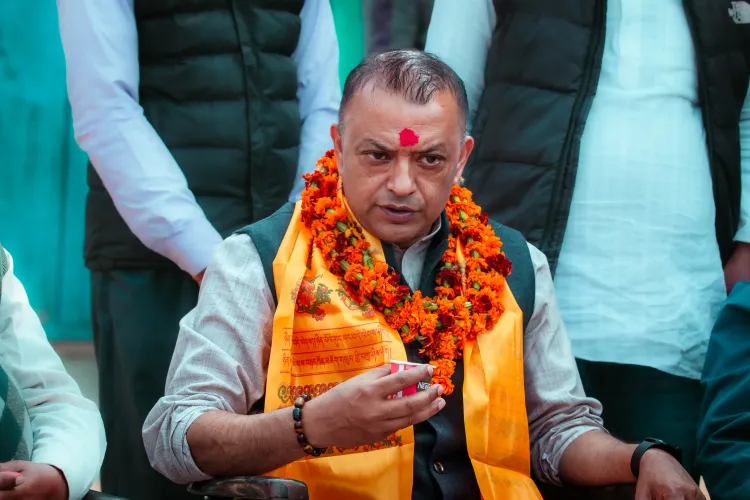
Kathmandu, March 19 (NationPress) Gagan Thapa, who ascended to the presidency of the Nepali Congress during a contentious special general convention in January, has stepped down from his role after the party's disappointing performance in the recent parliamentary elections.
Thapa faced a significant defeat against Amaresh Kumar Singh of the dominant Rastriya Swatantra Party (RSP) in the Sarlahi-4 constituency of Madhesh Province, as his party secured a distant second place, with numerous senior leaders also experiencing losses.
As the Prime Ministerial candidate for his party, Thapa garnered 22,831 votes compared to Singh's 35,688, adding his name to a list of prominent leaders who have encountered similar electoral challenges.
The Nepali Congress managed to win only 38 seats in the House of Representatives—18 through direct elections and 20 via proportional representation—significantly down from the 88 seats it achieved in the 2022 elections. Following this defeat, a faction within the Nepali Congress had been urging Thapa's resignation.
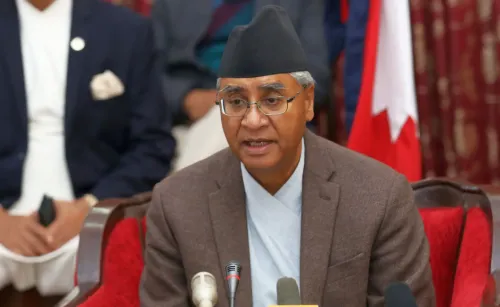
“Thapa has submitted his resignation to Vice-President Bishwo Prakash Sharma on Tuesday,” disclosed a close associate of Thapa to IANS. “The party's unsatisfactory election results prompted his decision to resign.”
The historic party entered the elections under the banner of “We transformed the Nepali Congress, and we will transform the country.” However, it failed to resonate with voters, as the RSP, led by Rabi Lamichhane and Prime Ministerial hopeful Balendra Shah, dominated the elections with nearly two-thirds of the House of Representatives.
According to the party's rules, if the central president chooses to resign, the resignation must be presented to the Central Working Committee through the vice-president. A meeting of the Central Working Committee is set for Friday.
Should the Central Working Committee accept Thapa's resignation, the vice-president will assume the role of acting president and oversee responsibilities, with a special general convention to be organized within six months to elect a new central president.
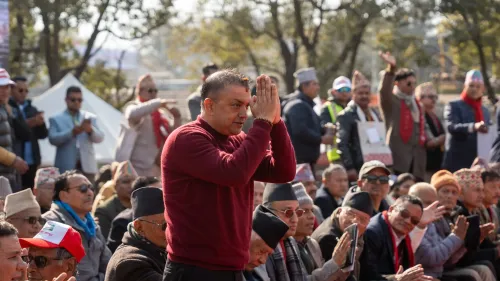
When a special general convention took place in Kathmandu this January, resulting in the election of a new Central Working Committee led by Thapa, it was viewed as a significant shift from the previous generation to a new one. Many had high hopes that Thapa, who enjoyed popularity among Nepali Congress supporters, would lead the party to a successful performance in the elections held on March 5.
However, the dismal results have led to criticism directed at Thapa and his team, especially from those aligned with former Prime Minister and past party president Sher Bahadur Deuba.
At 49, Thapa gained notoriety as a student leader during the 2006 people's movement, where his speeches denouncing the monarchy and advocating for a republic resonated with the youth.
Since his rise on the national scene two decades ago, Thapa has maintained a strong presence in the party and enjoys considerable popularity among the public. Following the Gen-Z movement in September last year, Thapa collaborated with then-general secretary Sharma to initiate a call for a special general convention, emphasizing the need for change ahead of the March elections.
Despite Thapa’s team seizing leadership through the contentious special general convention, the party’s performance in the parliamentary elections held shortly after his election as president was underwhelming.
Point of View
The party must reassess its strategies and leadership to regain public trust and support.
NationPress
20 Sept 2026
Frequently Asked Questions
What led to Gagan Thapa's resignation?
Gagan Thapa resigned due to the Nepali Congress's disappointing performance in the recent parliamentary elections, prompting calls for accountability from within the party.
How many seats did the Nepali Congress secure?
The Nepali Congress secured only 38 seats in the House of Representatives, a significant drop from the 88 seats won in the previous elections.
Who did Gagan Thapa lose to in the elections?
Gagan Thapa faced a defeat against Amaresh Kumar Singh of the Rastriya Swatantra Party in the Sarlahi-4 constituency.
What is the process for electing a new president for the Nepali Congress?
If the resignation is accepted by the Central Working Committee, the vice-president will take over as acting president, and a special general convention will be held within six months to elect a new president.
What was the slogan of the Nepali Congress during the elections?
The Nepali Congress campaigned under the slogan, 'We transformed the Nepali Congress, and we will transform the country.'