Should the Nepali Congress Embrace a Hindu State and Monarchy?
Synopsis
As Nepal approaches its general elections, a Nepali Congress leader has sparked debate by proposing the inclusion of a Vedic Sanatan Hindu state and a constitutional monarchy in the party's manifesto. This call raises questions about national identity and the secular state, reflecting a significant shift in political sentiment ahead of the March 5 elections.
Key Takeaways
Proposal for Vedic Sanatan Hindu state reflects changing political sentiments.
Restoration of constitutional monarchy sought for national identity.
Over 81% of the population identifies as Hindu , influencing political discourse.
Calls for a neutral head of state amid growing demands for traditional governance.
Political parties are under pressure to respond to public sentiment ahead of elections.
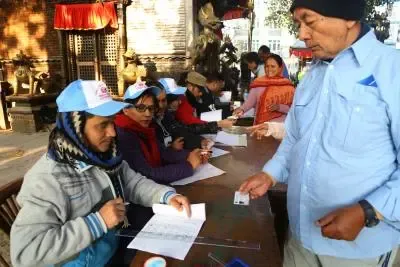
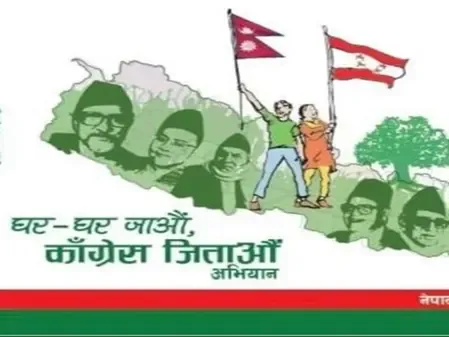
Kathmandu, Feb 3 (NationPress) A member of the Nepali Congress has called on the party leadership to include a pledge for the establishment of a Vedic Sanatan Hindu state and the restoration of a constitutional monarchy in its election manifesto for the upcoming House of Representatives elections on March 5.
As parties, including the Nepali Congress, prepare to release their manifestos for the parliamentary elections, Lokesh Dhakal, a general committee member, has formally requested the newly elected leadership to make a significant political shift.
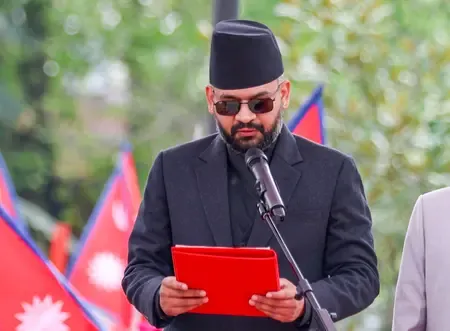
Dhakal, who serves as the joint coordinator of the Grand Campaign for the Establishment of a Sanatan Hindu Nation in Nepal, submitted his proposal to the party’s Central Working Committee, headed by President Gagan Thapa.
Thapa has historically been a strong proponent of the republican system within the party, dating back to his days as a student leader during the royal regime, post the royal coup in February 2005.
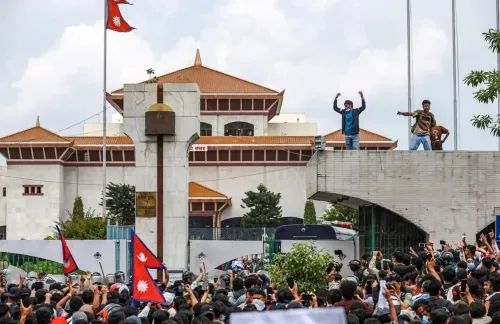
In the aftermath of the successful people’s movement in 2006, the Maoist party became a significant player in politics, leading to the first Constituent Assembly's decision to abolish the monarchy in 2008.
Nepal adopted secularism via the interim Constitution in 2007, a stance that was upheld in the new Constitution enacted by the second Constituent Assembly in 2015.
Nonetheless, a faction within the Nepali Congress, including Dhakal, has long championed the re-establishment of a Vedic Sanatan Hindu state, arguing that it is essential to Nepal’s national identity, given that over 81% of the population identifies as Hindu.
In his proposal, Dhakal asserted that Nepal’s identification as a secular state was imposed against the public's will, undermining the country’s shared cultural identity.
“The declaration of a secular state was made in opposition to the people's sentiment at a conspiratorial level, resulting in increased external encroachment on Nepal's indigenous Sanatan religion and culture, thereby weakening our shared identity and plunging the nation into a complex crisis,” he noted.
He further emphasized the necessity of reinstating a constitutional monarchy, advocating for a neutral head of state.
“Although the Nepali Congress felt pressured to adopt republicanism during the peace process and constitution-making, it is now vital for the party to acknowledge political realities, national needs, and public sentiment by committing to the restoration of the constitutional monarchy in its election manifesto,” he argued.
Dhakal is part of a group that previously initiated a signature campaign urging the party to establish a Hindu state policy during the General Committee meeting in February 2024.
Point of View
I believe that the discussion around the restoration of a Hindu state and monarchy reflects evolving political dynamics in Nepal. It is crucial for the Nepali Congress to gauge public sentiment carefully, as this could redefine national identity and impact future governance. The party must balance tradition with contemporary democratic ideals.
NationPress
23 Sept 2026
Frequently Asked Questions
What is the proposal by Lokesh Dhakal?
Lokesh Dhakal has proposed that the Nepali Congress include a commitment to establish a Vedic Sanatan Hindu state and restore a constitutional monarchy in its election manifesto for the upcoming elections.
Why does Dhakal believe a Hindu state is important?
Dhakal argues that a Vedic Sanatan Hindu state is integral to Nepal's national identity, given that more than 81% of the population identifies as Hindu.
What changes occurred in Nepal's political system post-2006?
Following the people's movement in 2006, the monarchy was abolished in 2008, and Nepal adopted secularism through the interim Constitution in 2007, which was retained in the 2015 Constitution.
What is the significance of restoring a constitutional monarchy?
Dhakal emphasizes the need for a neutral head of state, suggesting that a constitutional monarchy could provide stability and reflect the public sentiment that favors traditional governance.
How are other political parties responding?
As the Nepali Congress and other parties prepare their election manifestos, the response to Dhakal's proposal remains to be seen, as political dynamics evolve leading up to the elections.