Is the Nepali Congress on the Brink of a Split?
Synopsis
Tensions within the Nepali Congress escalate as President Sher Bahadur Deuba's faction expels three key office-bearers, pushing the party closer to division. With elections soon approaching, both factions vie for recognition, raising concerns about the party's future.
Key Takeaways
The Nepali Congress is facing a potential split due to internal conflicts.
Three key office-bearers have been expelled by President Sher Bahadur Deuba's faction.
The Special General Convention is crucial for electing new leadership.
The party has a history of splits, which raises concerns about its future.
Upcoming elections could be affected by this internal strife.
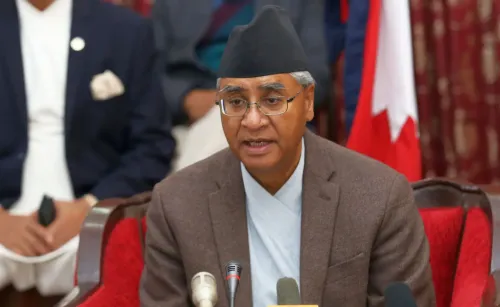
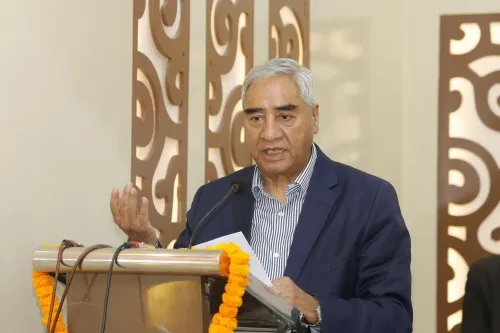
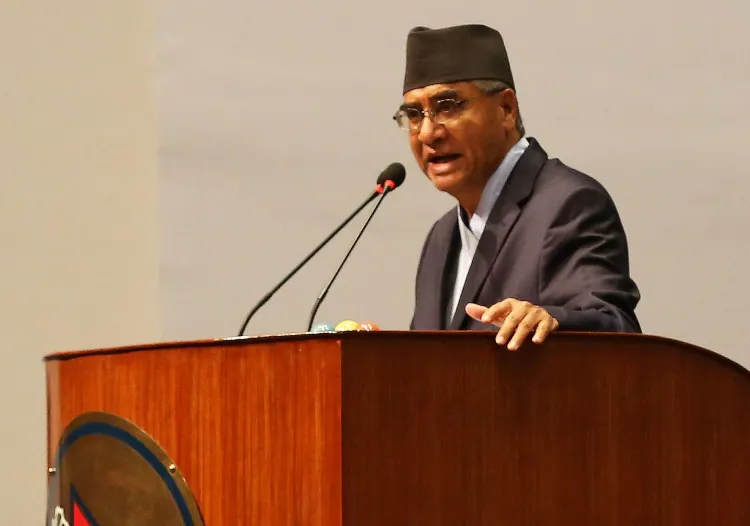
Kathmandu, Jan 14 (NationPress) The Nepali Congress is seemingly on the verge of division, as the party's establishment faction, led by President Sher Bahadur Deuba, made the decision on Wednesday to expel three prominent office-bearers for five years due to their alleged roles in the Special General Convention (SGC).
A meeting convened by the Central Working Committee, heavily influenced by Deuba supporters, concluded with the immediate expulsion of General Secretaries Gagan Thapa, Bishwa Prakash Sharma, and Joint General Secretary Farmullah Mansur for a duration of five years.
“Aside from those facing disciplinary measures, the meeting has earnestly urged other office-bearers and party members, who may have been misled or swayed, to reflect on party discipline, return to the party’s main objectives, and engage actively in regular party activities,” the decision from the Central Working Committee stated.
When asked by reporters about the potential for reversing the disciplinary actions, Central Working Committee Member Min Bahadur Bishwakarma suggested there remains a possibility for the Committee to reconsider the case in the future if the expelled individuals present a convincing explanation or appeal.
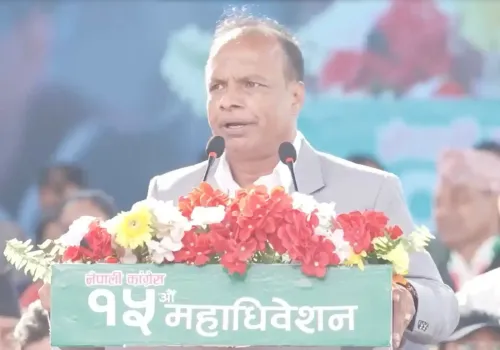
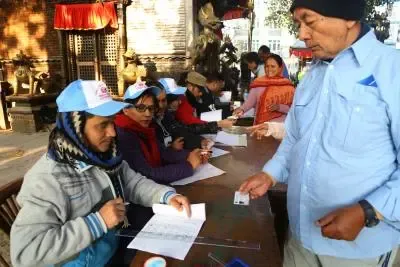
The three expelled members were instrumental in organizing the ongoing SGC, which is set to conduct elections for a new Central Working Committee on Wednesday. Following several unsuccessful rounds of negotiations aimed at resolving the internal conflict, the establishment faction opted to take decisive action against these key office-bearers. Simultaneously, the dissenting faction is pushing forward with plans to elect new leadership through the SGC.
Thapa has put forth a candidate for party president, while other leaders have also announced their candidacies. In response to the expulsion during a closed session of the SGC, Thapa stated that the Central Working Committee had effectively been dissolved and that notification had been sent to the Election Commission.
He further asserted that the SGC would pave the way for new leadership within the party. “With our majority in the SGC, we are confident of obtaining official recognition from the election authority,” he stated.
After multiple discussions involving leaders from both factions were unable to produce a resolution, the dissenting faction has proceeded with elections for a new Central Working Committee, while the establishment faction opted to enforce disciplinary actions against the expelled trio.
These actions have placed the venerable party on the brink of a split, as both factions take steps to secure recognition as the official Nepali Congress from the Election Commission.
This confrontation, occurring just months prior to the scheduled House of Representatives elections on March 5, has raised concerns among party leaders and supporters regarding its potential ramifications on the party's electoral future.
The Nepali Congress has experienced splits in its history. In 2002, the party divided following then Prime Minister Deuba's dissolution of the House of Representatives. Following this incident, he was expelled from the party and subsequently founded the Nepali Congress (Democratic).
The NC and NC (Democratic), which had previously collaborated in opposition to the rule of then King Gyanendra Shah, reunited in September 2007 after the success of the 2006 People’s Movement. Now, Deuba—who is unable to contest the party presidency under current party regulations—has once again found himself at the center of a dispute that threatens another significant split.
Point of View
I observe the Nepali Congress grappling with internal strife that could redefine its political landscape. This situation warrants close attention as it unfolds, given its potential impact on upcoming elections and party dynamics. The necessity for unity cannot be overstated, especially during such a pivotal time for the party and the nation.
NationPress
6 Oct 2026
Frequently Asked Questions
What led to the expulsion of the office-bearers?
The office-bearers were expelled due to their alleged involvement in the Special General Convention (SGC), which the establishment faction deemed against the party's interests.
What is the significance of the Special General Convention?
The SGC is crucial as it is set to elect a new Central Working Committee, which will influence the party's direction and leadership ahead of the upcoming elections.
How has the party responded to the internal conflict?
The establishment faction has opted for disciplinary measures against dissenting leaders, while the opposing faction continues to organize for leadership elections.
What historical context is relevant to this situation?
The Nepali Congress has faced splits in the past, notably in 2002 when Deuba dissolved the House of Representatives, leading to the formation of the Nepali Congress (Democratic).
What are the potential consequences of a split?
A split could significantly affect the party's electoral prospects and its ability to present a united front in the upcoming House of Representatives elections.