Is the Nepali Congress Facing Internal Divisions Ahead of the March Parliamentary Elections?
Synopsis
The Nepali Congress faces critical internal divisions ahead of the March 5 elections. As rival factions clash, political analysts warn of potential disaster unless resolutions are reached. With the Gen-Z movement fueling demands for change, the NC's future hangs in the balance. Will they unite or risk irreparable damage?
Key Takeaways
Nepali Congress is grappling with internal divisions.
Failure to resolve disputes could lead to electoral disaster.
Calls for a Special General Convention are increasing.
Leadership dynamics within the party are shifting.
Rival parties are consolidating their positions.
Kathmandu, Jan 8 (NationPress) As political parties gear up for the March 5 parliamentary elections, the Nepali Congress (NC) finds itself grappling with significant internal divisions.
Experts caution that if the party's internal conflicts remain unresolved, it could be detrimental to its prospects in the forthcoming House of Representatives elections.
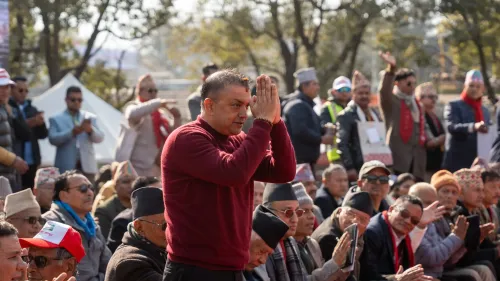
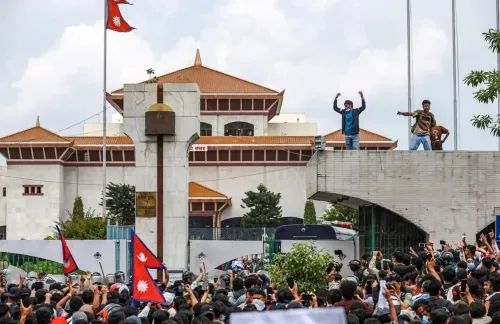
In mid-October of last year, a substantial number of representatives at the party’s general convention submitted a petition urging the organization of a Special General Convention in light of the Gen-Z movement that led to the collapse of the coalition government headed by former Prime Minister K P Sharma Oli in collaboration with the NC.
The party's constitution stipulates that a Special Central General Convention must be convened within three months of such a petition if deemed necessary by the Central Working Committee, or if forty percent of the members submit a written request citing special reasons.
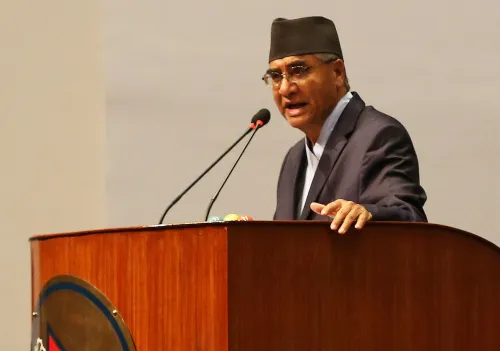
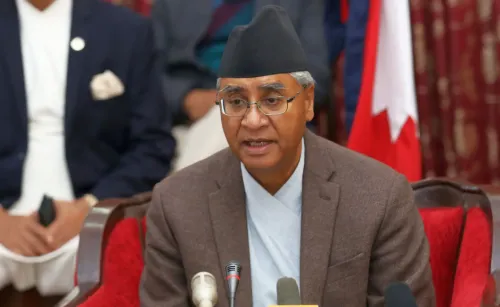
However, the establishment faction led by former President Sher Bahadur Deuba has declined to consider the petition. The Central Working Committee, where Deuba commands a majority, resolved in early January to hold the 15th General Convention from May 11 to 14 in Kathmandu.
This decision led the party's two general secretaries, Gagan Thapa and Bishwa Prakash Sharma, representing the dissenting faction, to announce a Special General Convention set for January 11–12 in Kathmandu.
Proponents of the proposed convention asserted that their goal is not to fracture the party. In response, party Chief Secretary Krishna Prasad Poudel, on behalf of President Deuba, released a statement on Wednesday evening urging elected representatives to avoid participating in the planned Special General Convention.
According to the party's regulations, the authority to convene a convention at any level, including special ones, is strictly held by the Central Working Committee. Consequently, any actions taken independently by office-bearers or members would contravene the party's charter.
With the party divided over the Special General Convention, many Congress leaders express concerns that the discord could lead to a split. However, Thapa and Sharma view the convention as a potential avenue for leadership transformation, with Thapa particularly aiming for the presidency.
While Deuba is ineligible to contest for a third term as party President according to the statutes, he is eager to maintain the influence of his loyalists within the party. The demand for a Special General Convention intensified following the Gen-Z movement, as public discontent with the leadership of prominent political parties—including the NC, the Communist Party of Nepal (Unified Marxist-Leninist), and the former CPN (Maoist Centre)—became increasingly vocal over their perceived failures in delivering prosperity.
While the NC struggles with its internal divisions, its longtime rival, the CPN (UML), has solidified its position under former Prime Minister Oli, who was re-elected as party president during its recent general convention. The former CPN (Maoist Centre) has transitioned into the Nepali Communist Party through the merger of over a dozen leftist parties.
Meanwhile, the Rastriya Swatantra Party, which was the fourth-largest party in the dissolved House of Representatives, is strengthening its position by attracting notable national figures and is anticipated to challenge established parties in the upcoming elections.
“If the NC proceeds to the elections without resolving its internal disputes, it could spell disaster for the party,” stated political analyst Lok Raj Baral. “For example, if one faction fields a rebel candidate against the official nominee, it could result in split votes and ultimately lead to a loss for the party.”
Baral suggests that the most prudent course of action for the NC would be to convene a Special General Convention, given that a majority of elected representatives from the general convention have called for it in accordance with the party's statute.
Point of View
It is imperative to observe that the Nepali Congress stands at a crossroads. The internal rifts could significantly impact its performance in the upcoming elections. A unified approach is essential not only for the party's survival but also for the democratic framework of Nepal. Addressing these internal disputes constructively is crucial.
NationPress
28 Sept 2026
Frequently Asked Questions
What is causing the divide within the Nepali Congress?
The divide stems from differing opinions on leadership and the call for a Special General Convention, which some factions believe is necessary to address internal issues.
Who are the key figures in the current conflict?
Key figures include Sher Bahadur Deuba, Gagan Thapa, and Bishwa Prakash Sharma, representing different factions within the party.
What are the potential consequences of this division?
If unresolved, the divide could lead to split votes in the parliamentary elections, jeopardizing the party's chances of success.
What is the timeline for the upcoming elections?
The parliamentary elections are scheduled for March 5, with significant party events leading up to this date.
How is the Nepali Congress responding to these challenges?
The party leadership is attempting to maintain control while dissenting factions are pushing for changes, leading to ongoing tensions.