Jharkhand Assembly session to debate mining law, SIR
Synopsis
Jharkhand’s two-day Assembly session will put mining revenue and voter verification at the centre of a political contest. Hemant Soren’s government plans resolutions opposing the Centre’s mining law amendments and electoral roll revision, while the BJP says it will challenge the government’s case.
Key Takeaways
The Jharkhand Assembly special session is scheduled for 25 and 26 November , beginning at 11 am .
Chief Minister Hemant Soren ’s government plans resolutions opposing central mining law amendments and the Special Intensive Revision of electoral rolls.
The government fears the mining amendments could affect its authority to levy cesses and fund development in mining-affected areas.
The government says voter documentation and verification could exclude eligible people; the BJP defends the revision as a constitutional exercise.
The BJP says it may also raise law and order and alleged competitive examination irregularities.
The current term of the Soren government completes two years on 28 November .
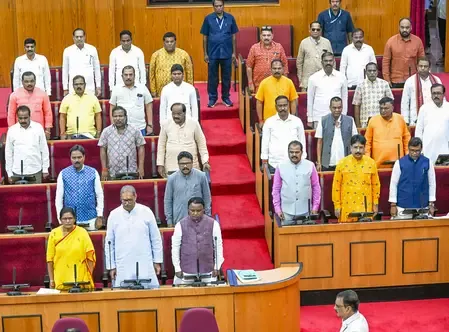
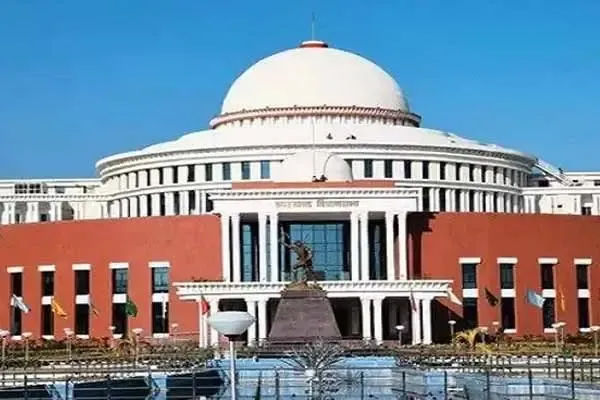
The Jharkhand Assembly special session will begin in Ranchi on 25 November, with the government led by Chief Minister Hemant Soren planning resolutions against central mining law amendments and the Special Intensive Revision (SIR) of electoral rolls. The two-day sitting is expected to bring the ruling alliance and the opposition into a direct contest over state revenue and voter verification.
Proceedings are scheduled to start at 11 am on 25 and 26 November. The government intends to debate both issues, pass resolutions opposing the Centre’s decisions and forward them to the Union government.
Mining law and state revenue
The planned debate on amendments to the Mines and Minerals (Development and Regulation) Act, or MMDR Act, centres on the state government’s concern about its authority to levy cesses on mineral-rich land.
Jharkhand is among India’s leading mineral-producing states, and coal, iron ore and other minerals contribute substantially to its revenues. The government fears that the amended law could affect revenue generation and the resources available for development projects in mining-affected areas.
The Bharatiya Janata Party (BJP) says the law applies across the country and alleges that the state government wants additional cesses and taxes that could raise coal prices and affect marketability. The party also claims coal sales have risen in other states while declining in Jharkhand, and accuses the government of politicising the issue rather than acting against illegal coal trade.
Electoral roll revision dispute
The second proposed resolution concerns the Special Intensive Revision of electoral rolls. The state government has raised concerns that documentation and verification requirements could lead to eligible voters being excluded.
It wants legislators to discuss the exercise’s possible implications and the concerns surrounding it. The question has a direct bearing on voters whose eligibility and documentation may be examined during a revision.
The BJP describes the revision as a constitutional exercise conducted by the Election Commission and says booth-level officers carry out door-to-door voter verification. The party says state officials also participated and argues that the government’s opposition is difficult to justify.
Ruling alliance and opposition prepare
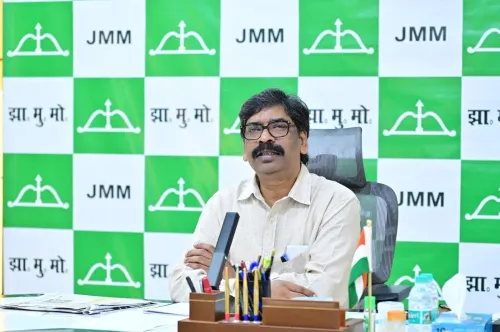
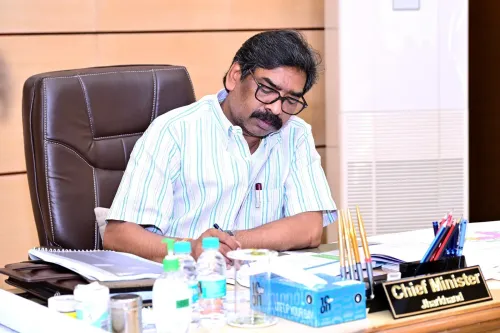
On Monday, Soren reviewed preparations online with ministers and ruling coalition legislators from his residence. He directed them to arrive prepared with facts and arguments on both subjects.
The governing alliance of the Jharkhand Mukti Morcha (JMM), the Indian National Congress (Congress) and the Rashtriya Janata Dal (RJD) plans to present the disputes as questions of state rights and public interest.
The BJP has also settled its strategy after meetings attended by state BJP chief Aditya Sahu and Leader of Opposition Babulal Marandi. It has accused the government of using the session to mislead the public and says it will defend its position on both issues.
Session schedule and wider agenda
The special sitting extends the Monsoon Session, which was adjourned indefinitely on 11 August. The decision to convene it was taken at a cabinet meeting chaired by Soren on 27 October.
The opposition says it will not confine itself to the listed agenda. Law and order, alleged irregularities in competitive examinations and other local matters could also come up during the proceedings.
The sitting comes ahead of 28 November, when the current term of the Soren government completes two years. Attention will turn to the Assembly debate and whether the proposed resolutions are passed and forwarded to the Centre.
Point of View
And how voter verification protects eligible citizens. Both sides should substantiate their claims with the relevant legal provisions, revenue estimates and evidence about exclusion risks. Resolutions may sharpen the political divide, but residents of mining areas and voters need clarity on the practical consequences.
NationPress
24 Nov 2026
Frequently Asked Questions
When is the Jharkhand Assembly special session?
The two-day special session is scheduled for 25 and 26 November, with proceedings beginning at 11 am. It is an extension of the Monsoon Session adjourned indefinitely on 11 August.
What will the Jharkhand Assembly discuss?
The government plans to discuss central mining law amendments and the Special Intensive Revision of electoral rolls. It intends to move resolutions opposing both and forward them to the Union government.
Why is Jharkhand concerned about the mining amendments?
The government fears the amendments could affect its authority to levy cesses on mineral-rich land. It says this could affect revenue and resources for development in mining-affected areas.
Why is the electoral roll revision contentious in Jharkhand?
The state government fears documentation and verification could exclude eligible voters. The BJP defends the revision as a constitutional Election Commission exercise involving door-to-door verification.
What other issues could the BJP raise in the session?
The BJP says it will not limit itself to the government’s listed agenda. Law and order, alleged competitive examination irregularities and other local matters may also be raised.