Jharkhand Minister pushes for special Assembly session against MMDR Amendment Bill 2026
Synopsis
Jharkhand's Transport Minister Deepak Birua has escalated the fight against Parliament's MMDR Amendment Bill 2026, calling for a special Assembly session, a Supreme Court challenge under Article 131, and village-level tribal mobilisation — a three-pronged offensive that could set a constitutional precedent for mineral-rich states across India.
Key Takeaways
Deepak Birua , Jharkhand's Transport, Revenue and Land Reforms Minister , called for a special Assembly session on 14 August to oppose the MMDR Amendment Bill, 2026 .
He urged Chief Minister Hemant Soren to convene the session and pass a resolution challenging the amendment.
Birua cited a 2024 nine-judge Supreme Court Constitution Bench ruling affirming states' rights to levy taxes on minerals.
He proposed approaching the Supreme Court under Article 131 to challenge the law's constitutional validity.
The minister demanded a statutory compensation package for states modelled on the GST compensation mechanism if mineral taxation powers are curtailed.
Birua called for grassroots campaigns involving tribals and indigenous communities to build public pressure.
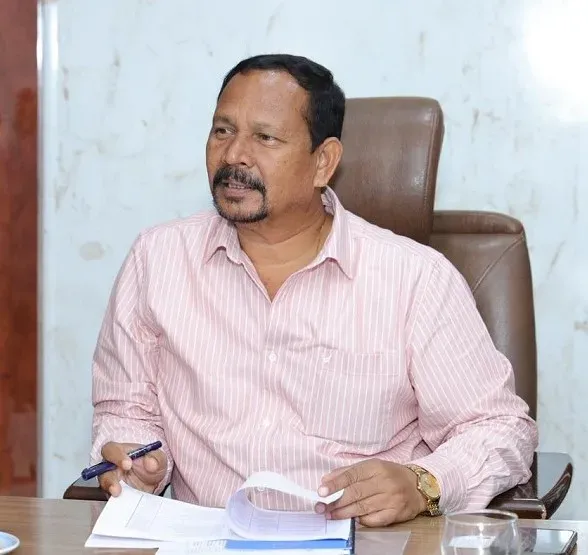
Deepak Birua, Jharkhand's Transport, Revenue and Land Reforms Minister, on Friday, 14 August called for an immediate special session of the state Assembly to formally oppose the Mines and Minerals (Development and Regulation) Amendment Bill, 2026, passed by Parliament. Birua framed the issue not merely as a taxation dispute but as a direct challenge to states' constitutional fiscal autonomy.
What Birua Demanded
In a post on social media, Birua urged Chief Minister Hemant Soren to initiate the process of convening a special Assembly session to pass a resolution opposing the amendment. He also challenged the Opposition to back such a resolution, arguing the move would force all political parties to publicly declare their stance on protecting the state's rights. Birua stressed that Jharkhand should not adopt a defensive posture but instead mount a coordinated constitutional, legal, and political challenge against the Centre.
The Constitutional Basis
Birua cited a landmark 2024 ruling by a nine-judge Constitution Bench of the Supreme Court, which recognised the authority of states to levy taxes and cess on minerals and mineral-bearing lands. Building on that precedent, he suggested the Jharkhand government consider approaching the Supreme Court directly under Article 131 of the Constitution to challenge the validity of the new law. He argued that if the Union government curtails states' taxation powers, Jharkhand should demand a statutory annual compensation package — modelled on the GST compensation mechanism — through parliamentary and fiscal forums.
The Fiscal and Social Stakes
The minister argued that Jharkhand bears the brunt of mining operations — including land acquisition, displacement, and environmental degradation — and must therefore retain its rightful claim over revenues generated from its mineral wealth. He questioned why decisions affecting revenues from Jharkhand's minerals and land should be made in New Delhi when the social and environmental costs are borne by the people of the state. This comes amid a broader federal tension over resource-sharing between mineral-rich states and the Centre, a fault line that has surfaced repeatedly in states like Odisha and Chhattisgarh as well.
Grassroots Mobilisation Push
Calling for wider public engagement, Birua advocated village-level awareness campaigns to involve tribals, indigenous communities, and local residents in the effort to protect the state's rights over its mineral resources and revenues. The appeal to tribal communities is particularly significant in Jharkhand, where a substantial share of the population belongs to Scheduled Tribes and where mineral extraction has historically displaced indigenous people. Notably, this is the first formal call within the ruling coalition for a special Assembly session specifically targeting the MMDR amendment.
What Happens Next
Whether Chief Minister Soren acts on the call for a special session will determine how far Jharkhand is willing to escalate the confrontation with the Centre. A resolution passed by the Assembly would carry symbolic and legal weight, potentially anchoring any future Supreme Court challenge under Article 131. Industry bodies and legal observers are watching closely, as the outcome could set a precedent for other mineral-rich states seeking to protect their fiscal ground.
Point of View
A Supreme Court Article 131 petition, and tribal mobilisation are not three separate ideas but a coordinated escalation ladder. What mainstream coverage misses is the GST compensation parallel: if that framing gains traction in Parliament, it could force a fiscal negotiation the Centre would rather avoid. The deeper tension is structural — mineral-rich states like Jharkhand generate extraction revenues but absorb displacement and environmental costs, while the Centre retains growing control over the royalty framework. The 2024 nine-judge bench ruling gave these states a constitutional foothold; the MMDR amendment is, in effect, a legislative attempt to narrow it. Whether Soren acts on the special session call will signal how seriously the ruling alliance treats federal fiscal rights versus political optics ahead of the next electoral cycle.
NationPress
29 Sept 2026
Frequently Asked Questions
What is the MMDR Amendment Bill 2026 and why is Jharkhand opposing it?
The Mines and Minerals (Development and Regulation) Amendment Bill, 2026 was passed by Parliament and is seen by Jharkhand as curtailing states' rights to levy taxes and cess on minerals. Minister Deepak Birua argues it undermines the fiscal autonomy of mineral-rich states and contradicts a 2024 Supreme Court ruling affirming those rights.
What did the 2024 Supreme Court ruling say about states' mineral taxation rights?
A nine-judge Constitution Bench of the Supreme Court in 2024 recognised the authority of states to levy taxes and cess on minerals and mineral-bearing lands. Birua has cited this ruling as the constitutional basis for Jharkhand's challenge to the MMDR amendment.
What is Deepak Birua asking Chief Minister Hemant Soren to do?
Birua has urged Soren to convene a special session of the Jharkhand Assembly to pass a resolution opposing the MMDR Amendment Bill 2026. He also wants the government to consider filing a direct challenge in the Supreme Court under Article 131 of the Constitution.
How does the GST compensation model relate to Birua's demand?
Birua has suggested that if the Centre curtails states' mineral taxation powers, Jharkhand should demand a statutory annual compensation package similar to the GST compensation mechanism, to be negotiated through parliamentary and fiscal forums.
Why are tribal communities central to this issue?
A significant portion of Jharkhand's population belongs to Scheduled Tribes, and mineral extraction in the state has historically led to displacement of indigenous communities. Birua has called for village-level awareness campaigns to involve tribals and local residents in the push to protect the state's mineral revenue rights.