UNGA 2026: Leaders warn AI may deepen inequality, urge youth jobs push
Synopsis
At UNGA 2026, leaders from across the world agreed on a paradox: the AI revolution could either be the best tool for global youth prosperity or the sharpest new driver of inequality — and right now, it is heading toward the latter unless developing nations get equitable access to technology, infrastructure, and skills. South Korea's call for a Global AI Hub and Jamaica's blunt warning against a 'new global divide' cut to the heart of an unresolved multilateral debate.
Key Takeaways
Leaders at the UN General Assembly on 28 September 2026 warned that AI risks widening global inequality and increasing youth anxiety about employment.
Zambian FM Mulambo Hamakuni Haimbe said one in four young people worldwide will be African by 2050 , making youth investment a global, not regional, priority.
South Korea's President Lee Jae Myung announced a Global AI Hub platform to broaden international access to technological advances.
Mexico's FM Roberto Velasco Álvarez reported a 154% minimum wage increase since 2018 , citing it as proof that better-paid workers strengthen economies.
Jamaica and Singapore called for stronger digital infrastructure and skills investment in developing nations to prevent a new AI-driven global divide.
India and China both framed AI as an opportunity contingent on responsible governance and equitable access.
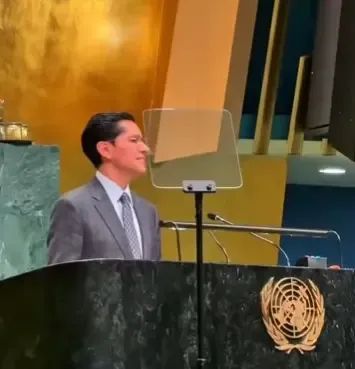
World leaders at the UN General Assembly (UNGA) on 28 September 2026 called on nations to invest urgently in education, skills, and productive employment for their young populations, warning that the artificial intelligence revolution risks widening inequality and stoking uncertainty about the future of work. The speeches, delivered across multiple sessions, underscored a growing consensus that a youth dividend is not automatic — it must be deliberately built.
Africa's Youth as a Global Asset
Zambian Foreign Minister Mulambo Hamakuni Haimbe made the most direct case for viewing demographic trends as an international opportunity. 'Africa's youthful population is one of our greatest assets and represents an enormous opportunity for global prosperity,' he said. Haimbe noted that by 2050, one in every four young people on the planet would be African, placing enormous weight on governments to deliver quality education, relevant skills, access to technology, entrepreneurship pathways, and decent employment.
Employment, Resilience, and Political Stability
Several delegations drew a direct line between job creation and national stability. Indonesian Foreign Minister Sugiono argued that economic resilience began at the household level — with farmers growing food, workers finding decent jobs, and children able to build futures. 'We are building an economy that can withstand shocks and create opportunities,' he said.
Mexico presented higher wages and youth investment as twin pillars of both development and security. Foreign Minister Roberto Velasco Álvarez said the country had combined education and employment programmes with stronger institutions, intelligence, and research. He noted that Mexico's minimum wage had risen by 154 per cent since 2018, and that purchasing power was now at its highest level in more than 40 years. 'Peace cannot be decreed or imposed; it is built with social justice,' he said. 'Paying workers better does not make economies poorer. It actually strengthens them.'
AI: Opportunity and Risk on the Same Frontier
South Korea offered one of the starkest warnings on artificial intelligence. President Lee Jae Myung said the AI revolution risked deepening inequality and increasing anxiety among young people about their economic futures. Seoul announced plans to create a Global AI Hub platform intended to make technological advances accessible to the broader international community.
Singapore's Foreign Minister Vivian Balakrishnan called artificial intelligence 'the most urgent frontier' and urged countries to invest in science, infrastructure, and skills. 'Human beings must remain in control and accountable,' he said.
Jamaica's Foreign Minister Kamina Johnson Smith warned that technological advances must not reproduce existing economic divisions. 'We must therefore not allow AI to deepen old inequalities and create an entirely new global divide,' she said, calling for greater investment in digital infrastructure, skills, and capacity in developing countries.
India presented AI as an opportunity for development while cautioning against its misuse. China called for AI to be developed 'for the positive and for good' and used to narrow the digital divide rather than widen it.
What the Speeches Signal for Developing Economies
Taken together, the addresses reflected a shared anxiety: access to education alone will not secure a youth dividend. Young people also require economies capable of generating productive work, and technology frameworks that do not leave developing nations dependent on systems designed and controlled elsewhere. This is the central tension in the AI debate at the multilateral level — and it remained unresolved after the session.
For India, with one of the world's largest working-age populations, the stakes are particularly high. Whether domestic education and training systems can keep pace with technological change — and whether economic growth produces enough quality employment for new workforce entrants — will shape the country's development trajectory for decades. The UNGA debate has placed those questions firmly in the international spotlight.
Point of View
But the consistency itself is the problem: every nation agrees AI must not deepen inequality, yet no binding framework to prevent it was tabled. South Korea's Global AI Hub is a gesture, not a governance mechanism. Meanwhile, the countries most exposed to an AI-driven displacement shock — those with large, young, low-skill workforces — have the least leverage to shape the rules being written in Silicon Valley and Shenzhen. India's demographic window is real, but so is the risk that it becomes a demographic liability if skilling systems lag technological change by even half a decade. The UNGA session has named the problem clearly; what it conspicuously lacks is a plan.
NationPress
28 Sept 2026
Frequently Asked Questions
What did world leaders say about AI at UNGA 2026?
Leaders at the UN General Assembly on 28 September 2026 warned that artificial intelligence risks deepening global inequality and increasing anxiety among young people about employment. Nations including South Korea, Jamaica, Singapore, India, and China called for equitable access to AI technology and stronger investment in digital infrastructure and skills in developing countries.
What is South Korea's Global AI Hub announced at UNGA?
South Korean President Lee Jae Myung announced plans to create a Global AI Hub platform designed to make technological advances accessible to the wider international community. The initiative is Seoul's response to concerns that AI benefits are being concentrated in a small number of wealthy nations.
Why is Africa's youth population central to the UNGA debate on jobs?
Zambian Foreign Minister Mulambo Hamakuni Haimbe told the General Assembly that by 2050, one in four young people in the world will be African, making the continent's youth a globally significant workforce. He argued that governments must urgently provide quality education, relevant skills, technology access, and decent employment to convert this demographic into a prosperity dividend.
What did Mexico say about wages and youth employment at UNGA 2026?
Mexican Foreign Minister Roberto Velasco Álvarez said Mexico had raised its minimum wage by 154 per cent since 2018, bringing citizen purchasing power to its highest level in more than 40 years. He argued that paying workers better strengthens economies rather than weakening them, and that combining education and employment programmes with stronger institutions is essential for peace and development.
How does the UNGA AI debate affect India?
India, with one of the world's largest working-age populations, has a major stake in whether AI governance frameworks are equitable and whether education and training systems can keep pace with technological change. At UNGA, India presented AI as a development opportunity while cautioning against misuse, reflecting the dual challenge of harnessing technology while protecting its large, young workforce from displacement.