Andrew Ng at NDTV World Summit: AI won't cause mass job losses, reskilling is key
Synopsis
At the NDTV World Summit, AI pioneer Andrew Ng took direct aim at the 'AI job apocalypse' narrative — calling it largely corporate hype — and argued that the technology is currently creating more jobs than it destroys. His prescription: stop training workers for 2024's jobs and start preparing them for 2028's.
Key Takeaways
Andrew Ng told the NDTV World Summit on 22 October 2026 that AI is unlikely to trigger mass job losses.
He said current AI systems make workers more productive, prompting businesses to expand and hire more.
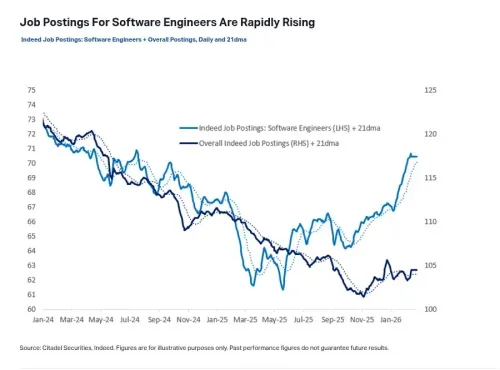
Ng cited US software engineering as evidence: more AI adoption has led to more job postings , not fewer.
He called on education systems to prepare workers for the jobs of 2028 and beyond , not roles that exist today.
MIT economist Daron Acemoglu offered a contrasting view, warning that AI risks amplifying inequality unless industry shifts to 'pro-worker' tools.
AI pioneer Andrew Ng said on 22 October 2026 that artificial intelligence is unlikely to trigger widespread job losses and will instead generate new opportunities — provided workers and institutions commit to reskilling. Speaking at the NDTV World Summit in New Delhi, Ng urged students and professionals alike to focus on acquiring future-ready skills rather than fearing replacement by machines.
What Andrew Ng Said
Ng argued that current AI systems are not yet capable of eliminating the vast majority of jobs. He said the technology more often makes workers more productive, enabling businesses to expand and, in turn, hire more people. 'There will be hope and it's not nearly as bad as the hype says it will,' he said.
He also pushed back against what he described as corporate scaremongering. Many businesses, he suggested, have amplified narratives of an 'AI job apocalypse' to make themselves appear more consequential or to attract media attention. He pointed to recent data suggesting AI is currently creating more jobs than it is eliminating.
Software Engineering as a Case Study
Ng cited the software engineering sector as a concrete illustration of how AI reshapes rather than cuts employment. 'Certainly, in the United States, the number of software engineer job postings is up because when we make software engineers much more productive, we want to hire a lot more of them,' he noted. He predicted a similar pattern would emerge across other sectors as AI tools become more widely adopted.
The Education Challenge
A central theme of Ng's remarks was the need for education systems to anticipate how work will evolve, rather than preparing students exclusively for roles that exist today. 'We're readying them not for the jobs of 2026 or even, heaven forbid, the jobs of 2024, but for the jobs of 2028 and beyond. So that's the challenge ahead of us,' he said. He called for training programmes to be designed with future labour market demands in mind.
A Contrasting View from MIT
Not all experts share Ng's optimism. A recent paper by Daron Acemoglu, economist and Institute Professor at MIT, cautioned that the current trajectory of AI development risks amplifying both inequality and job losses unless the industry pivots toward tools that complement rather than displace workers. Acemoglu argued that the policy conversation should shift away from speculative debates about Artificial General Intelligence (AGI) and toward practical frameworks promoting what he termed 'pro-worker' AI systems. The divergence between the two positions reflects a broader, unresolved debate in the global AI community about who ultimately benefits from the technology's advance.
Point of View
Well-paid cohort that is better placed than most to adapt. The harder question is what happens to the hundreds of millions of workers in lower-skill, routine-task roles across India and the Global South, where reskilling infrastructure is thin and social safety nets thinner still. Acemoglu's warning about 'pro-worker AI' design is the sharper policy challenge: without deliberate intervention, productivity gains tend to accrue to capital, not labour. Ng is right that the apocalypse is overhyped — but dismissing the risk entirely risks leaving the most vulnerable workers without the policy attention they need.
NationPress
22 Oct 2026
Frequently Asked Questions
What did Andrew Ng say about AI and jobs at the NDTV World Summit?
Andrew Ng said that AI is unlikely to cause mass job losses and is currently creating more jobs than it destroys, provided workers reskill. He argued that AI typically makes workers more productive, encouraging businesses to expand and hire more staff.
Why does Andrew Ng think the AI job apocalypse narrative is overstated?
Ng suggested that many businesses have hyped AI-driven job losses for PR purposes or to appear more significant than they are. He pointed to recent data indicating net job creation from AI and used US software engineering as a sector where productivity gains have increased, not reduced, hiring.
What does Andrew Ng say education systems should do differently?
Ng called for education and training programmes to anticipate how work will evolve rather than focusing only on skills currently in demand. He said the goal should be preparing workers for the jobs of 2028 and beyond, not roles that exist today.
What is MIT economist Daron Acemoglu's view on AI and employment?
Acemoglu's recent paper warned that the current direction of AI development risks amplifying inequality and job losses unless the industry shifts focus to tools that complement workers. He called for practical 'pro-worker' AI policies over speculation about Artificial General Intelligence.
How does AI affect software engineering jobs, according to Andrew Ng?
Ng cited US data showing that software engineer job postings have risen as AI tools have made engineers more productive. He argued this is a template for other sectors — greater productivity drives demand for more workers, not fewer.