Vaishnaw Highlights Rishikesh-Karnaprayag Rail's 83% Tunnel Feat
Synopsis
Union Minister Ashwini Vaishnaw has spotlighted the Rishikesh-Karnaprayag rail line — 125 km, 12 stations, 83% tunnels — as a transformational connectivity project for Uttarakhand, framing it as the state's 'lifeline to the future.'
Key Takeaways
The Rishikesh-Karnaprayag rail line spans 125 km across Uttarakhand with 12 stations .
83 per cent of the route runs through tunnels, reflecting the extreme challenge of Himalayan terrain.
The project would provide the first-ever rail access to several Garhwal valley towns currently dependent on a single mountain road.
Union Minister Ashwini Vaishnaw described the line as 'Uttarakhand's lifeline to the future' in a post on 22 October 2026 .
The project received in-principle approval and survey clearance in the late 2000s as part of broader Uttarakhand connectivity plans.
The corridor is part of Indian Railways ' wider push to extend rail into Himalayan states for pilgrimage, tourism, and strategic access.
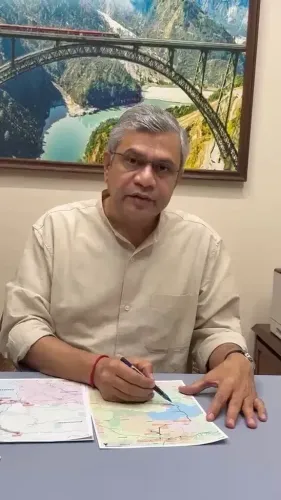
Boring through the Himalayas — 125 kilometres, 12 stations, and 83 per cent of the entire route running underground. Union Minister Ashwini Vaishnaw took to X on Thursday, 22 October 2026 to spotlight the sheer engineering audacity of the Rishikesh-Karnaprayag rail line, calling it 'Uttarakhand's lifeline to the future.'
Why 83% tunnels is an engineering statement, not a footnote
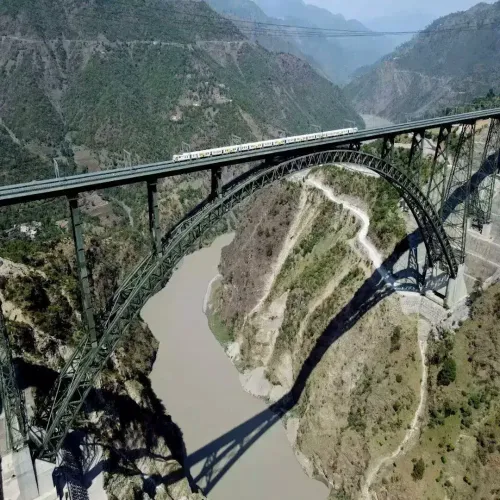
Most railway projects celebrate bridges. This one is defined by what lies beneath mountains. The Rishikesh-Karnaprayag corridor pierces through some of the most geologically unstable terrain in northern India — a stretch of Uttarakhand where the Himalayan ranges leave virtually no room for conventional surface track. Engineering a line here means going through rock, not around it, which is why the tunnel share sits at an extraordinary 83 per cent of total length — among the highest for any rail project in the country.
Tunnel boring in Himalayan geology is not routine construction. Variable rock types, seismic sensitivity, and unpredictable aquifers make each breakthrough a milestone in itself. The scale of the challenge is one reason this project, which first received in-principle approval and survey clearance in the late 2000s, has been years in the making.
From pilgrimage pinch-point to rail corridor
Rishikesh today is connected to the national rail network, but the journey beyond it — toward Devprayag, Srinagar Garhwal, and finally Karnaprayag — is entirely road-dependent. That road is the same artery used by millions of pilgrims heading to the Char Dham circuit each year, residents of remote hill towns, and the armed forces. Landslides routinely cut it for days. A rail link through the same corridor would break that single-point vulnerability for good.
The 12 stations planned along the route are not just stops — they represent the first rail access ever for several Garhwal valley towns, communities that have organised their lives around the unreliability of mountain roads. For them, the project is less about travel time and more about economic integration with the rest of India.
India's broader Himalayan rail push
Indian Railways has been systematically extending its footprint into Himalayan states — a policy logic that combines connectivity, tourism, strategic access, and regional development. The Rishikesh-Karnaprayag line fits neatly into that arc, alongside projects in Jammu & Kashmir, Himachal Pradesh, and Arunachal Pradesh. Each carries a high tunnel percentage for the same reason: the mountain does not negotiate.
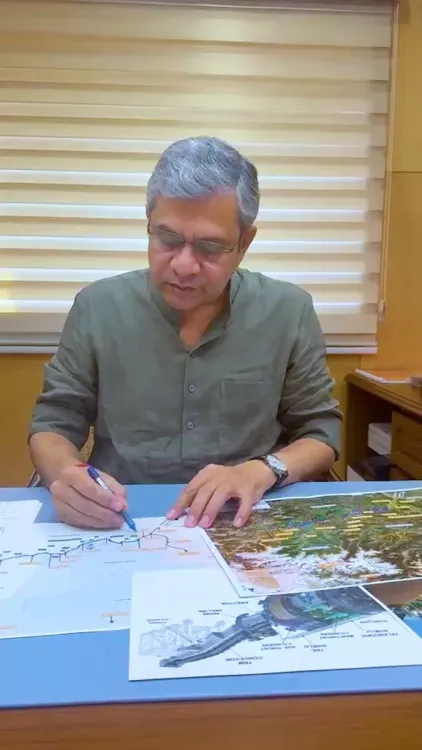
Vaishnaw's post, accompanied by a video, frames the project in explicitly emotional terms — 'not just a track' but a 'lifeline.' That language signals how New Delhi wants the infrastructure narrative read in Uttarakhand: not as bureaucratic capital expenditure, but as a generational commitment to a state whose geography has always made development harder than elsewhere.
Tunnel boring milestones, station construction timelines, and any convergence with the broader Char Dham road-rail integration plans will be the markers to track as this corridor moves toward completion.
Point of View
Not just a transport one, particularly potent in a state like Uttarakhand where road vulnerability has real human costs. The 83 per cent tunnel figure, if borne out, would also mark a structural leap in India's tunneling capacity — a quiet capability story the ministry appears keen to publicise. Watch for how this project is woven into the broader Char Dham connectivity narrative as completion draws closer.
NationPress
22 Oct 2026
Frequently Asked Questions
What is the Rishikesh-Karnaprayag rail line?
The Rishikesh-Karnaprayag rail line is a 125 km railway project in Uttarakhand that will connect Rishikesh to Karnaprayag through 12 stations , with approximately 83 per cent of the route running through tunnels to navigate Himalayan terrain.
Why does the Rishikesh-Karnaprayag line have so many tunnels?
The extreme mountain geography of the Garhwal Himalayas leaves little room for surface track, forcing engineers to route the majority of the line underground — making it one of the highest tunnel-share rail projects in India.
Which stations will the Rishikesh-Karnaprayag rail corridor cover?
The project includes 12 stations along the 125 km corridor between Rishikesh and Karnaprayag in Uttarakhand , though the full station list has not been detailed in Minister Vaishnaw's post.
When was the Rishikesh-Karnaprayag rail project approved?
The project received in-principle approval and survey clearance in the late 2000s as part of broader Uttarakhand connectivity plans, though construction and tunneling work has continued over subsequent years.
How does the Rishikesh-Karnaprayag line connect to Char Dham?
The corridor passes through the Garhwal valley region, providing rail access to towns along the route to the Char Dham pilgrimage circuit and potentially reducing pressure on the single mountain road that currently serves millions of pilgrims annually.