CM Dhami Meets Railway Board Chief on Uttarakhand Rail Push
Synopsis
Uttarakhand CM Pushkar Singh Dhami met Railway Board Chairman Satish Kumar on 19 June 2026 to advance the Rishikesh-Karnprayag and Tanakpur-Bageshwar rail projects and plan special facilities at Haridwar, Rishikesh, and Roorkee stations ahead of the Kumbh and Kanwar Mela.
Key Takeaways
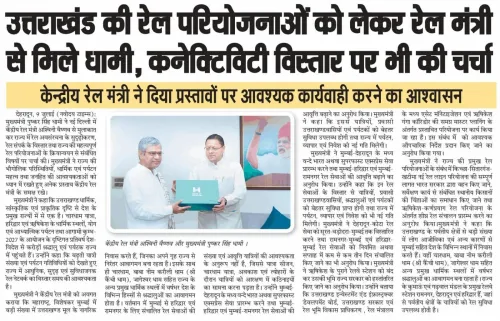
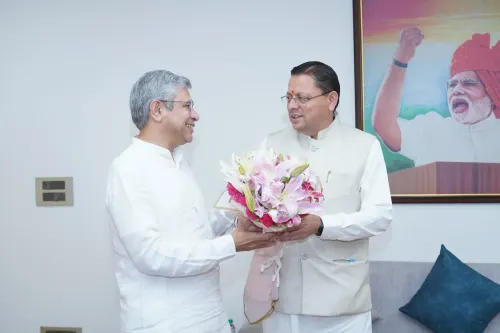
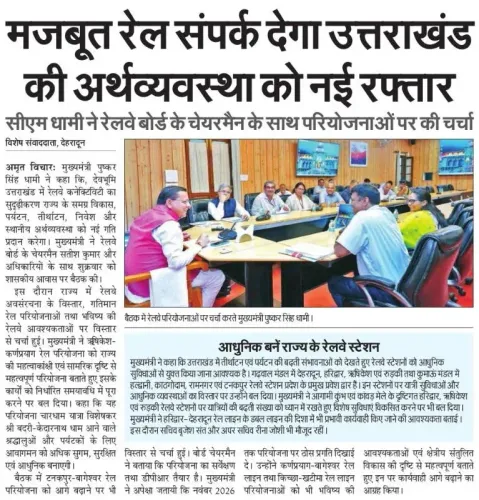
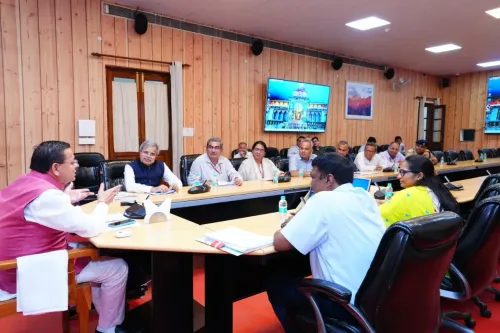
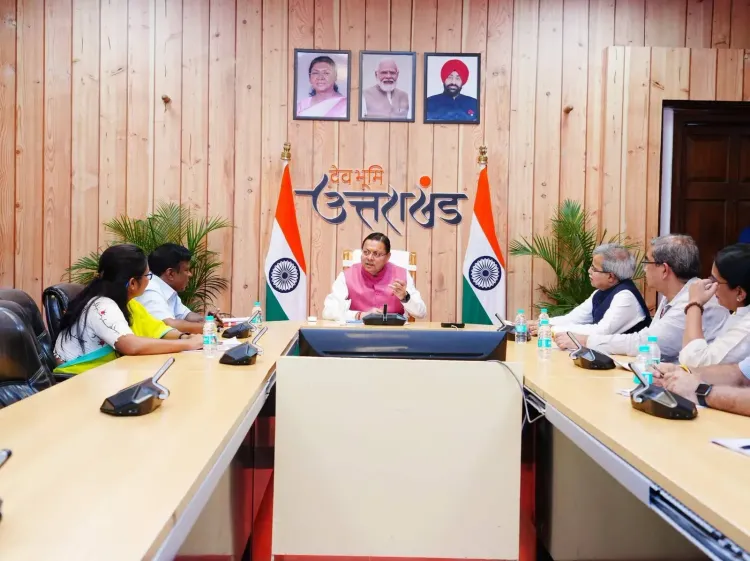
CM Pushkar Singh Dhami held talks with Railway Board Chairman Satish Kumar at the Chief Minister's official residence on 19 June 2026 .
Discussions covered the Rishikesh-Karnprayag Rail Project , a broad-gauge line aimed at improving access to the Garhwal Himalayas.
The Tanakpur-Bageshwar Rail Project for the Kumaon region was also on the agenda as a key pending connectivity initiative.
Special passenger facilities at Haridwar , Rishikesh , and Roorkee railway stations are being planned ahead of the upcoming Kumbh Mela and Kanwar Mela .
Both hill rail projects were sanctioned under the broader Char Dham connectivity programme initiated in the 2010s.
Land acquisition, tunnelling timelines, and station redevelopment tenders are the key near-term milestones to watch.
Uttarakhand Chief Minister Pushkar Singh Dhami met a delegation led by Railway Board Chairman Satish Kumar at the Chief Minister's official residence on Friday, 19 June 2026, to discuss the expansion of rail infrastructure across the state. The talks covered ongoing projects, future connectivity needs, and station upgrades ahead of major religious gatherings.
Context
The meeting centred on two of Uttarakhand's most consequential rail projects and the immediate challenge of managing surging pilgrim footfall at key stations. CM Dhami posted on X that discussions were held on 'राज्य में रेलवे अवसंरचना के विस्तार, गतिमान रेल परियोजनाओं तथा भविष्य की रेलवे आवश्यकताओं' — 'the expansion of railway infrastructure in the state, ongoing rail projects, and future railway requirements.' The Railway Board delegation's visit signals active coordination between the central rail authority and the state government on hill connectivity.
Policy Backdrop
The Rishikesh-Karnprayag Rail Project is a broad-gauge line designed to open up the Garhwal Himalayas, reducing dependence on mountain roads that are vulnerable to landslides and seasonal closures. The Tanakpur-Bageshwar Rail Project aims to extend rail reach into the Kumaon region, a corridor that currently lacks direct rail connectivity. Both projects were sanctioned as part of a broader Char Dham connectivity programme that Indian Railways initiated in the 2010s to link plains railheads with high-altitude pilgrimage destinations.
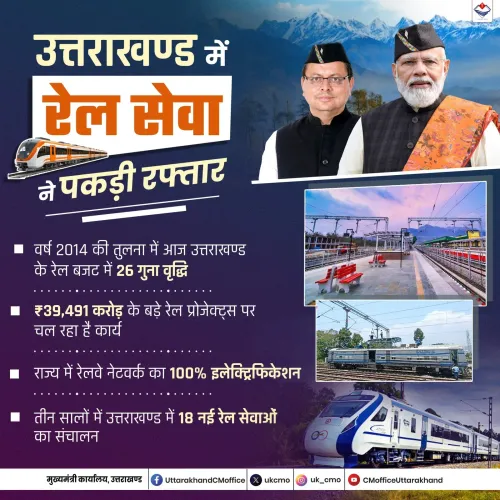
The policy rationale is twofold: serve the millions of devotees who travel to Uttarakhand each year for the Char Dham yatra, Kumbh Mela, and Kanwar yatra, and reduce chronic road congestion in the hills. Central and state governments have consistently framed rail expansion in the state as both a developmental and a religious-tourism priority.
Stakeholders and Impact
The most immediate beneficiaries of the station upgrade discussions are the pilgrims and tourists who pass through Haridwar, Rishikesh, and Roorkee railway stations — three of the busiest entry points for religious travel in northern India. The upcoming Kumbh Mela and the annual Kanwar Mela draw tens of millions of visitors, placing extraordinary strain on station capacity, ticketing, sanitation, and crowd management infrastructure. Developing 'special facilities' at these stations, as discussed in the meeting, would directly affect the travel experience of a vast cross-section of pilgrims, including those from economically weaker sections who rely entirely on rail.
Local residents and the state's tourism economy also stand to gain from faster, more reliable rail links if the two hill projects advance on schedule. Contractors, tunnelling firms, and local labour markets in the project corridors are among the other stakeholders watching progress closely.
What's Next
The immediate watchpoints are the pace of land acquisition and tunnelling work on the Rishikesh-Karnprayag and Tanakpur-Bageshwar corridors, both of which involve complex Himalayan terrain. On the station side, tenders for redevelopment and crowd-management infrastructure at Haridwar, Rishikesh, and Roorkee will indicate how quickly the centre and state translate Friday's discussions into on-ground action. With major religious events on the calendar, the pressure to deliver upgrades within a defined window is significant.
Point of View
Visible progress on the Rishikesh-Karnprayag and Tanakpur-Bageshwar corridors serves a dual purpose: it reinforces the BJP's infrastructure delivery narrative and addresses a long-standing demand from residents of the Garhwal and Kumaon hills. The focus on station upgrades at Haridwar, Rishikesh, and Roorkee also reflects a pattern of using mega-religious events as hard deadlines that force otherwise slow infrastructure processes to accelerate. Whether these discussions translate into concrete tenders and revised project timelines will be the real test of Friday's meeting.
NationPress
18 Sept 2026
Frequently Asked Questions
What is the Rishikesh-Karnprayag Rail Project?
The Rishikesh-Karnprayag Rail Project is a broad-gauge railway line being built to connect Rishikesh with Karnprayag in the Garhwal Himalayas, aimed at improving access to the Char Dham pilgrimage circuit and reducing dependence on mountain roads.
What is the Tanakpur-Bageshwar Rail Project?
The Tanakpur-Bageshwar Rail Project is a proposed rail corridor intended to extend railway connectivity into the Kumaon region of Uttarakhand, an area currently without direct rail links to major hill destinations.
Why are Haridwar, Rishikesh, and Roorkee stations being upgraded?
These three stations are the primary rail entry points for pilgrims and tourists heading into Uttarakhand. Upgrades are being planned to handle the sharp rise in passenger numbers expected during the upcoming Kumbh Mela and the annual Kanwar Mela.
Who is Railway Board Chairman Satish Kumar?
Satish Kumar is the Chairman of the Railway Board, the apex body overseeing Indian Railways, and led the delegation that met Uttarakhand CM Pushkar Singh Dhami on 19 June 2026 to discuss state rail projects.
What is the status of railway projects in Uttarakhand in 2026?
As of mid-2026, the Rishikesh-Karnprayag and Tanakpur-Bageshwar projects are ongoing priorities under India's hill rail expansion programme. Land acquisition and tunnelling timelines, along with station redevelopment tenders, remain the key milestones being tracked.