CM Dhami Pushes Railway Expansion for Uttarakhand
Synopsis
Chief Minister Pushkar Singh Dhami met Railway Board Chairman Satish Kumar on 19 June 2026 to advance rail projects including the Rishikesh-Karnprayag line, Tankpur-Bageshwar corridor, and modernisation of eight key stations ahead of the Kumbh and Kanwar Melas.
Key Takeaways
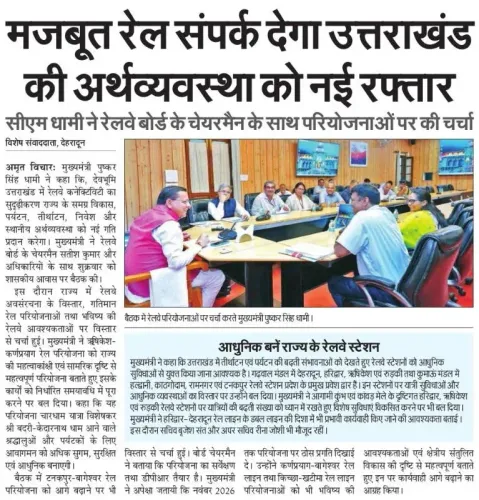
CM Pushkar Singh Dhami held a meeting with Railway Board Chairman Satish Kumar at the Chief Minister's residence in Dehradun on 19 June 2026 .
The Rishikesh-Karnprayag Rail Project — a 125-km strategic line sanctioned in 2013 — was flagged as a priority, with the CM urging timely completion to ease access to Badrinath and Kedarnath .
The survey and DPR for the Tankpur-Bageshwar Rail Project are complete; CM Dhami expects concrete progress by November 2026 .
Eight stations — Dehradun, Haridwar, Rishikesh, Roorkee, Haldwani, Kathgodam, Ramnagar , and Tanakpur — were identified for modern passenger facility upgrades.
Special infrastructure at Haridwar, Rishikesh , and Roorkee stations was sought ahead of the upcoming Kumbh and Kanwar Melas .
Doubling of the Haridwar-Dehradun Rail Line and new corridors including Karnprayag-Bageshwar and Kiccha-Khatima were also discussed.
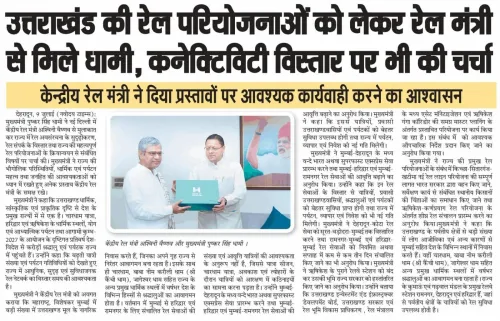
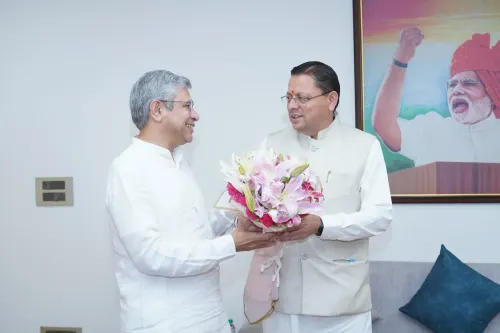
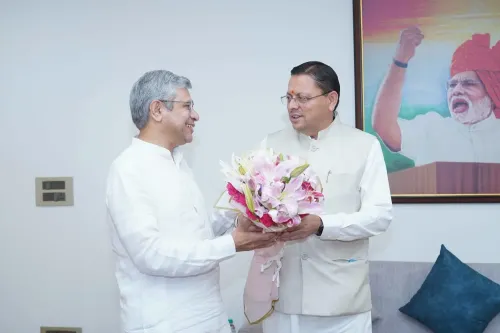
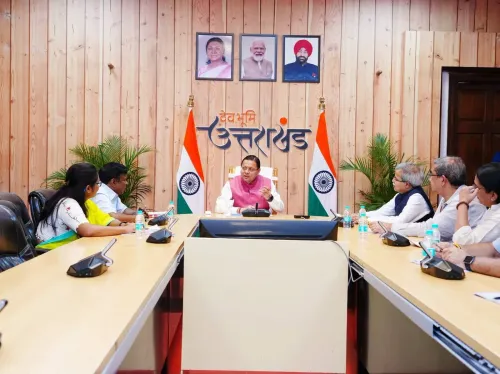
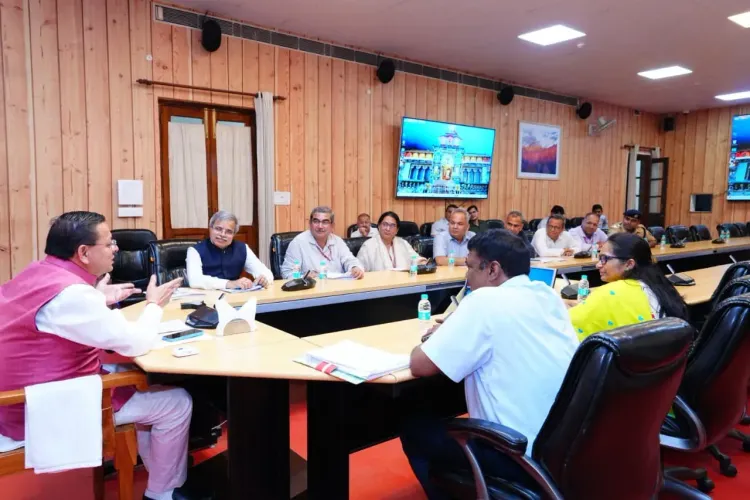
The Chief Minister's Office of Uttarakhand announced on Friday, 19 June 2026 that Chief Minister Pushkar Singh Dhami met a high-level delegation from the Railway Board, led by Chairman Satish Kumar, at the Chief Minister's residence in Dehradun to discuss the expansion of railway infrastructure across the state.
Context
The meeting centred on ongoing and proposed rail projects, future connectivity requirements, and the modernisation of key railway stations in Uttarakhand. CM Dhami stated that strengthening railway connectivity would give 'राज्य के समग्र विकास' ('the state's overall development') — including tourism, pilgrimage, investment, and the local economy — fresh momentum.
The Chief Minister specifically highlighted the Rishikesh-Karnprayag Rail Project as an ambitious and strategically vital undertaking, urging that work be completed within the stipulated timeframe. He said the project would make travel to Badrinath Dham and Kedarnath Dham — two of the four Char Dham pilgrimage sites — more convenient, safe, and modern for devotees and tourists.
Policy Backdrop
The Rishikesh-Karnprayag Rail Project, a 125-km line sanctioned in 2013, is designed to improve strategic and pilgrimage connectivity deep into the Himalayan interior. It remains one of the most complex hill-railway projects under the national infrastructure pipeline, given the challenging terrain.
The Tankpur-Bageshwar Rail Project was also discussed at length. Railway Board Chairman Satish Kumar informed the meeting that the project's survey and Detailed Project Report (DPR) have been prepared. CM Dhami expressed the expectation that concrete progress on this project be visible by November 2026. He also urged that work be advanced on the Karnprayag-Bageshwar Rail Line and the Kiccha-Khatima Rail Line, describing both as important for future needs and regionally balanced development.
The Chief Minister additionally flagged the need for effective action on doubling the Haridwar-Dehradun Rail Line, a corridor that carries heavy passenger traffic between two of the state's most connected cities.
Stakeholders and Impact
CM Dhami identified eight stations as the state's primary gateways: Dehradun, Haridwar, Rishikesh, and Roorkee in the Garhwal division, and Haldwani, Kathgodam, Ramnagar, and Tanakpur in the Kumaon division. He stressed expanding passenger amenities and modern facilities at all eight stations.
With the upcoming Kumbh Mela and Kanwar Mela in view, the Chief Minister emphasised developing special facilities at Haridwar, Rishikesh, and Roorkee stations to handle surging pilgrim numbers. He said coordinated efforts between the railways and the state government could deliver a better, safer, and smoother travel experience for devotees and visitors.
Beyond pilgrimage, Dhami noted that expanding and modernising the rail network would generate new opportunities for investment, trade, tourism, and employment, providing long-term economic strength to Uttarakhand.
What's Next
Railway Board Chairman Satish Kumar assured that all points discussed in the meeting would be acted upon with full seriousness. Senior state officials — Secretary Brijesh Kumar Sant and Additional Secretary Reena Joshi — were present at the meeting.
The immediate focus will be on timelines for the Tankpur-Bageshwar project, station redevelopment tenders ahead of the Kumbh and Kanwar fairs, and survey progress on the newer rail corridors. How quickly the Railway Board translates these discussions into ground-level action will determine whether Uttarakhand's pilgrimage economy gets the connectivity boost its government is seeking.
Point of View
Investment, and the Kumbh Mela cycle, the Chief Minister is framing infrastructure as economic strategy rather than mere public works. The November 2026 milestone for the Tankpur-Bageshwar project and the push for eight station upgrades suggest the state is building pressure ahead of what could be a politically significant pre-election infrastructure narrative. Whether the Railway Board translates these assurances into budgetary allocations and tender awards will be the real test of this engagement.
NationPress
18 Sept 2026
Frequently Asked Questions
What is the Rishikesh-Karnprayag Rail Project?
The Rishikesh-Karnprayag Rail Project is a 125-km strategic railway line sanctioned in 2013 to connect Rishikesh with Karnprayag in Uttarakhand, aimed at improving access to Char Dham pilgrimage sites including Badrinath and Kedarnath.
What is the status of the Tankpur-Bageshwar Rail Project?
The survey and Detailed Project Report (DPR) for the Tankpur-Bageshwar Rail Project have been completed. CM Pushkar Singh Dhami has expressed the expectation of concrete progress on the project by November 2026.
Which railway stations in Uttarakhand are being upgraded?
Eight stations have been identified for modernisation: Dehradun, Haridwar, Rishikesh, and Roorkee in the Garhwal division, and Haldwani, Kathgodam, Ramnagar, and Tanakpur in the Kumaon division.
Why is railway connectivity important for Uttarakhand?
Uttarakhand's economy is heavily dependent on pilgrimage tourism to sites like Badrinath and Kedarnath. Improved rail connectivity is expected to boost tourist footfall, attract investment, generate employment, and support balanced regional development.
What railway preparations are being made for the Kumbh and Kanwar Melas?
CM Dhami has urged special passenger facilities at Haridwar, Rishikesh, and Roorkee railway stations to handle the surge in devotee numbers expected during the upcoming Kumbh Mela and Kanwar Mela.