CM Dhami, PM Modi drive rail expansion in Uttarakhand
Synopsis
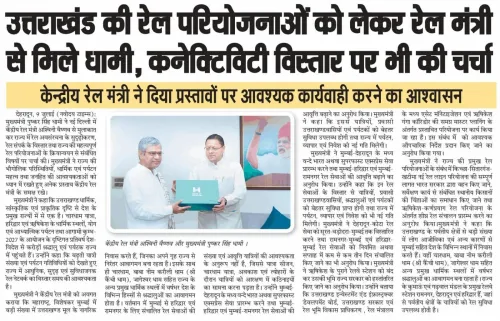
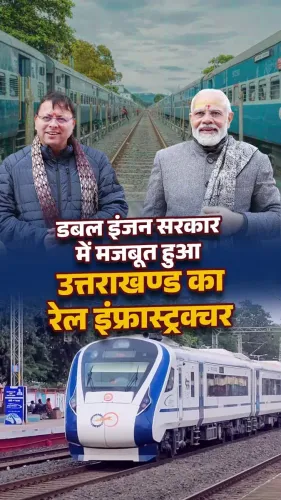
The Chief Minister's Office of Uttarakhand has highlighted accelerating rail services in the state, crediting PM Narendra Modi's guidance and CM Pushkar Singh Dhami's leadership. The push is tied to the broader 12 Years of Garib Kalyan narrative and includes the flagship Rishikesh-Karnaprayag rail corridor.
Key Takeaways
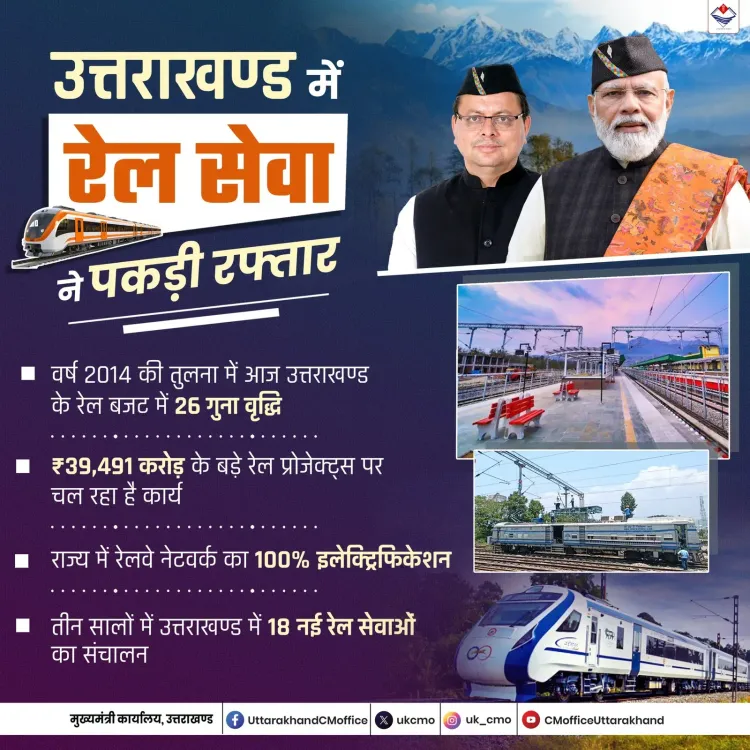
The Chief Minister's Office of Uttarakhand announced on 8 June 2026 that rail services in the state have gained pace under PM Modi and CM Dhami .
The post is linked to the #12YearsOfGaribKalyan campaign, framing rail expansion as part of a decade-long welfare and infrastructure drive.
The Rishikesh-Karnaprayag rail line , approximately 125 km long, is the flagship project aimed at connecting the Char Dham pilgrimage circuit to the national network.
The project received Cabinet approval in 2018 and is being executed under the PM Gati Shakti framework.
Uttarakhand's difficult Himalayan terrain has historically restricted rail access, making the current push particularly significant for remote districts.
Residents, pilgrims, tourists, and local businesses are the primary beneficiaries of the expanded rail network.
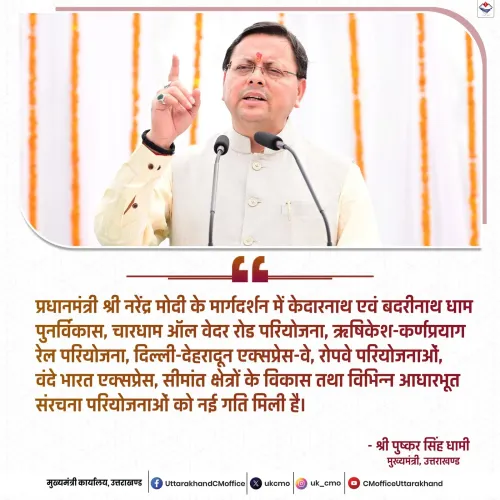
The Chief Minister's Office of Uttarakhand announced on Monday, 8 June 2026 that rail services in the state have gained significant momentum under the guidance of Prime Minister Narendra Modi and the leadership of Chief Minister Pushkar Singh Dhami.
The post, shared under the hashtags #RailConnectivity and #12YearsOfGaribKalyan, states: 'Pradhan Mantri Shri Narendra Modi ke margdarshan va Mukhyamantri Shri Pushkar Singh Dhami ke netritva mein Uttarakhand mein rail sevaon ne pakdi raftaar' — meaning 'Under the guidance of Prime Minister Narendra Modi and the leadership of Chief Minister Pushkar Singh Dhami, rail services in Uttarakhand have picked up pace.'
Context
Uttarakhand, a Himalayan state carved out in 2000, has historically faced severe constraints in rail connectivity owing to its rugged mountain terrain. Most of the state's districts depend on road transport, which remains vulnerable to landslides and seasonal closures. The announcement signals a renewed official emphasis on rail as a reliable, all-weather alternative for residents, pilgrims, and tourists. The hashtag #12YearsOfGaribKalyan ties the rail push to a broader ruling-party narrative around welfare and infrastructure delivery since 2014, framing connectivity gains as part of a wider development agenda.Policy Backdrop
The central government's focus on rail expansion in Himalayan states dates to the 2014-15 Union Budget, which prioritised new lines in Uttarakhand as part of a national infrastructure push. The most consequential project in this pipeline is the Rishikesh-Karnaprayag rail line, a roughly 125-kilometre corridor that received Cabinet approval in 2018 and is being developed under the PM Gati Shakti integrated infrastructure framework. The project is designed to link the Char Dham pilgrimage circuit — covering Kedarnath, Badrinath, Gangotri, and Yamunotri — to the national rail network, dramatically reducing travel time for millions of devotees who currently rely on congested mountain roads. The line passes through challenging geological terrain, requiring extensive tunnelling and bridgework.Stakeholders and Impact
The primary beneficiaries of improved rail access in Uttarakhand are its approximately 10 million residents, particularly those in remote hill districts who currently face high transport costs and limited mobility. Pilgrims and tourists — who number in the tens of millions annually — stand to gain from faster, safer access to religious and adventure destinations. Local tourism businesses, hospitality operators, and small traders along the proposed corridors are also direct stakeholders, as improved connectivity typically stimulates economic activity in hill economies. For the state government, rail expansion reduces pressure on its road network and lowers long-term maintenance costs associated with mountain highways.What's Next
The immediate focus remains on construction progress along the Rishikesh-Karnaprayag corridor, where completion milestones will be closely watched by both the state administration and the central railway ministry. Any new train service announcements in the forthcoming Union Railway Budget would further test the government's stated commitment to accelerating connectivity in the state. With Uttarakhand positioning itself as a premier pilgrimage and eco-tourism destination, sustained investment in rail infrastructure will be critical to managing visitor volumes sustainably while ensuring that the economic benefits of tourism reach interior communities.Point of View
Visibility on connectivity projects is strategically important in a state where terrain-driven isolation remains a live electoral grievance. The Rishikesh-Karnaprayag corridor, if delivered on schedule, would represent the most transformative rail investment in Uttarakhand since the state's formation, and both the Centre and the state government have strong incentives to claim credit for its progress. The broader pattern — using social media posts to signal momentum on long-gestation infrastructure projects — reflects how India's political communication has shifted toward continuous narrative management rather than milestone-only announcements.
NationPress
22 Oct 2026
Frequently Asked Questions
What is the Rishikesh-Karnaprayag rail line?
The Rishikesh-Karnaprayag rail line is a roughly 125-kilometre rail corridor in Uttarakhand designed to connect the Char Dham pilgrimage circuit to India's national rail network. It received Cabinet approval in 2018 and is being built under the PM Gati Shakti framework.
Why is rail connectivity difficult in Uttarakhand?
Uttarakhand's Himalayan terrain — marked by steep gradients, river gorges, and landslide-prone slopes — makes rail construction technically challenging and expensive, requiring extensive tunnelling and bridgework.
What is the #12YearsOfGaribKalyan hashtag about?
#12YearsOfGaribKalyan is a campaign hashtag used by the ruling party to mark 12 years of welfare and development initiatives since 2014, linking infrastructure and social programmes to a single governance narrative.
How does better rail connectivity benefit Uttarakhand's economy?
Improved rail access reduces transport costs for residents, draws more pilgrims and tourists to the Char Dham circuit, stimulates local businesses, and lowers the state's dependence on road infrastructure that is vulnerable to seasonal disruptions.
Who is Pushkar Singh Dhami?
Pushkar Singh Dhami is the Chief Minister of Uttarakhand, serving since 2021. He is responsible for state-level implementation of central connectivity and infrastructure schemes in the hill state.