CM Pema Khandu urges Arunachal farmers to register on AgriStack

Synopsis
Arunachal Pradesh CM Pema Khandu on 22 October 2026 urged state farmers to register under the central AgriStack platform, calling the Farmer ID a gateway to subsidies, agricultural credit, and government schemes for the state's predominantly tribal agrarian communities.
Key Takeaways
CM Pema Khandu publicly urged all Arunachal Pradesh farmers on 22 October 2026 to register under the AgriStack digital agriculture platform.
A Farmer ID under AgriStack links land records, identity, and financial data to enable streamlined access to subsidies, crop insurance, and institutional credit.
The AgriStack initiative was announced by the Union Ministry of Agriculture in 2021 to build a federated national farmers database.
Northeastern states, including Arunachal Pradesh, have been included in a phased integration with the national AgriStack database.
The platform is connected to flagship welfare delivery including PM-KISAN direct transfers and crop insurance schemes.
State-level linkage of AgriStack IDs to Arunachal's horticulture and credit schemes remains a key development to watch.
Every farmer in Arunachal Pradesh now has a digital front door to government welfare — and Arunachal Pradesh Chief Minister Pema Khandu wants them to walk through it. On Thursday, 22 October 2026, Khandu took to X to call on farmers across the state to register under the national AgriStack platform and secure their Farmer ID — the single digital credential that unlocks subsidies, agricultural credit, and a growing stack of central welfare schemes.
What a Farmer ID actually unlocks
AgriStack is the Union Ministry of Agriculture's federated digital agriculture infrastructure, announced in 2021, designed to create a unified national database of farmers. At its core is the Farmer ID — a unique identifier that links a cultivator's land records, identity, and financial profile into one verifiable profile. Once registered, a farmer can claim benefits under schemes like PM-KISAN, access crop insurance, and apply for institutional credit without the paper-trail maze that has historically kept smallholders out.
Khandu put it plainly: 'A Farmer ID is your gateway to easier access to government schemes, subsidies, agricultural credit and other farming benefits.' In a state where agriculture is the backbone of livelihoods — and where much of the population is tribal and rural — that gateway matters enormously.
Why Arunachal's agrarian terrain makes digital outreach urgent
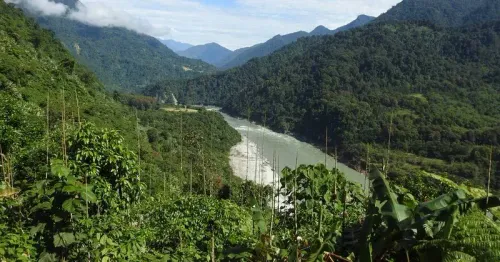
Arunachal Pradesh is one of India's most geographically dispersed states, with communities spread across high-altitude valleys, dense forest belts, and remote border districts. Reaching every eligible farmer through conventional administrative channels is slow and leaky. A portable digital ID — accessible via a smartphone or a common service centre — cuts through that geography. The northeastern states have been brought in through a phased integration with the national AgriStack database, making the current registration window a genuine inflection point for the state's farming households.
The broader policy logic is straightforward: the more farmers who register, the more accurately the government can target direct transfers, credit guarantees, and input subsidies — reducing both exclusion errors and leakage. State-level registration drives like this one are the critical last mile in that design.
What to watch as the drive unfolds
The real test will come in whether Arunachal's AgriStack IDs get linked to state-specific schemes — particularly in horticulture, which is a major economic driver in the region — and to institutional credit pipelines that can reach farmers in districts far from urban banking infrastructure. CM Khandu's public push signals political will at the top; the execution challenge now falls to district administrations and panchayat-level outreach teams.
If the registration momentum builds, Arunachal's tribal farming communities stand to gain a durable, portable claim on welfare delivery that travels with them — not one that resets every time a form is lost or an office is unreachable.
Point of View
Where geography and tribal land tenure systems have historically complicated welfare delivery, the Farmer ID represents a potential structural fix, not just a scheme announcement. The push also signals that the Centre's post-2021 AgriStack ambitions are now entering active state-level mobilisation, with northeastern integration no longer on the backburner. Whether this translates into measurable credit and subsidy uptake for Arunachal's remote farming households will be the real scorecard.
NationPress
22 Oct 2026
Frequently Asked Questions
What is AgriStack and how does it benefit farmers?
AgriStack is India's national digital agriculture platform, launched by the Union Ministry of Agriculture in 2021, that creates a unique Farmer ID linking a cultivator's land records, identity, and financial profile. It enables farmers to access government subsidies, crop insurance, PM-KISAN transfers, and agricultural credit through a single verifiable digital credential.
How can Arunachal Pradesh farmers register for a Farmer ID?
Arunachal Pradesh farmers can register for a Farmer ID under AgriStack through designated enrolment drives, common service centres, or state agriculture department portals. CM Pema Khandu has urged farmers to register at the earliest to start availing digital farming benefits.
What schemes are linked to the AgriStack Farmer ID?
The Farmer ID is linked to major central government welfare programmes including PM-KISAN direct benefit transfers, crop insurance schemes, and institutional agricultural credit. It is designed to eliminate paperwork barriers for small and marginal farmers.
Why is AgriStack important for Arunachal Pradesh specifically?
Arunachal Pradesh has a predominantly tribal and rural farming population spread across remote, high-altitude terrain. A portable digital Farmer ID reduces dependence on physical documentation and allows benefit delivery to reach farmers in geographically isolated districts more efficiently.
What did CM Pema Khandu say about the Farmer ID?
CM Pema Khandu stated that 'a Farmer ID is your gateway to easier access to government schemes, subsidies, agricultural credit and other farming benefits,' and urged all farmers in Arunachal Pradesh to register under AgriStack at the earliest.