CM Bhajan Lal shares Modi's jab at critics who 'defame India abroad'
Synopsis
Rajasthan CM Bhajan Lal Sharma amplified a sharp PM Modi quote on 22 October 2026, accusing unnamed critics of dreaming of 'disorder' in India and petitioning foreigners to intervene, framing such acts as an attack on India's rising global prestige.
Key Takeaways
Rajasthan Chief Minister Bhajan Lal Sharma posted on 22 October 2026 , sharing a direct quote from PM Narendra Modi .
PM Modi's quoted remark contrasts a world seeking a 'new order' with domestic actors allegedly dreaming of 'disorder' in India.
The statement accuses unnamed individuals of travelling abroad to 'defame India' and soliciting foreign intervention in internal affairs.
The messaging aligns with BJP's recurring narrative that frames opposition foreign outreach as an assault on national sovereignty and prestige.
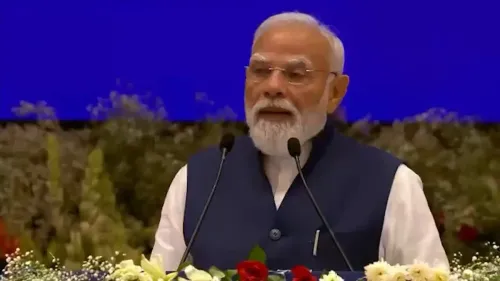
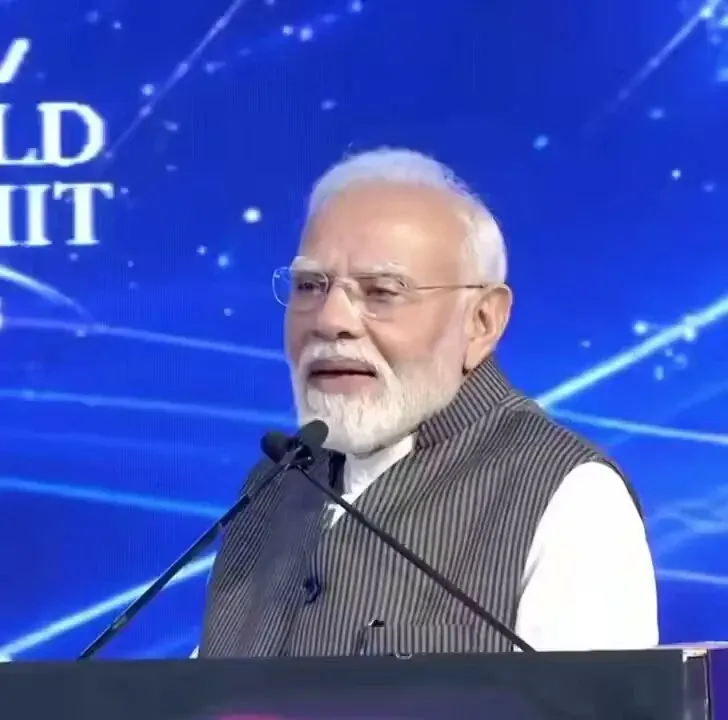
The post contains a video, suggesting the quote originates from a speech or public address by the Prime Minister.
No specific triggering event is named — the post frames the warning as a standing principle rather than a response to a single incident.
While the world scrambles for a new order, Rajasthan Chief Minister Bhajan Lal Sharma says some people right here at home are dreaming of disorder — and he wants every Indian to know exactly who he means. On Thursday, 22 October 2026, CM Sharma took to X to amplify a sharp remark by Prime Minister Narendra Modi, one that cuts to the heart of a recurring fault line in Indian politics: who speaks for India, and where.
The quote CM Sharma shared, attributed directly to PM Modi, pulls no punches: 'दुनिया जहाँ नए Order की तलाश में है, कुछ लोग भारत में Disorder के सपने देख रहे हैं' — 'While the world searches for a new order, some people are dreaming of disorder inside India.' The Prime Minister goes further, arguing that at a moment when global instability demands a strong, credible India on the world stage, certain individuals are instead 'hell-bent on grinding India's prestige into the dust.'
The charge: taking India's dirty laundry overseas
The sharpest line in the quoted remark is also the most politically loaded: these unnamed figures, the Prime Minister says, 'go to foreign countries and defame India, and petition foreigners to intervene.' It is a well-worn but still potent accusation in Indian political discourse — one that frames domestic opposition activity abroad not as free speech but as an invitation to external interference.
By amplifying this message, CM Sharma signals alignment with a broader BJP narrative that has grown more insistent as India's geopolitical profile has risen: that criticism voiced on foreign soil, before foreign audiences or governments, crosses a line from legitimate dissent into something closer to sabotage of national interest.
Order vs Disorder: the framing BJP keeps returning to
The 'new world order' framing is deliberate. Global turbulence — from ongoing conflicts to economic realignments — has given India an opening to position itself as a stable, decisive anchor. PM Modi's messaging, as relayed here, argues that every act of domestic political controversy exported abroad chips away at that carefully built image.
It is a high-stakes framing: cast the opponent not just as wrong on policy, but as actively undermining the nation's standing at the very moment that standing is most valuable. The political logic is blunt and effective — it pushes critics into a corner where defending their right to speak internationally can be made to look like defending the act of 'defaming' India.
Whether those critics respond, and how sharply, will determine whether this exchange stays a social-media moment or escalates into a full political debate — but with a Chief Minister amplifying a Prime Minister, the BJP's megaphone is clearly pointed in one direction.
Point of View
CM Sharma lends it constitutional weight while distancing himself from direct mudslinging. The 'new world order vs disorder' binary is shrewd political branding: it ties domestic criticism to global instability, making the BJP the natural guarantor of stability. The durability of this messaging depends on whether opposition parties choose to engage it head-on or simply let it pass as partisan noise.
NationPress
23 Oct 2026
Frequently Asked Questions
What did PM Modi say about people defaming India abroad?
PM Modi, as quoted by Rajasthan CM Bhajan Lal Sharma , said certain individuals 'go to foreign countries and defame India' and 'petition foreigners to intervene' in internal affairs, describing this as grinding India's prestige into the dust at a time when a strong India needs to project itself to the world.
Who is Bhajan Lal Sharma?
Bhajan Lal Sharma is the Chief Minister of Rajasthan and a senior BJP leader. He took office as Rajasthan CM after the BJP's victory in the state assembly elections.
What does 'world order vs disorder' mean in PM Modi's speech?
The phrase contrasts a world looking for stability and a 'new order' with what the Prime Minister characterises as domestic political actors who create instability or embarrassment for India, particularly by voicing criticism in foreign forums.
Is the BJP accusing the opposition of seeking foreign intervention?
Yes. The quoted remark is consistent with a broader BJP political line that accuses opposition figures of lobbying foreign governments or audiences against India, framing such activity as an attack on national sovereignty rather than legitimate political speech.
Why did CM Bhajan Lal Sharma share this quote on X?
By amplifying a PM Modi quote, CM Sharma signals state-level endorsement of the BJP's national messaging on sovereignty and India's global image, reinforcing the party's unified political narrative ahead of any potential political contestation.