CM Pema Khandu reviews Buddha Relics Exposition prep for Tawang, Bomdila, Namsai
Synopsis
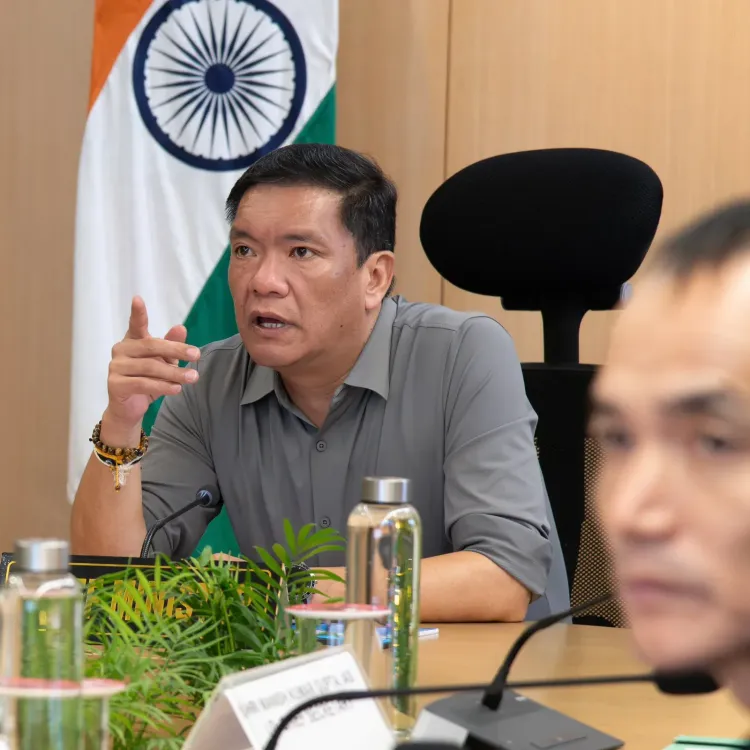
Arunachal Pradesh CM Pema Khandu on 22 October 2026 reviewed preparations for the Sacred Exposition of the Holy Relics of Lord Buddha, a three-week, three-city event spanning Tawang, Bomdila and Namsai from 31 October to 20 November 2026, calling it a landmark moment for the state.
Key Takeaways
The Sacred Exposition of the Holy Relics of Lord Buddha will be held across Tawang, Bomdila and Namsai from 31 October to 20 November 2026 .
CM Pema Khandu personally reviewed event preparations on 22 October 2026 , nine days before the opening date.
The exposition spans three distinct Buddhist traditions: Tibetan Mahayana (Tawang), mixed monastic (Bomdila), and Theravada (Namsai).
Tawang Monastery , one of the world's largest Tibetan Buddhist monasteries, anchors the northern leg of the event.
The Golden Pagoda in Namsai, a landmark of Theravada Buddhism in the Northeast, is one of the three host venues.
The event aligns with India's broader push to develop spiritual tourism and Buddhist heritage in the Northeast.
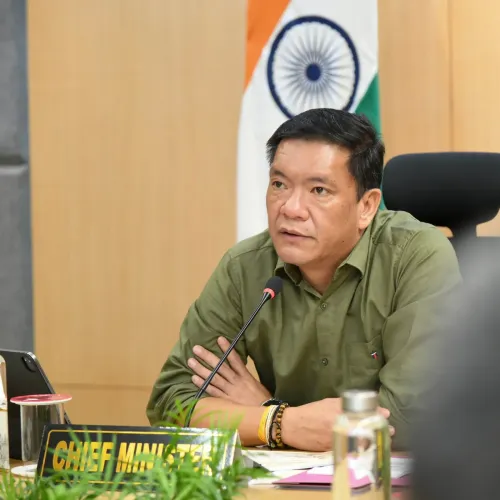
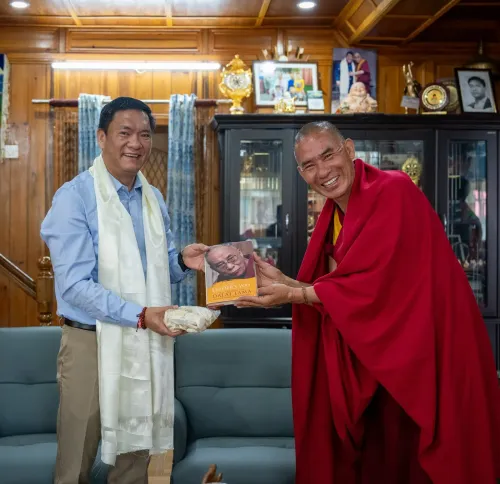
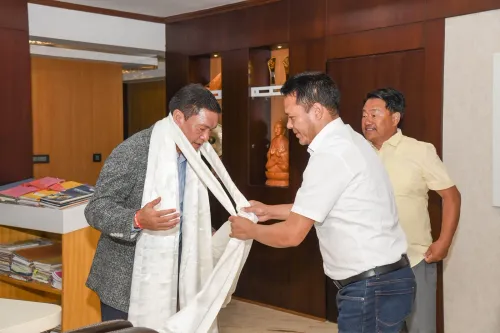
A once-in-a-generation spiritual event is taking shape across three Buddhist heartlands of Arunachal Pradesh — and Arunachal Pradesh Chief Minister Pema Khandu is personally steering its preparation. On Thursday, 22 October 2026, the Chief Minister reviewed the groundwork for the Sacred Exposition of the Holy Relics of Lord Buddha, scheduled to span Tawang, Bomdila and Namsai from 31 October to 20 November 2026.
Khandu described the event as 'far more than a religious gathering,' calling it 'a historic moment that brings together faith, humanity and the timeless message of Lord Buddha.' The Chief Minister said the state is committed to ensuring that 'every devotee has a peaceful and meaningful opportunity to pay homage to the sacred relics and seek spiritual blessings.'
Three cities, three Buddhist traditions, one corridor of faith
The choice of venues is deliberate and rich with meaning. Tawang, home to the storied Tawang Monastery — one of the largest Tibetan Buddhist monasteries in the world — anchors the exposition in the Mahayana tradition of the Himalayan highlands. Bomdila, further south in the West Kameng district, adds another node of monastic life, with its cluster of gompa complexes drawing pilgrims from across the region. And Namsai, in the state's eastern plains, brings in the Theravada tradition, centred on the luminous Golden Pagoda — evidence that this is not a single-community affair but a pan-Buddhist statement.
Running across three weeks and three geographically distinct districts, the exposition is designed as a moving pilgrimage corridor rather than a single fixed venue — an unusual logistical undertaking for a state whose mountainous terrain makes large-scale public events genuinely complex.
Arunachal's Buddhist identity on the national stage
The Government of India has periodically used relic expositions — organised through its cultural ministries — as a soft-power instrument, highlighting the country's Buddhist heritage both domestically and for international visitors. Arunachal Pradesh, with its concentration of living monastery traditions in sensitive border districts, fits neatly into that larger strategic and cultural narrative. Successive state governments have aligned landmark events here with the national push to develop spiritual tourism in the Northeast.
For Khandu's administration, the exposition also carries a practical dimension: drawing pilgrim footfall to Tawang and Namsai — two districts that sit along contested border areas — reinforces the state's settled, vibrant identity in regions that often attract geopolitical scrutiny.
What the preparation review signals
That the Chief Minister himself is conducting a preparation review with nine days to go before the opening date signals both the scale the state is anticipating and the political weight being placed on delivery. Infrastructure, crowd management, accommodation for out-of-state devotees, and inter-district coordination across terrain that ranges from high Himalayan passes to lowland river valleys — all of it now on the clock.
Khandu's stated goal: to make this 'a landmark moment for Arunachal Pradesh.' Given the spiritual significance of Buddha relics in the Tibetan and Theravada Buddhist worlds, the audience for that landmark extends well beyond the state's borders.
Point of View
Soft power, and border-district visibility — three priorities that converge in Arunachal Pradesh like nowhere else in India. By personally flagging the review, Khandu is signalling that the state government views this as a prestige event, not routine administration. Relic expositions have historically drawn both domestic pilgrims and international Buddhist visitors, giving the Northeast a rare moment in a global spiritual spotlight. The choice to run the event across all three major Buddhist sub-traditions in the state is also quietly inclusive politics — a message that Arunachal's Buddhist identity is diverse, deep-rooted, and proud.
NationPress
22 Oct 2026
Frequently Asked Questions
When and where is the Sacred Exposition of the Holy Relics of Lord Buddha in Arunachal Pradesh 2026?
The Sacred Exposition of the Holy Relics of Lord Buddha is scheduled from 31 October to 20 November 2026 , across three venues: Tawang, Bomdila and Namsai in Arunachal Pradesh.
What is the Sacred Exposition of the Holy Relics of Lord Buddha?
It is a multi-district public display of Buddha relics, a spiritually significant event that allows devotees to pay homage and seek blessings. The Government of India has periodically organised similar relic expositions through its cultural ministries to promote Buddhist heritage.
Why is Tawang significant for this Buddha relics event?
Tawang is home to the Tawang Monastery , one of the largest Tibetan Buddhist monasteries in the world, making it a natural and historically important host for a relic exposition of this scale.
What is the Golden Pagoda in Namsai?
The Golden Pagoda in Namsai is a prominent Theravada Buddhist temple and a landmark of Buddhist culture in Arunachal Pradesh's eastern plains, and one of the three venues for the 2026 exposition.
What is Pema Khandu's role in the Buddha relics exposition?
Pema Khandu , Chief Minister of Arunachal Pradesh, personally reviewed the event preparations on 22 October 2026 and has committed the state government to making the exposition 'a landmark moment for Arunachal Pradesh.'