Jal Shakti Minister Paatil Reviews Jal Sanchay Jan Bhagidari Drive
Synopsis
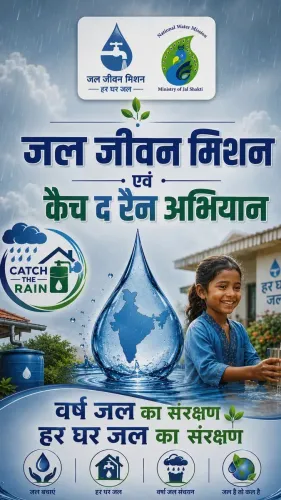
Union Jal Shakti Minister C. R. Paatil reviewed the Jal Sanchay Jan Bhagidari Abhiyan on 22 October 2026, issuing directives to accelerate rainwater harvesting construction and boost participation from states, local bodies, and citizens in PM Modi's water conservation vision.
Key Takeaways
Paatil , Union Jal Shakti Minister, conducted a formal review of the Jal Sanchay Jan Bhagidari Abhiyan on 22 October 2026 .
Fresh guidelines were issued to make the campaign more effective and speed up construction of water harvesting structures .
The campaign emphasises citizen-led, community-driven water conservation — a shift from purely government-executed models.
The initiative is framed as the fulfilment of PM Narendra Modi 's vision of 'janbhagidari se jal sanrakshan' (water conservation through people's participation).
The Jal Shakti Abhiyan , launched in 2019 , provided the policy foundation for the current expanded campaign.
State governments and local bodies are expected to translate Thursday's directives into ground-level action ahead of the next monsoon season.
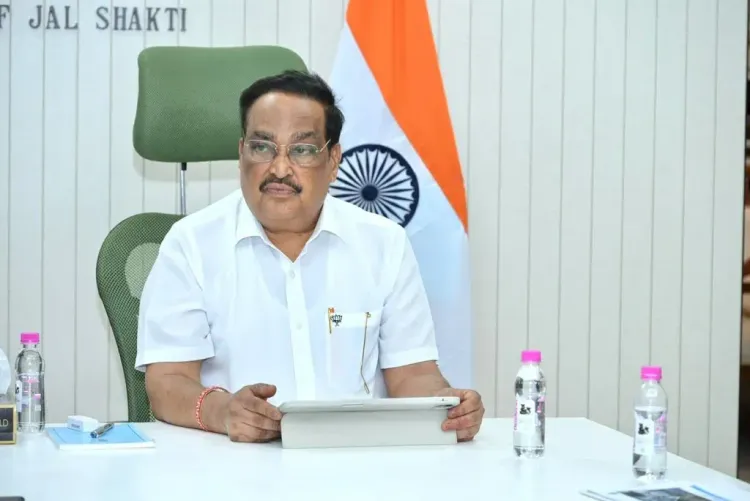
Water security is no longer a bureaucratic ambition in India — it is being recast as a mass movement, one village and one harvesting structure at a time. On Thursday, 22 October 2026, Union Jal Shakti Minister C. R. Paatil reviewed the progress of the Jal Sanchay Jan Bhagidari Abhiyan, issuing fresh directives to accelerate rainwater harvesting construction and deepen the active participation of states, local bodies, and citizens.
Posting in Hindi on X, Minister Paatil wrote: 'जल संरक्षण को जन आंदोलन बनाना तथा वर्षा जल संचयन के प्रयासों में अधिक से अधिक जनभागीदारी सुनिश्चित करना हमारी प्राथमिकता है' — 'Making water conservation a people's movement and ensuring maximum public participation in rainwater harvesting efforts is our priority.' He added that necessary guidelines had been issued to make the campaign more effective, speed up the construction of water harvesting structures, and increase the active involvement of states, local institutions, and citizens.
From Jal Shakti Abhiyan to Jal Sanchay Jan Bhagidari
The current campaign builds directly on the architecture laid by the Jal Shakti Abhiyan, launched in 2019, which first pushed a district-by-district blitz on water conservation and rainwater harvesting. What has evolved since is the centre of gravity: earlier efforts were largely driven by government machinery; the Jal Sanchay Jan Bhagidari Abhiyan explicitly places citizens and local bodies at the front of the effort.
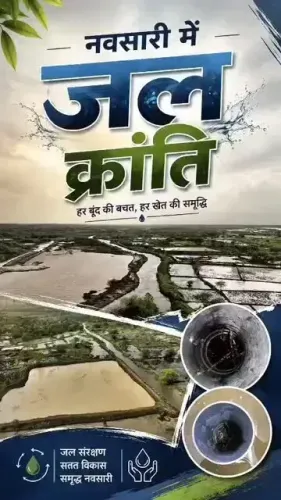
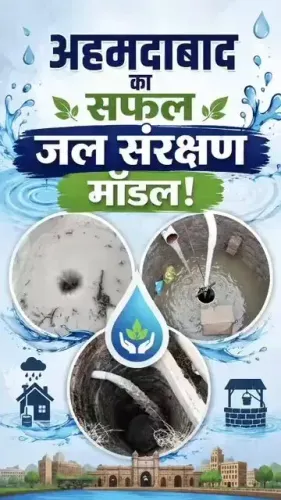
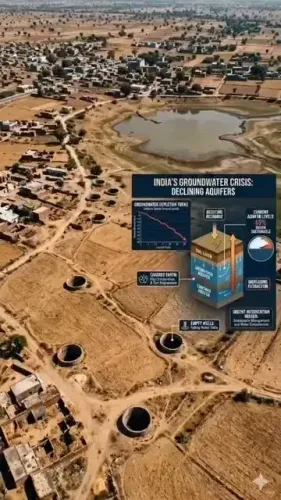
The logic is straightforward — and urgent. India faces mounting groundwater depletion in its most productive agricultural belts, compounded by erratic monsoon patterns. A top-down approach to building check dams, ponds, and rooftop harvesting units can only go so far. Mobilising communities to build and maintain these structures is both cheaper and more durable. That is the bet the Jal Shakti Ministry is making.
Modi's Vision, Paatil's Marching Orders
Minister Paatil anchored Thursday's review explicitly in Prime Minister Narendra Modi's vision of 'janbhagidari se jal sanrakshan' — water conservation through people's participation. The framing is deliberate: it positions this not as a government scheme to be implemented, but as a civilisational commitment to be fulfilled collectively.
The directives issued at Thursday's review are aimed at three pressure points — campaign effectiveness, construction speed, and multi-stakeholder engagement. States and local bodies will be expected to translate these into measurable action before the next monsoon season arrives.
What Comes Next: Structures, States, and the Monsoon Clock
The real test of Thursday's directives will come when the 2027 monsoon fills whatever harvesting infrastructure gets built between now and then. Each structure commissioned, each community mobilised, and each litre of rainwater captured represents a hedge against the water stress that already threatens millions of Indian households. The clock, as always, runs on the monsoon calendar.
India's water-security journey has been long on vision and uneven on execution. With Paatil's ministry pushing both guidelines and grassroots ownership simultaneously, the question is whether this review translates into structures in the ground — not just intentions on paper.
Point of View
Reflecting the Modi government's broader pivot from infrastructure-heavy schemes to decentralised, citizen-owned delivery. By publicly invoking the PM's vision, Paatil is also reinforcing political ownership of water security — a theme that resonates strongly in agrarian states facing groundwater stress. The issuance of new guidelines rather than just a progress report suggests the ministry is acknowledging gaps in rollout speed and state-level follow-through. How quickly states and local bodies convert these directives into physical harvesting structures will determine whether the campaign's participatory framing is rhetoric or reality.
NationPress
22 Oct 2026
Frequently Asked Questions
What is the Jal Sanchay Jan Bhagidari Abhiyan?
The Jal Sanchay Jan Bhagidari Abhiyan is a central government campaign under the Jal Shakti Ministry focused on water conservation through public participation, particularly rainwater harvesting, involving states, local bodies, and citizens.
What did C. R. Paatil announce on 22 October 2026?
Union Jal Shakti Minister C. R. Paatil reviewed the progress of the Jal Sanchay Jan Bhagidari Abhiyan and issued directives to accelerate the construction of water harvesting structures and increase involvement from state governments, local institutions, and citizens.
What is the difference between Jal Shakti Abhiyan and Jal Sanchay Jan Bhagidari Abhiyan?
The Jal Shakti Abhiyan, launched in 2019, was the foundational campaign driving district-level water conservation and rainwater harvesting. The Jal Sanchay Jan Bhagidari Abhiyan builds on it with a stronger emphasis on community-driven and citizen-led participation rather than solely government-executed implementation.
Why is rainwater harvesting important for India?
India faces serious groundwater depletion in key agricultural regions and increasing monsoon variability. Rainwater harvesting structures — such as check dams, ponds, and rooftop systems — help recharge groundwater and reduce dependence on depleting aquifers, making water security more resilient.
What role do state governments play in the Jal Sanchay campaign?
State governments, along with local bodies and citizens, are central stakeholders expected to implement the guidelines issued by the Jal Shakti Ministry, coordinate construction of harvesting structures, and mobilise community participation at the grassroots level.