Jal Shakti Minister CR Paatil Backs Industry Role in Water Conservation
Synopsis
Union Jal Shakti Minister C. R. Paatil told industry leaders in Kolkata on 18 June 2026 that the Jal Sanchay Janbhagidari campaign has become a mass movement, with over 1.5 crore water harvesting structures built, and called on businesses to drive rainwater harvesting, wastewater reuse, and water-sector innovation.
Key Takeaways
Union Jal Shakti Minister C.
Paatil spoke at the Merchants Chamber of Commerce and Industry in Kolkata on 18 June 2026 .
The Jal Sanchay Janbhagidari campaign, launched on 6 September 2024 , has been described as having grown into a national mass movement.
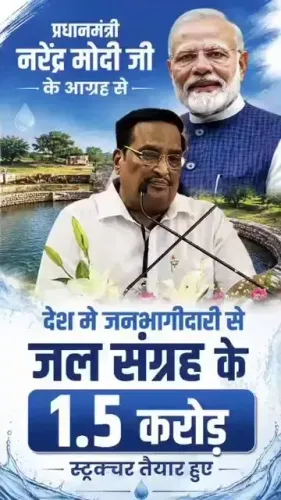
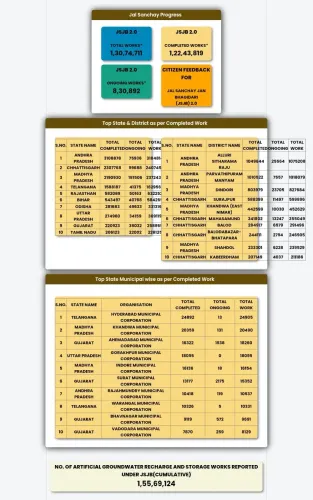
More than 1.5 crore rainwater harvesting and groundwater recharge structures have reportedly been constructed through community participation.
Paatil called on industry to actively contribute through rainwater harvesting, treated wastewater reuse, faecal sludge management, and water innovation .
The minister stressed that government, industry, and society must collaborate to ensure long-term water security in India.
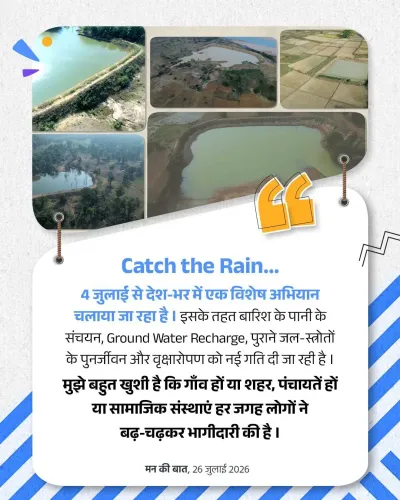
The outreach builds on a policy lineage including Jal Shakti Abhiyan, Catch the Rain, Atal Bhujal Yojana , and Jal Jeevan Mission .
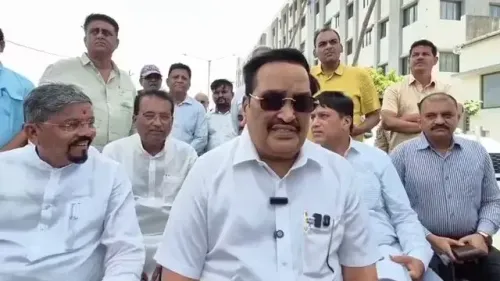
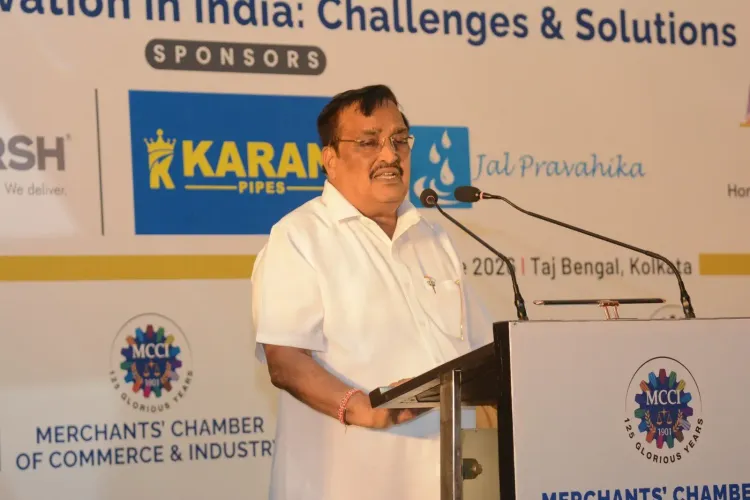
Union Jal Shakti Minister C. R. Paatil addressed industry representatives in Kolkata on Thursday, 18 June 2026, at a programme on 'Water Conservation in India: Challenges and Solutions' organised by the Merchants Chamber of Commerce and Industry, urging businesses to become active partners in India's water security mission.
Context
Speaking at the event, Minister Paatil highlighted that the Jal Sanchay Janbhagidari campaign — launched on 6 September 2024 at the call of Prime Minister Narendra Modi — has evolved into a mass movement. He stated that more than 1.5 crore rainwater harvesting and groundwater recharge structures have been built across the country through community participation.
The minister's remarks in Hindi underscored the scale of the effort: 'जल संचय जनभागीदारी आज एक जन आंदोलन का रूप ले चुका है' ('Jal Sanchay Janbhagidari has today taken the form of a people's movement'). The framing positions water conservation not as a government programme alone but as a societal obligation.
Policy Backdrop
The Kolkata event sits within a layered policy architecture that the Ministry of Jal Shakti has built since 2019. The Jal Shakti Abhiyan, launched that year, promoted water conservation and aquifer recharge across states, while the Catch the Rain campaign from 2020 encouraged creation of harvesting structures in both rural and urban areas. The Atal Bhujal Yojana and the Jal Jeevan Mission further extended the ministry's focus from supply-side infrastructure to demand-side management and source sustainability.
The current emphasis on treated wastewater reuse and industrial innovation represents an evolution of this model — drawing on lessons from multi-stakeholder frameworks used in programmes such as Namami Gange and AMRUT. Paatil explicitly called on industry to lead on rainwater harvesting, treated wastewater recycling, faecal sludge management, and water-sector innovation.
Stakeholders and Impact
The minister's address to the Merchants Chamber of Commerce and Industry signals a deliberate effort to draw corporate India into the conservation ecosystem. Industries are being asked to go beyond compliance — adopting treated wastewater reuse, investing in faecal sludge management, and developing scalable innovations that can be replicated by urban local bodies and rural communities alike.
Paatil stated that government, industry, and society must work together to ensure water security — a formulation that distributes responsibility across sectors. For industries in water-stressed regions, this could translate into operational imperatives around effluent recycling and zero-liquid-discharge norms.
What's Next
The Kolkata engagement is likely a precursor to broader industry outreach as the ministry seeks state-level memoranda with chambers of commerce on wastewater reuse norms. Observers will watch whether dedicated allocations for water harvesting infrastructure appear in upcoming Union Budget proposals or state action plans. The minister's emphasis on innovation in the water sector also points to possible policy support for startups and enterprises working on water-tech solutions, reinforcing the jan andolan model with private-sector capital and technology.
Point of View
Not just policy compliance, on wastewater reuse and water-tech innovation. The invocation of the Jal Sanchay Janbhagidari's 1.5 crore structures as a benchmark sets a high bar for accountability and could presage formal industry targets. This fits a broader pattern of the BJP-led government framing large-scale social programmes as jan andolans to build durable political and civic ownership beyond electoral cycles.
NationPress
17 Sept 2026
Frequently Asked Questions
What is Jal Sanchay Janbhagidari?
Jal Sanchay Janbhagidari is a community-participation campaign launched on 6 September 2024 at Prime Minister Narendra Modi's initiative, focused on building rainwater harvesting and groundwater recharge structures across India through public involvement.
What did CR Paatil say at the Kolkata water conservation event?
Minister C. R. Paatil told industry leaders at the Merchants Chamber of Commerce and Industry in Kolkata on 18 June 2026 that the Jal Sanchay Janbhagidari has become a mass movement, with over 1.5 crore structures built, and urged businesses to lead on rainwater harvesting, treated wastewater reuse, and water innovation.
How many rainwater harvesting structures have been built under Jal Sanchay Janbhagidari?
According to Minister Paatil's statement, more than 1.5 crore rainwater harvesting and groundwater recharge structures have been constructed across India through community participation under the campaign.
What is the role of industry in India's water conservation policy?
The Ministry of Jal Shakti is asking industries to go beyond regulatory compliance by adopting treated wastewater reuse, investing in faecal sludge management, and developing scalable water-sector innovations that can support both urban and rural water security goals.
What are the key water conservation schemes launched by the Indian government?
Key schemes include the Jal Shakti Abhiyan (2019), Catch the Rain campaign (2020), Atal Bhujal Yojana (2019) for groundwater management, Jal Jeevan Mission (2019) for household tap connections, and the Jal Sanchay Janbhagidari campaign launched in September 2024.