Vaishnaw Hails Chenab, Pamban, Anji as Engineering Marvels
Synopsis
Union Minister Ashwini Vaishnaw has highlighted the Chenab Bridge, Pamban Bridge, Anji Khad Bridge, and an underwater rail project as engineering marvels, marking a shift from some of Indian Railways' most difficult undertakings to landmark completed infrastructure.
Key Takeaways
Union Minister Ashwini Vaishnaw on June 10, 2026 called four major railway projects — Chenab, Pamban, Anji Khad , and an underwater rail link — engineering marvels of India.
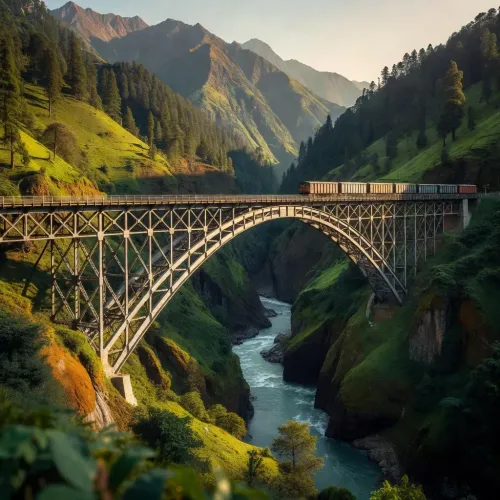
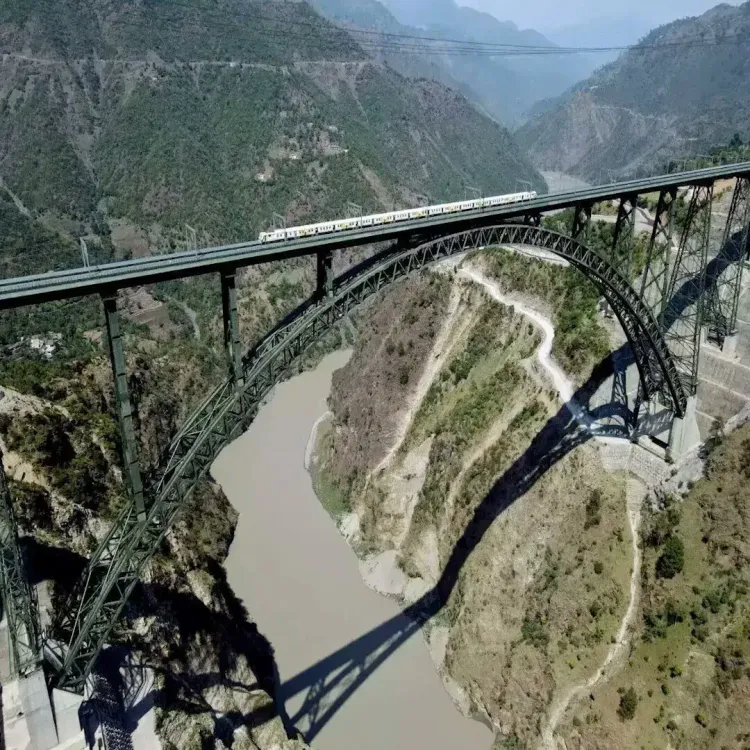
The Chenab Bridge is the world's highest railway bridge, part of the Udhampur-Srinagar-Baramulla Rail Link (USBRL) approved in 1994–95 .
The Anji Khad Bridge is the world's highest cable-stayed railway bridge, also on the USBRL corridor in Jammu and Kashmir .
The Pamban Bridge reconstruction was sanctioned in 2019 , upgrading a century-old sea crossing between Rameswaram and mainland Tamil Nadu .
Remaining USBRL sections are pending phased commissioning; the precise scope of the 'underwater rail' reference is yet to be officially clarified.
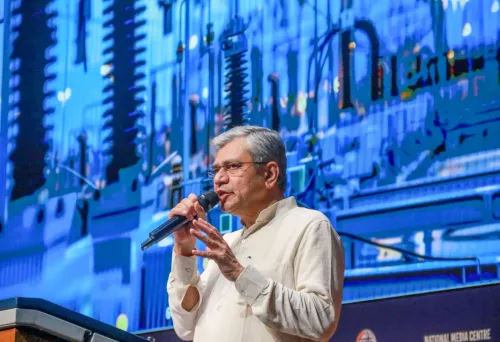
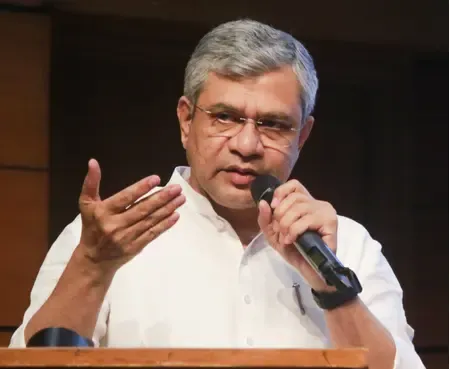
Union Minister Ashwini Vaishnaw on Wednesday, June 10, 2026, spotlighted four of India's most challenging railway infrastructure achievements — the Chenab Bridge, Pamban Bridge, Anji Khad Bridge, and an underwater rail project — calling them engineering marvels that were once considered among the most difficult undertakings in the country's railway history.
Context
The minister's post, part of a thread on Indian Railways' transformation, stated: 'Some of the most difficult projects are now the engineering marvels of Bharat.' The four projects he cited span the Himalayas and coastal and marine environments, representing the breadth of terrain India's railway engineers have had to conquer.
The post accompanied a video, underlining the visual scale of these structures for a public audience. It forms part of a broader government communication effort to highlight infrastructure milestones ahead of and during ongoing commissioning phases.
Policy Backdrop
The Chenab Bridge and Anji Khad Bridge are both components of the Udhampur-Srinagar-Baramulla Rail Link (USBRL), a project that received Cabinet approval in 1994–95 and gained accelerated funding and execution from 2002 onward. The USBRL is designed to provide all-weather rail connectivity to Jammu and Kashmir, a region long dependent on road links vulnerable to seasonal disruption.
The Chenab Bridge is recognised as the world's highest railway bridge, arching over the Chenab river gorge at a height greater than the Eiffel Tower. The Anji Khad Bridge holds the distinction of being the world's highest cable-stayed railway bridge, also on the USBRL corridor. Together, they represent decades of engineering problem-solving in seismically active, high-altitude terrain.
The Pamban Bridge, linking Rameswaram island to mainland Tamil Nadu, was sanctioned for reconstruction in 2019 as part of dedicated railway bridge modernisation. The new structure replaces a century-old cantilever design with a double-track, vertical-lift span capable of handling modern rolling stock. The 'underwater rail' reference in the minister's post has not been independently verified from available records and its precise scope remains to be officially clarified.
Stakeholders and Impact
For residents of Jammu and Kashmir, full operationalisation of the USBRL corridor would mean year-round rail access to the Kashmir Valley for the first time, reducing dependence on the Jammu-Srinagar National Highway and lowering logistics costs for goods and passengers alike. The strategic dimension is equally significant, given the region's proximity to international borders.
Coastal and island communities in Tamil Nadu, particularly around Rameswaram and Pamban, stand to benefit from improved freight and passenger movement enabled by the upgraded sea bridge. The projects collectively demonstrate a national pattern of deploying advanced engineering — cable-stay technology, high-altitude tunnelling, marine construction — to connect regions historically isolated by geography.
What's Next
Remaining tunnel and bridge sections on the USBRL corridor are slated for phased commissioning, and parliamentary updates on their timelines are expected in upcoming budget and standing-committee sessions. Any formal announcement on the underwater rail component — its route, funding, and commissioning schedule — would represent a significant addition to India's infrastructure pipeline.
As India continues to push rail connectivity into its most challenging geographies, projects like these set a precedent for how the country approaches long-gestation, high-complexity works: converting engineering obstacles into national landmarks.
Point of View
Politically fraught infrastructure commitments as delivery success stories for the current administration. By naming the Chenab and Anji bridges — both rooted in a 1994–95 Cabinet approval — alongside the more recent Pamban reconstruction, the minister is drawing a line from long-pending projects to completion, a narrative that serves both governance credibility and electoral signalling in Jammu and Kashmir ahead of any future electoral cycle. The inclusion of an 'underwater rail' reference, however unverified, suggests the government is also seeding anticipation for the next generation of ambitious connectivity projects. Taken together, the post reflects a broader BJP communications strategy of anchoring infrastructure milestones to a national pride framework rather than a purely technical or administrative one.
NationPress
26 Oct 2026
Frequently Asked Questions
What is the Chenab Bridge and why is it significant?
The Chenab Bridge is the world's highest railway bridge, spanning the Chenab river gorge in Jammu and Kashmir as part of the Udhampur-Srinagar-Baramulla Rail Link. It stands taller than the Eiffel Tower and is a key link for all-weather rail connectivity to the Kashmir Valley.
What is the USBRL project?
The Udhampur-Srinagar-Baramulla Rail Link (USBRL) is a major Indian Railways project to connect Jammu and Kashmir by rail through the Himalayas. It received Cabinet approval in 1994–95 and has been under accelerated execution since 2002.
What is the Anji Khad Bridge?
The Anji Khad Bridge is the world's highest cable-stayed railway bridge, located on the USBRL corridor in Jammu and Kashmir. Like the Chenab Bridge, it is part of the effort to link remote Himalayan terrain to the national rail network.
What is the new Pamban Bridge?
The new Pamban Bridge is a reconstructed sea bridge linking Rameswaram island to mainland Tamil Nadu, sanctioned in 2019. It replaces a century-old structure with a modern double-track, vertical-lift design capable of handling contemporary trains.
What did Ashwini Vaishnaw say about Indian Railways infrastructure?
Union Minister Ashwini Vaishnaw stated on June 10, 2026, that some of the most difficult railway projects have now become engineering marvels of India, specifically naming the Chenab, Pamban, and Anji bridges along with an underwater rail project.