Shekhawat Highlights Chenab Bridge, Vande Bharat in Infrastructure Push
Synopsis
Union Minister Gajendra Singh Shekhawat invoked the world's highest railway bridge at 359 metres in Kashmir and the Vande Bharat Express to argue that India is translating infrastructure ambition into reality, posting under the hashtag #12YearsOfNayaBharatNirman on June 16, 2026.
Key Takeaways
Union Culture and Tourism Minister Gajendra Singh Shekhawat posted on June 16, 2026 under #12YearsOfNayaBharatNirman .
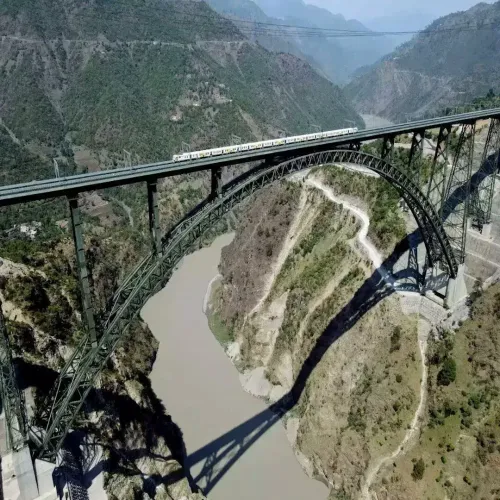
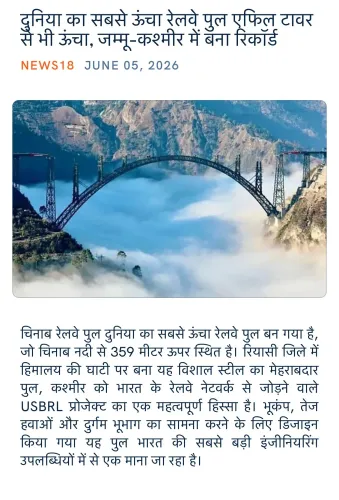
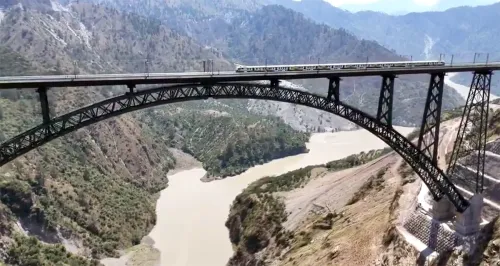
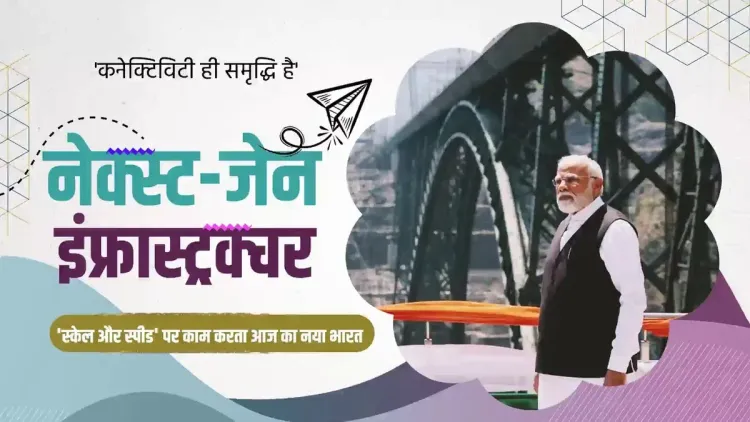
The Chenab Railway Bridge at 359 metres is the world's highest rail bridge, part of the Udhampur-Srinagar-Baramulla Rail Link .
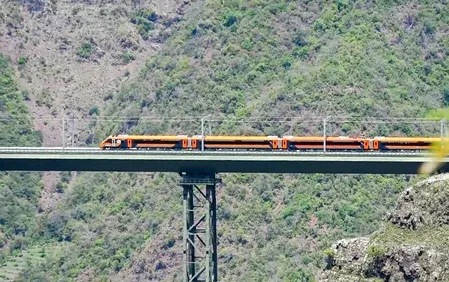
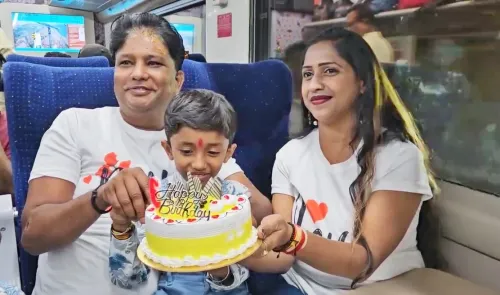
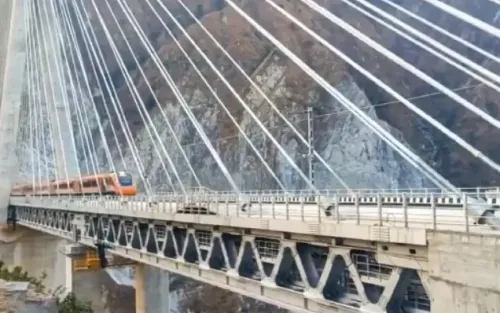
The Vande Bharat Express , first launched in 2019 , has been expanded across multiple national corridors as a semi-high-speed service.
The Bharatmala Pariyojana (approved 2017 ) underpins the expressway network cited in the post.
Improved rail connectivity to Kashmir is expected to benefit tourism, logistics, and residents dependent on weather-vulnerable road links.
Remaining USBRL sections and further Vande Bharat route expansions are anticipated in upcoming fiscal cycles.
Union Culture and Tourism Minister Gajendra Singh Shekhawat on Tuesday, June 16, 2026, invoked India's infrastructure milestones — from the world's highest railway bridge in Kashmir to the Vande Bharat Express — in a social media post framing the country's development trajectory as a shift from aspiration to ground-level execution.
Posting under the hashtag #12YearsOfNayaBharatNirman, Shekhawat wrote: 'नया भारत, नई रफ्तार: इंफ्रास्ट्रक्चर से आत्मनिर्भरता की ओर!' ('New India, New Speed: From Infrastructure to Self-Reliance!'). He described a country that 'does not merely dream but brings those dreams to the ground.'
Context
The post centres on two flagship infrastructure achievements. The Chenab Railway Bridge, standing at 359 metres, is the world's highest rail bridge and forms a critical span of the Udhampur-Srinagar-Baramulla Rail Link (USBRL), a long-pending project aimed at connecting the Kashmir Valley to the national rail network. Alongside it, Shekhawat cited the spread of expressways and the Vande Bharat Express as symbols of a modernised transport backbone reaching every corner of the country.
The minister's framing — 'infrastructure to self-reliance' — directly echoes the government's Atmanirbhar Bharat policy narrative, linking physical connectivity to the broader economic self-sufficiency agenda that has shaped public spending priorities in recent years.
Policy Backdrop
The USBRL project received renewed funding and accelerated execution after 2014, with the Chenab Bridge emerging as its most visible engineering feat. The Vande Bharat Express was first introduced in 2019 on the New Delhi–Varanasi route and has since been expanded across multiple corridors, representing Indian Railways' push into semi-high-speed passenger services.
On the roads side, the Bharatmala Pariyojana, approved in 2017, has driven construction of national highways and economic corridors, providing the expressway network Shekhawat references. Together, these projects form the structural spine of what the ruling party has consistently branded as a generational infrastructure transformation.
Stakeholders and Impact
The USBRL's completion carries particular significance for Jammu and Kashmir residents, who have historically faced road-dependent connectivity that is vulnerable to weather disruptions and security concerns. An all-weather rail link is expected to reduce travel times, lower freight costs, and open the valley to greater tourist footfall — a dimension directly relevant to Shekhawat's portfolio as Tourism Minister.
Railway passengers across the country are the primary beneficiaries of the Vande Bharat expansion, which offers faster journey times and improved onboard amenities compared to conventional express trains. The tourism sector stands to gain as better connectivity to remote and heritage destinations lowers the barrier for domestic travellers.
What's Next
Remaining sections of the Udhampur-Srinagar-Baramulla Rail Link are expected to be completed in coming fiscal cycles, with full operationalisation set to mark a historic moment for rail connectivity in the Himalayan region. Further route expansions of Vande Bharat services are also anticipated, deepening the semi-high-speed network beyond current corridors.
As the government continues to anchor its political messaging in visible infrastructure outcomes, posts like Shekhawat's signal that the #12YearsOfNayaBharatNirman campaign will remain a key communication vehicle in the run-up to future electoral cycles, tying tangible projects to the broader self-reliance narrative.
Point of View
Anchoring the ruling party's governance record in tangible, photogenic infrastructure. By tying the Chenab Bridge and Vande Bharat to the 'Atmanirbhar Bharat' frame, he reinforces a communications strategy that converts engineering milestones into electoral capital. The hashtag #12YearsOfNayaBharatNirman suggests a coordinated, long-cycle campaign designed to consolidate the party's development credentials ahead of future contests. For a minister whose portfolio spans culture and tourism, invoking connectivity infrastructure also signals an attempt to link physical access to the country's heritage and tourism potential.
NationPress
16 Sept 2026
Frequently Asked Questions
What is the Chenab Railway Bridge and why is it significant?
The Chenab Railway Bridge is the world's highest rail bridge at 359 metres , spanning the Chenab river in Jammu and Kashmir as part of the Udhampur-Srinagar-Baramulla Rail Link, which will provide all-weather rail connectivity to the Kashmir Valley for the first time.
What is the Vande Bharat Express?
The Vande Bharat Express is a semi-high-speed train service operated by Indian Railways, first introduced in 2019 on the New Delhi–Varanasi route and subsequently expanded across multiple corridors to modernise passenger travel.
What is the Bharatmala Pariyojana?
Bharatmala Pariyojana is a national highway and economic corridor construction programme approved in 2017 , which has driven the expressway expansion Shekhawat referenced in his post.
What does #12YearsOfNayaBharatNirman mean?
The hashtag #12YearsOfNayaBharatNirman appears to be a campaign framing twelve years of infrastructure and governance achievements under the current political dispensation as evidence of a transformed India, though the specific campaign details are not independently verified.
Why did Culture Minister Shekhawat post about railway infrastructure?
While Gajendra Singh Shekhawat holds the Culture and Tourism portfolio, improved rail and road connectivity directly supports tourism access to destinations like Kashmir , making infrastructure a relevant theme for his ministry alongside the broader party messaging on national development.