Jal Shakti Min Paatil Reviews NDSA Dam Safety Work
Synopsis
Union Jal Shakti Minister C. R. Paatil reviewed the National Dam Safety Authority's operations on 22 October 2026, reaffirming dam safety, real-time risk surveillance, and technical capacity-building for dam owners as the government's top priority under the Dam Safety Act, 2021.
Key Takeaways
Union Jal Shakti Minister C.
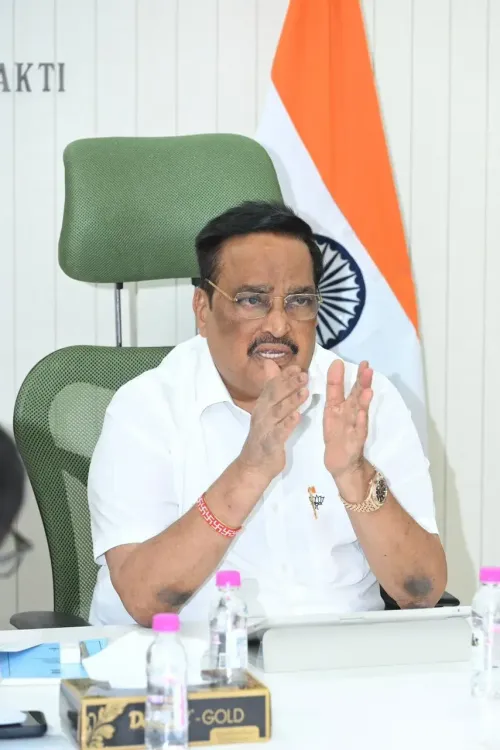
Paatil conducted a review of the National Dam Safety Authority (NDSA) on 22 October 2026 .
The NDSA was established under the Dam Safety Act, 2021 and became operational in 2022 as India's first statutory national dam safety body.
Paatil reaffirmed that timely risk identification, regular surveillance, and prevention of dam failures is the government's 'top priority'.
The ministry is committed to empowering dam owners with technical support, modern technology, and capacity-building to meet national safety standards.
India has over 6,000 large dams , most owned by state agencies, making central oversight and uniform standards critical to downstream community safety.
The review aligns with a broader Jal Shakti Ministry push to modernise ageing water infrastructure under PM Modi's administration.
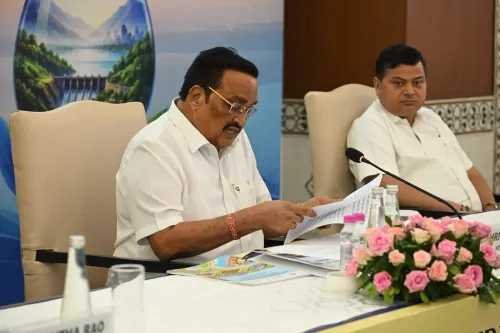
India's dams hold the water that feeds its farms, powers its cities, and sustains hundreds of millions of lives — and on Thursday, 22 October 2026, Union Jal Shakti Minister C. R. Paatil signalled that their safety is receiving the highest-level political attention. Paatil conducted a comprehensive review of the activities and operations of the National Dam Safety Authority (NDSA), the statutory body created to watch over every major dam in the country.
Posting in Hindi on X, Paatil said: 'देशभर में बांधों की सुरक्षा, नियमित निगरानी तथा जोखिमों की समय रहते पहचान और निवारण हमारी सर्वोच्च प्राथमिकता है' — 'Dam safety, regular surveillance, and the timely identification and prevention of risks across the country is our top priority.' He added that the government is committed to empowering dam owners through necessary technical support, modern technology, and capacity-building to ensure the highest safety standards.The Law Behind the Authority: Dam Safety Act, 2021
The NDSA did not exist five years ago. It was the Dam Safety Act, 2021 — enacted in December 2021 — that brought the authority into being, establishing for the first time a uniform national framework for dam inspection, surveillance, risk assessment, and rehabilitation. Before that legislation, dam safety was a patchwork of state-level rules with no central oversight body to enforce consistent standards.
The NDSA became operational in 2022, armed with powers to issue guidelines, conduct audits, and provide technical assistance to dam owners — which include state irrigation departments, power utilities, and other agencies managing the country's roughly 6,000-plus large dams. Today's ministerial review is part of the government's ongoing effort to ensure those powers are being exercised actively, not just on paper.
What 'Empowering Dam Owners' Means on the Ground
The language Paatil used is deliberate. Dam ownership in India is overwhelmingly at the state level — state irrigation and power departments run the vast majority of structures. The centre's role, through the NDSA, is to set standards, audit compliance, and backstop technical capacity that many state agencies still lack.
Paatil specifically highlighted three instruments: technical support, modern technology adoption, and capacity-building. That framing points to a persistent challenge — ageing infrastructure. Many of India's large dams were built in the decades after Independence and are now decades overdue for instrumentation upgrades, structural health monitoring, and trained engineering personnel at the site level. The NDSA's mandate is to close those gaps before they become disasters.
PM Modi's Water Infrastructure Push — and What Comes Next
Paatil closed his post with a direct reference to Prime Minister Narendra Modi, noting that work toward 'safe and strong water infrastructure' continues under his leadership. That framing is consistent with a broader Jal Shakti Ministry priority that has run through the current government's tenure: treating water infrastructure — dams, canals, pipelines — as a national security and economic asset, not just an engineering problem.
The signals to watch now are concrete: NDSA annual inspection reports, state-level compliance filings under the Dam Safety Act, and any new guidelines the authority releases on surveillance technology or rehabilitation financing. The review meeting Paatil described is a political checkpoint — the real measure will be in the field, at the dam face, the next time the monsoon tests these structures.
Point of View
2021 — whose implementation has historically been uneven across states. High-level ministerial reviews serve a dual purpose: they push state-level dam owners and irrigation departments to take compliance seriously, and they create a political accountability trail for the ruling government ahead of any future dam-related incident. The emphasis on technology adoption and capacity-building also signals that the Centre recognises the technical deficit at state dam management agencies, and is choosing a facilitative rather than purely punitive approach to close it. Whether the NDSA translates this political attention into measurable field outcomes — updated inspection records, retrofitted instrumentation, trained engineers on site — will be the true test of the post-2021 reform architecture.
NationPress
22 Oct 2026
Frequently Asked Questions
What is the National Dam Safety Authority (NDSA)?
The NDSA is a statutory body established under the Dam Safety Act, 2021, under the Ministry of Jal Shakti. It is responsible for setting dam safety standards, conducting audits, issuing guidelines, and providing technical assistance to dam owners across India. It became operational in 2022.
What is the Dam Safety Act, 2021?
The Dam Safety Act, 2021 was enacted in December 2021 and created India's first national framework for uniform dam inspection, surveillance, risk assessment, and rehabilitation. It established the NDSA and mandated all specified dam owners to follow its protocols.
Why did C. R. Paatil review the NDSA?
As Union Jal Shakti Minister, Paatil reviewed NDSA's activities and operations on 22 October 2026 to assess progress on dam safety surveillance, risk mitigation, and technical support to dam owners — part of the government's regular oversight of the body since the Dam Safety Act came into force.
How many large dams does India have?
India has over 6,000 large dams, the majority of which are owned and operated by state irrigation departments and power utilities. Ensuring uniform safety standards across this network is one of the NDSA's primary mandates.
What is the Jal Shakti Ministry responsible for?
The Ministry of Jal Shakti oversees water resources, river development, the Ganga rejuvenation mission, drinking water supply, and water infrastructure including dams. C. R. Paatil serves as the Union Minister heading this ministry.