Jal Shakti Minister Paatil Reviews JJM, Swachh Bharat in Navsari
Synopsis
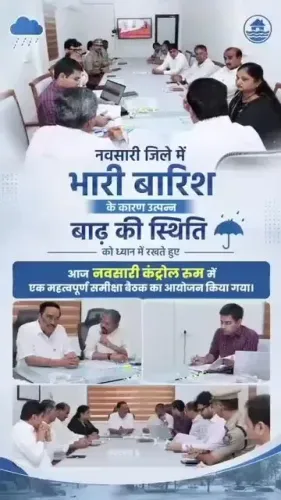
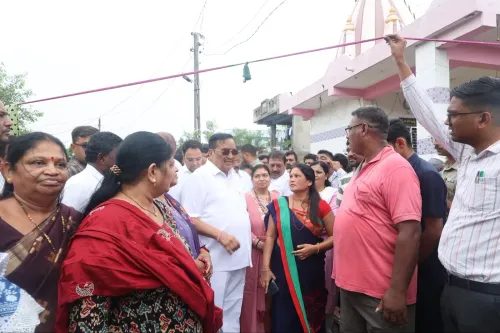
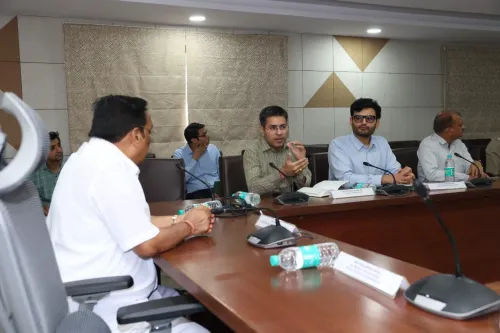
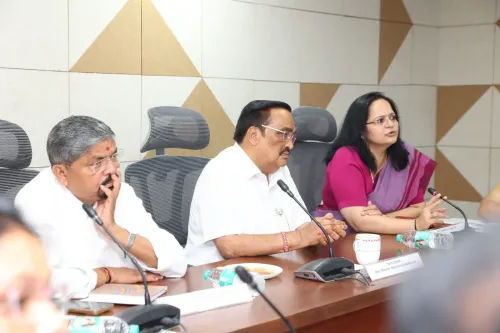
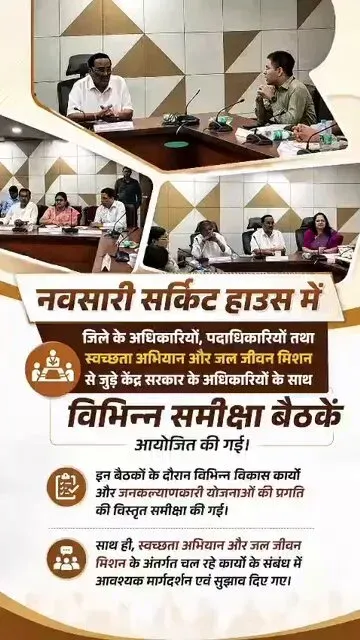
Union Jal Shakti Minister C. R. Paatil held a series of review meetings at Navsari Circuit House with district officials and central government officers to assess progress on the Jal Jeevan Mission and Swachh Bharat Abhiyan, sharing a glimpse of the engagements on X on 19 July 2026.
Key Takeaways
Paatil , Union Minister of Jal Shakti, conducted multiple review meetings at Navsari Circuit House in southern Gujarat.
The meetings included district officials, local office-bearers, and central government officers linked to Jal Jeevan Mission and Swachh Bharat Abhiyan .
Jal Jeevan Mission , launched in 2019 , aims to provide functional household tap water connections to all rural households across India.
Swachh Bharat Abhiyan , launched on 2 October 2014 , targets open-defecation-free status and improved sanitation infrastructure nationwide.
Gujarat has been positioned by the central government as an early and high-performing adopter of both flagship missions.
Review outcomes are expected to inform quarterly progress reports and could influence fund releases and coverage targets for Navsari district.
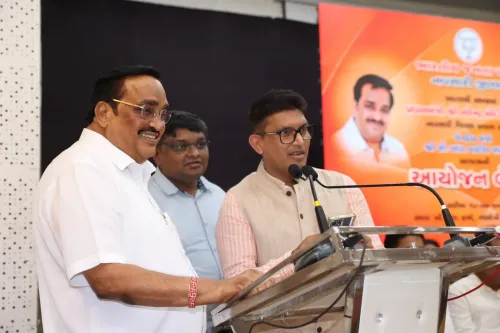
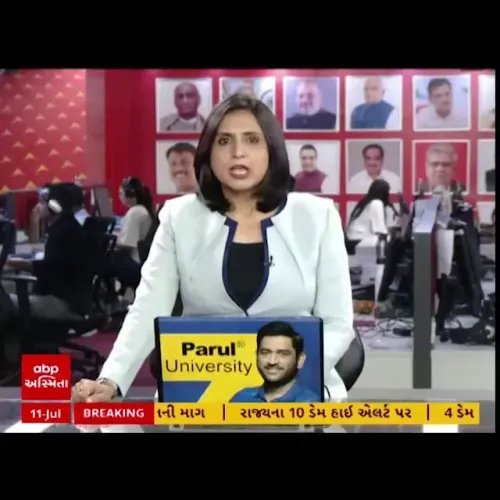
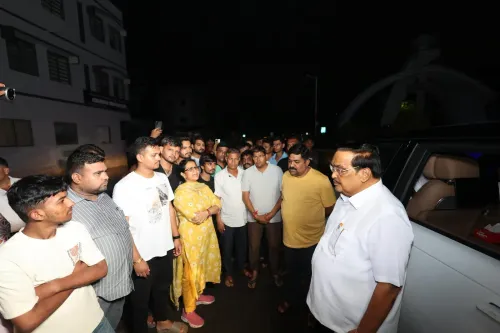
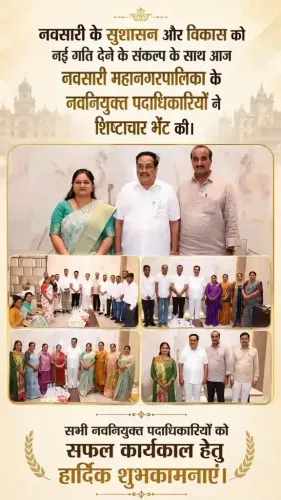
Union Jal Shakti Minister C. R. Paatil convened a series of review meetings at the Navsari Circuit House in Gujarat, bringing together district officials, office-bearers, and central government officers associated with the Swachh Bharat Abhiyan and the Jal Jeevan Mission. The minister shared a glimpse of the engagements on his official X account on 19 July 2026, describing the sessions as a moment of coordinated oversight across multiple flagship schemes.
In his post — written in Gujarati — Paatil described the meetings as 'વિવિધ સમીક્ષા બેઠકો' ('various review meetings'), held with district officers, elected representatives, and central officials linked to the two national missions. The circuit house setting, a standard administrative venue for ministerial field visits in Gujarat, signals a deliberate on-ground engagement rather than a routine Delhi-based review.
Context
The Navsari district, located in southern Gujarat, falls within the political constituency that C. R. Paatil has represented in the Lok Sabha. His dual role as the area's elected representative and as the Union minister responsible for water and sanitation policy makes such district-level reviews particularly significant — they combine ministerial oversight with constituency accountability.
The meetings brought together both central and district-level functionaries, reflecting the co-operative federal architecture through which Jal Jeevan Mission and Swachh Bharat Abhiyan are implemented. State and district machinery execute the programmes while the Union ministry monitors targets, expenditure, and coverage data.
Policy Backdrop
The Jal Jeevan Mission, announced in the 2019 Union Budget, set a target of providing functional household tap water connections (FHTCs) to every rural home in India. The scheme operates through a central-state cost-sharing framework and has been a centrepiece of the Jal Shakti Ministry's mandate since the ministry's creation that same year.
The Swachh Bharat Abhiyan, launched on 2 October 2014, targets open-defecation-free (ODF) status and sustainable sanitation infrastructure across urban and rural India. Gujarat has been cited by the central government as an early and high-performing adopter of both missions, making district-level reviews in the state a reference point for national implementation benchmarks.
Such field reviews are part of a structured monitoring mechanism used by the Jal Shakti Ministry to assess last-mile delivery, identify administrative bottlenecks, and coordinate between central programme officers and district-level executors.
Stakeholders and Impact
The primary beneficiaries of both missions are rural households in Navsari district — families awaiting tap water connections and communities working to maintain ODF-plus sanitation standards. District officials present at the review are directly responsible for on-ground execution, making ministerial-level engagement a pressure point for accelerated delivery.
Elected representatives and local office-bearers at the meeting bridge the gap between administrative targets and community-level feedback, ensuring that scheme gaps flagged at the grassroots reach the ministry's attention. For Navsari, a district in a state the ruling party regards as a governance model, performance on these schemes carries political as well as administrative weight.
What's Next
The outcomes of such district reviews typically feed into quarterly progress reports submitted to the Jal Shakti Ministry, influencing fund release schedules and coverage targets for the next reporting cycle. Observers will watch whether the Navsari review produces any specific directives on pending tap water connections or ODF sustainability certifications in the district.
With the forthcoming Union Budget cycle approaching, any supplementary provisions for Jal Jeevan Mission or expanded sanitation targets under Swachh Bharat could be shaped in part by ground-level findings from ministerial field visits such as this one.
Point of View
His own parliamentary constituency, underscores how flagship welfare infrastructure programmes double as political capital for senior leaders. For the Jal Shakti Ministry, district-level reviews serve a dual purpose: they generate ground-truth data to correct implementation gaps and signal to state machinery that central monitoring extends beyond Delhi dashboards. With Jal Jeevan Mission's original 2024 deadline long past and coverage targets still being pursued, such field engagements also carry an implicit urgency to accelerate last-mile delivery before the next budget cycle.
NationPress
18 Oct 2026
Frequently Asked Questions
What is Jal Jeevan Mission and what are its goals?
Jal Jeevan Mission is a central government scheme launched in 2019 to provide functional household tap water connections to every rural household in India, operating through a cost-sharing arrangement between the Union and state governments.
Why did C. R. Paatil visit Navsari Circuit House?
C. R. Paatil, Union Minister of Jal Shakti, held review meetings at Navsari Circuit House to assess the implementation of Jal Jeevan Mission and Swachh Bharat Abhiyan in the district, meeting with local officials and central programme officers.
What is Swachh Bharat Abhiyan?
Swachh Bharat Abhiyan is a national sanitation programme launched on 2 October 2014, aimed at achieving open-defecation-free status across India and improving solid waste management and sanitation infrastructure.
What is the significance of Navsari for C. R. Paatil?
Navsari is C. R. Paatil's Lok Sabha parliamentary constituency in southern Gujarat, making his ministerial field visit there a convergence of constituency engagement and central scheme oversight.
What happens after a Jal Shakti Minister's district review meeting?
Findings from such reviews typically feed into quarterly progress reports submitted to the Jal Shakti Ministry, which can influence fund release schedules, coverage targets, and administrative directives for the district concerned.