Mahua Moitra Slams Rijiju Over TMC Defectors at All-Party Meet
Synopsis
TMC MP Mahua Moitra has accused Parliamentary Affairs Minister Kiren Rijiju of 'severe impropriety' for inviting 20 TMC legislators — facing pending disqualification under the Tenth Schedule — to an all-party meeting, arguing the Speaker has neither recognised their group nor approved any merger.
Key Takeaways
Mahua Moitra publicly accused Kiren Rijiju of 'severe impropriety' on 19 July 2026 over the all-party meeting invitee list.
20 TMC legislators whose disqualification petitions are pending before the Lok Sabha Speaker were reportedly invited to the meeting.
The group they claim to represent, referred to as NCPI , has not been formally recognised by the Speaker, nor has any merger been effected.
Under the Tenth Schedule (1985) , the Lok Sabha Speaker alone has the authority to recognise a split or merger and adjudicate disqualification petitions.
The controversy raises questions about whether executive-convened all-party meetings can confer de facto legitimacy on constitutionally contested parliamentary groups.
The Speaker's formal ruling on the pending petitions is now the key procedural step that will determine the legislators' official status.
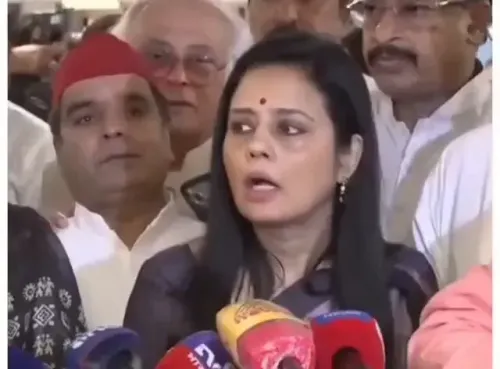
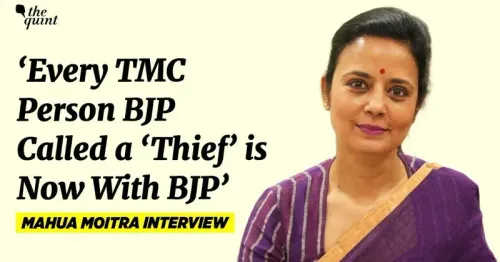
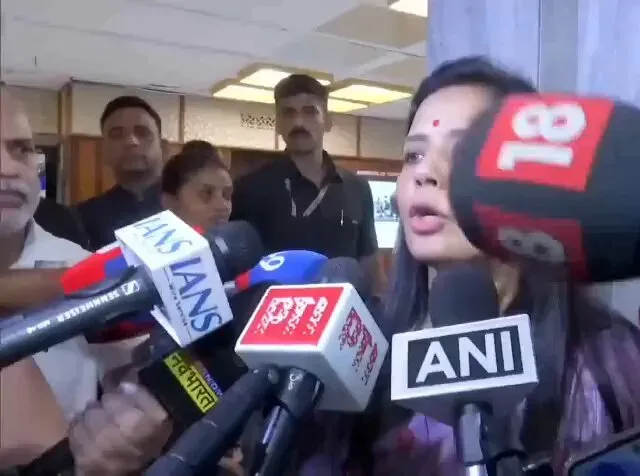
Trinamool Congress (TMC) Lok Sabha MP Mahua Moitra on Sunday, 19 July 2026, publicly accused Union Minister of Parliamentary Affairs Kiren Rijiju of 'severe impropriety' for inviting 20 TMC legislators — whose disqualification petitions are still pending before the Lok Sabha Speaker — to an all-party meeting, contending that neither their claimed group has been recognised by the Speaker nor has any merger been formally effected.
Context
Moitra stated on X that inviting the 20 TMC 'traitors' — her word — amounted to a procedural breach, given that their disqualification under the Tenth Schedule of the Constitution remains undecided. She specifically noted that the entity they purportedly represent, referred to as NCPI, 'neither been recognised nor merger effected by Speaker,' making their participation in an official all-party forum constitutionally and procedurally questionable.
The all-party meeting in question is a standard pre-session or inter-session consultation convened by the Parliamentary Affairs Ministry to coordinate legislative business across party lines. The guest list for such meetings is typically determined by the recognised composition of parliamentary groups, making the Speaker's formal orders the decisive gate.
Policy Backdrop
The Tenth Schedule, inserted into the Constitution in 1985, was designed precisely to curb opportunistic party-switching by elected legislators. It vests adjudicatory power in the Lok Sabha Speaker, who alone can decide whether a member is disqualified for defection, and whether a split or merger of a parliamentary party is legally valid.
Established rules of procedure and precedents dating to the 1990s make clear that no breakaway group can be treated as a separate parliamentary party or group — for purposes of whip enforcement, seat allocation, or official invitations — until the Speaker has formally recognised the split or merger. Without that recognition, the legislators in question continue to be counted as members of their original party, Trinamool Congress, and any disqualification petition against them remains live.
The BJP-led Union government, through the Parliamentary Affairs Ministry headed by Rijiju, is responsible for coordinating all-party meetings. Critics have previously argued that the composition of invitee lists at such meetings can confer de facto legitimacy on groups whose formal status is still contested before the Speaker.
Stakeholders and Impact
TMC as a parliamentary party stands to lose floor strength and bargaining power if legislators whose disqualification is pending are treated as a separate group in official forums. For the 20 legislators named in the disqualification petitions, inclusion in the all-party meeting could be read as implicit governmental recognition of their breakaway identity, potentially influencing public and political perception ahead of any Speaker's ruling.
The Lok Sabha Speaker, as a constitutional authority independent of the executive, is the only body empowered to resolve the underlying question. Moitra's public complaint effectively places pressure on the Speaker's office to expedite its ruling and on the Parliamentary Affairs Ministry to clarify the basis for the invitation.
What's Next
All eyes will now be on the Lok Sabha Speaker to issue a formal order on the pending disqualification petitions and to either recognise or reject the claimed parliamentary group. Until that order is issued, the procedural controversy flagged by Moitra is likely to persist and could spill into the well of the House when Parliament is next in session.
The episode underscores a recurring tension in Indian parliamentary practice: the executive's operational need to convene broad consultations versus the constitutional requirement that the Speaker's recognition serve as the definitive threshold for determining a legislator's formal party identity.
Point of View
She forces both the Parliamentary Affairs Ministry and the Speaker's office onto the defensive simultaneously. The episode fits a broader pattern in Indian parliamentary politics where the executive's coordination machinery and the Speaker's quasi-judicial role come into friction — especially when a ruling party has an interest in the outcome of defection disputes. The unresolved status of the 20 legislators and the NCPI entity makes the Speaker's next order unusually consequential, with implications for TMC's floor strength and the government's ability to manage opposition arithmetic. How the Speaker responds — and how swiftly — will signal whether the anti-defection framework retains its deterrent credibility in the current political climate.
NationPress
20 Jul 2026
Frequently Asked Questions
Why is Mahua Moitra objecting to the all-party meeting invitation?
Moitra argues it is improper to invite the 20 TMC legislators because their disqualification petitions under the Tenth Schedule are still pending before the Lok Sabha Speaker, and the group they claim to represent has not been formally recognised by the Speaker.
What is the Tenth Schedule and how does it apply here?
The Tenth Schedule, added to the Constitution in 1985, is India's anti-defection law. It empowers the Lok Sabha Speaker to disqualify members who switch parties and to decide whether a split or merger of a parliamentary group is legally valid — a ruling that has not yet been made in this case.
Who is Kiren Rijiju and what is his role in this controversy?
Kiren Rijiju is the BJP Union Minister of Parliamentary Affairs, responsible for coordinating government business and convening all-party meetings. Moitra holds him personally responsible for including the disputed legislators on the meeting's invitee list.
What is NCPI and why does its recognition matter?
NCPI appears to be the name of the parliamentary group claimed by the 20 legislators who reportedly broke from TMC. Until the Lok Sabha Speaker formally recognises it as a separate party or group, its members have no independent standing in Parliament and remain subject to TMC's whip.
What happens next in the TMC disqualification case?
The Lok Sabha Speaker must issue a formal order on the pending disqualification petitions. That ruling will determine whether the 20 legislators are disqualified, whether their group is recognised, and consequently whether their inclusion in official parliamentary forums was procedurally valid.