Mahua Moitra: 'Cut my head off, I will never join BJP'
Synopsis
TMC Lok Sabha MP Mahua Moitra posted a video on 7 July 2026 declaring she would 'never join BJP,' reinforcing the TMC's defiant stance against the ruling party amid persistent allegations of political poaching and centre-state tensions in West Bengal.
Key Takeaways
Mahua Moitra , TMC MP from Krishnanagar, West Bengal , publicly declared on 7 July 2026 that she would never join the BJP.
The statement was posted on X alongside a video clip, drawing swift attention from political observers.
The declaration reflects ongoing TMC-BJP tensions rooted in allegations of political poaching and use of central investigative agencies against opposition leaders.
During the 2021 West Bengal Assembly elections , the TMC successfully resisted large-scale BJP defections and retained power under CM Mamata Banerjee .
The post comes ahead of the 2026 monsoon session of Parliament , where TMC MPs are expected to maintain a combative posture against the Union government.
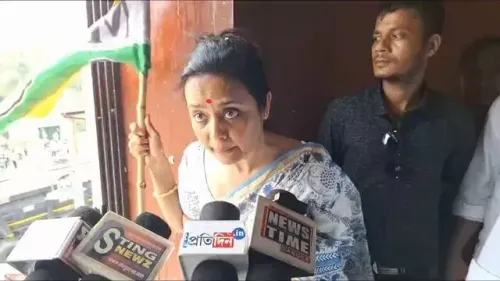
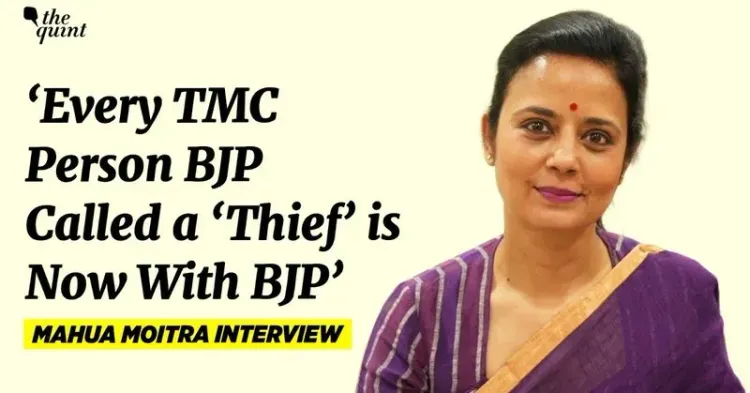
TMC MP Mahua Moitra on Tuesday, 7 July 2026, issued a sharp public declaration refusing to join the Bharatiya Janata Party (BJP), posting a video clip on X with the caption: 'You can cut my head off but I will never join BJP.' The post, which quickly drew attention across political circles, underscores the deepening fault lines between the All India Trinamool Congress (TMC) and the BJP-led Union government.
Context
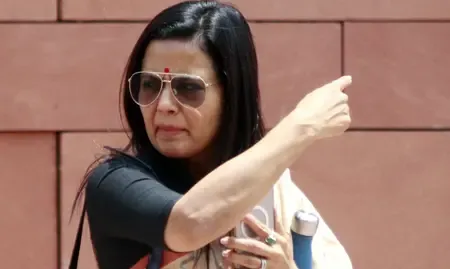
Moitra, the Lok Sabha MP from Krishnanagar, West Bengal, has been one of the most vocal critics of the BJP in Parliament and on social media. Her statement — 'You can cut my head off but I will never join BJP' — is an unambiguous public pledge against political defection, delivered at a moment when allegations of poaching opposition legislators have become a recurring feature of Indian politics.
The declaration follows a broader pattern in which regional party leaders have periodically issued such pledges, especially as the NDA's expansion post-2014 has been accompanied by high-profile defections from opposition parties across several states.
Policy Backdrop
The TMC-BJP rivalry is among the most intense in contemporary Indian politics. During the 2021 West Bengal Assembly elections, the TMC successfully resisted large-scale defections to the BJP and returned to power under Chief Minister Mamata Banerjee. Since then, both parties have traded accusations of political intimidation, misuse of central investigative agencies, and attempts to engineer defections.
Opposition MPs and regional party leaders have frequently alleged that the BJP uses the Enforcement Directorate (ED) and the Central Bureau of Investigation (CBI) as instruments of political pressure — a charge the BJP denies. Moitra herself has faced legal scrutiny in the past, making her public defiance particularly pointed in this context.
Stakeholders and Impact
TMC legislators and opposition MPs across parties are the immediate audience for such a declaration. Statements of this nature serve as internal signals of loyalty and external signals of resistance, reinforcing party cohesion at a time when defection anxieties remain high within non-NDA parties.
For West Bengal's political landscape, Moitra's post reaffirms the TMC's combative posture ahead of future electoral cycles. It also signals to the BJP that senior TMC figures — particularly those with national profiles — are unlikely to be peeled away through inducement or pressure.
What's Next
The 2026 monsoon session of Parliament is expected to see continued friction between the treasury and opposition benches, with TMC MPs likely to remain among the most assertive voices on the floor. Any reported shifts in West Bengal political alignments in the coming months will be closely watched, particularly as the state moves closer to its next electoral test.
Moitra's declaration, while symbolic, adds to a growing record of public resistance by opposition legislators — a record that will shape the narrative around political defections and party loyalty as India's electoral calendar advances.
Point of View
Such declarations serve a dual purpose: they reinforce internal party discipline and project an image of ideological resolve to the electorate. The timing, during a period of heightened centre-state friction and with a parliamentary session imminent, suggests the statement is as much a political signal to New Delhi as it is a message to TMC's own ranks. Whether such pledges translate into sustained legislative opposition or remain symbolic gestures will be the real test as India's electoral cycle intensifies.
NationPress
6 Oct 2026
Frequently Asked Questions
Why did Mahua Moitra say she will never join BJP?
Mahua Moitra posted a video on 7 July 2026 with the caption 'You can cut my head off but I will never join BJP,' reaffirming her loyalty to the TMC and publicly rejecting any possibility of defecting to the ruling BJP amid ongoing political tensions between the two parties.
Who is Mahua Moitra?
Mahua Moitra is the All India Trinamool Congress (TMC) Lok Sabha MP from Krishnanagar, West Bengal, and is known for her outspoken criticism of the BJP-led Union government in Parliament and on social media.
What is the TMC-BJP rivalry about?
The TMC-BJP rivalry centres on control of West Bengal, with both parties accusing each other of political intimidation, defection engineering, and misuse of central agencies. The TMC, led by Chief Minister Mamata Banerjee, defeated the BJP in the 2021 state elections.
Has Mahua Moitra faced any legal trouble from the BJP government?
Mahua Moitra has faced legal scrutiny in the past, including proceedings related to her parliamentary conduct, which she and the TMC have characterised as politically motivated. No final judicial verdict has been established in those matters.
What is political poaching in Indian politics?
Political poaching refers to the practice of inducing legislators from opposition parties to defect to the ruling party, often through offers of ministerial posts, protection from legal proceedings, or other incentives. It has been a recurring controversy in Indian politics, particularly since the NDA's expansion after 2014.