Mahua Moitra: Trinamool is Mamata, dissidents can join BJP
Synopsis
TMC MP Mahua Moitra on June 10, 2026 declared that Trinamool Congress and Mamata Banerjee are one and the same, openly inviting dissident factions she labelled 'Kakoli Congress' and 'Ritabrata Congress' to join BJP — a sharp consolidation message ahead of the 2026 West Bengal assembly elections.
Key Takeaways
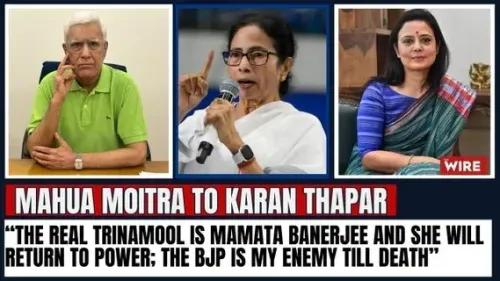
Mahua Moitra stated on June 10, 2026 that 'Trinamool is Mamata and Mamata is Trinamool,' reaffirming the party's identity as inseparable from its founder.
She called on factions she named 'Kakoli Congress' and 'Ritabrata Congress' to merge with BJP if they choose to leave TMC.
The remarks were made in an interview shared publicly on her official X account, amplifying the message beyond party channels.
West Bengal is approaching its 2026 assembly elections , making internal consolidation a high-stakes political priority for TMC.
TMC has used the same Mamata-centric unity framing successfully during the 2021 assembly elections , when it defeated BJP decisively despite defection attempts.
BJP remains the principal opposition in West Bengal and is implicitly cast in Moitra's statement as a refuge for anti-Mamata elements.
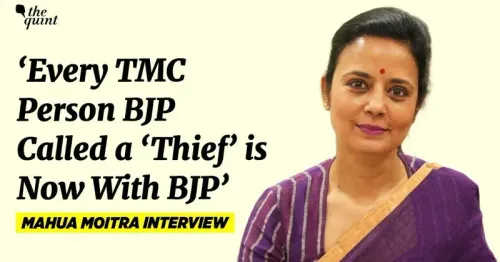
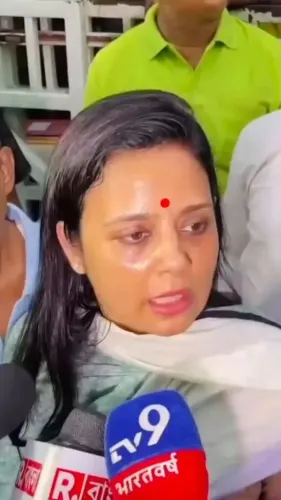
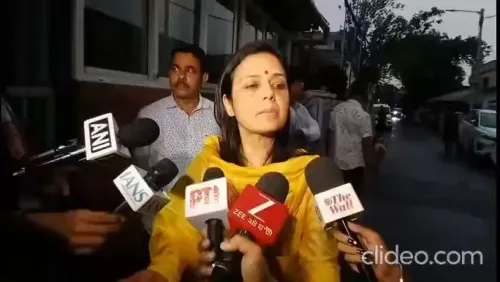
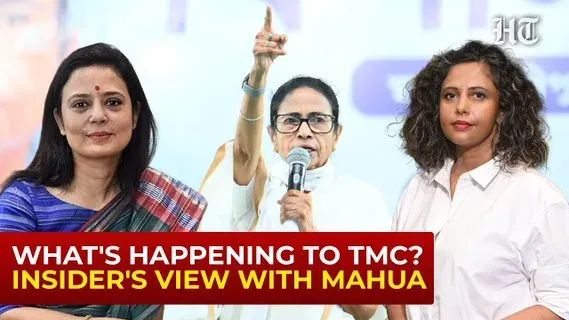
TMC MP Mahua Moitra on Wednesday, June 10, 2026 issued a sharp declaration of party loyalty, asserting that Trinamool Congress and Mamata Banerjee are inseparable — and telling factions she identified as 'Kakoli Congress' and 'Ritabrata Congress' they are free to merge with the Bharatiya Janata Party. The remarks came as part of an interview Moitra gave to Hindustan Times, a clip of which she shared on her official X account.
Context
In the post, Moitra wrote: 'Trinamool is Mamata & Mamata is Trinamool. Let the Kakoli Congress & Ritabrata Congress merge with BJP.' The statement is a direct challenge to internal dissent within the party, framing loyalty to Mamata Banerjee as the sole test of TMC membership. The references to 'Kakoli Congress' and 'Ritabrata Congress' point to factions associated with dissident figures inside the party's broader orbit, though their precise current status remains unconfirmed.
The interview was published as West Bengal approaches its 2026 assembly elections, a period when internal consolidation and counter-defection messaging typically intensify across regional parties.
Policy Backdrop
Trinamool Congress has governed West Bengal since 2011 under Mamata Banerjee, who founded the party and remains its undisputed chairperson. The party's political identity has long been built around her personal leadership — a framing TMC has used repeatedly to neutralise internal challengers and resist absorption attempts by national parties.
During the 2021 West Bengal assembly elections, TMC publicly highlighted BJP-backed efforts to engineer defections from its ranks. That campaign ultimately ended in a decisive TMC majority, reinforcing the leadership's belief that projecting unity around Banerjee is electorally effective. Moitra's current remarks follow the same strategic template ahead of the next state polls.
Stakeholders and Impact
The statement is directed at multiple audiences simultaneously: rank-and-file TMC workers are being signalled that the party line is non-negotiable; dissidents are being told the door to BJP is open if they choose to leave; and BJP, the principal opposition in West Bengal, is being framed as a destination for those unwilling to accept Banerjee's authority. The message also reinforces Moitra's own standing as a loyal voice within the TMC hierarchy.
For ordinary voters in West Bengal, the exchange underscores the binary that TMC wants to draw ahead of the assembly elections: the party versus a BJP that is portrayed as absorbing all anti-Mamata elements under one roof.
What's Next
Attention will now turn to whether the named factions respond publicly, and whether any formal merger announcements with BJP follow. Internal TMC communications over the coming weeks will indicate how seriously the leadership views the dissident challenge. With the 2026 West Bengal assembly elections on the horizon, any visible defection or consolidation move is likely to carry significant political weight.
Moitra's intervention signals that TMC intends to manage dissent loudly and publicly this cycle, using media platforms to draw clear loyalty lines before the campaign season formally begins.
Point of View
Designed to force fence-sitters into a public choice before the campaign season begins. By naming specific factions and pointing them toward BJP, she simultaneously shrinks the space for quiet dissent and hands TMC a ready-made narrative — that all opposition to Mamata is, in effect, BJP-aligned. This mirrors the party's successful 2021 strategy of collapsing the political field into a binary between Mamata and the Centre. The louder and earlier such signals are sent, the harder it becomes for potential defectors to negotiate a middle ground.
NationPress
13 Sept 2026
Frequently Asked Questions
What did Mahua Moitra say about Trinamool Congress?
Mahua Moitra declared that 'Trinamool is Mamata and Mamata is Trinamool,' asserting that the party's identity is inseparable from its founder Mamata Banerjee.
Who are Kakoli Congress and Ritabrata Congress in TMC?
These are labels Moitra used for dissident factions within the broader TMC orbit, though their precise current status and activities have not been independently confirmed.
Why is Mahua Moitra telling TMC dissidents to join BJP?
Moitra's statement is a consolidation move ahead of the 2026 West Bengal assembly elections, publicly framing loyalty to Mamata Banerjee as the only acceptable position within TMC.
What is the significance of TMC's unity message before 2026 elections?
With West Bengal assembly elections approaching in 2026, TMC is drawing sharp loyalty lines early to prevent defections and to cast BJP as the destination for all anti-Mamata elements — a strategy that worked in the 2021 elections.
What did Mahua Moitra say in her Hindustan Times interview?
Moitra shared a clip of her interview in which she asserted the Mamata-Trinamool equation and challenged dissident factions, though the full interview covers broader party and political matters.