Amit Shah Coordinates Relief After Cyclone Arnab Hits Coast

Synopsis
Union Home Minister Amit Shah spoke with Chief Ministers of four states hit by Cyclone Arnab on October 29, 2026, assuring central assistance. NDRF and SDRF teams are conducting rescue operations, with IMCTs to be deployed for damage assessment and further aid allocation.
Key Takeaways
Cyclone Arnab has impacted Andhra Pradesh , Puducherry , Odisha , and Chhattisgarh , prompting immediate central government response.
Home Minister Amit Shah personally telephoned all four Chief Ministers on October 29, 2026 to assure them of full central assistance.
NDRF and SDRF teams are conducting rescue and relief operations 'on a war footing' across affected areas.
Inter-Ministerial Central Teams (IMCTs) will be dispatched shortly to assess damage and determine additional aid requirements.
The response follows the established framework of the Disaster Management Act, 2005 , which created NDRF and the National Disaster Management Authority.
IMCT findings will directly determine the quantum of central financial assistance released to the affected states.
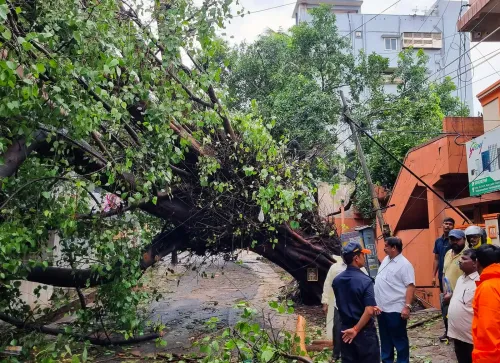
A cyclone has swept across India's eastern and southern coastline, and Union Home Minister Amit Shah moved swiftly on Thursday, October 29, 2026 — calling the Chief Ministers of four affected states and territories and committing the full weight of the central government to disaster relief.
Four states, one crisis call
Cyclone Arnab has forced coordinated action across Andhra Pradesh, Puducherry, Odisha, and Chhattisgarh — a spread that signals the storm's reach across both the coast and inland. Shah spoke directly with each of the four Chief Ministers, personally assuring them of 'every assistance to mitigate the hardship of the people in the face of the disaster.' In disaster management terms, that phone call is the formal starting gun for central resource mobilisation.
NDRF and SDRF already in the field
Teams from the National Disaster Response Force (NDRF) — the central government's dedicated disaster rescue arm operating under the Ministry of Home Affairs — and the state-level SDRF units are already on the ground. Shah described their operations as continuing 'on a war footing,' the phrase that signals maximum-priority deployment with no pause for procedural delays. The NDRF was created precisely for moments like this under the Disaster Management Act, 2005, which also established the National Disaster Management Authority to synchronise central and state responses.
IMCTs: the damage-assessment clock starts now
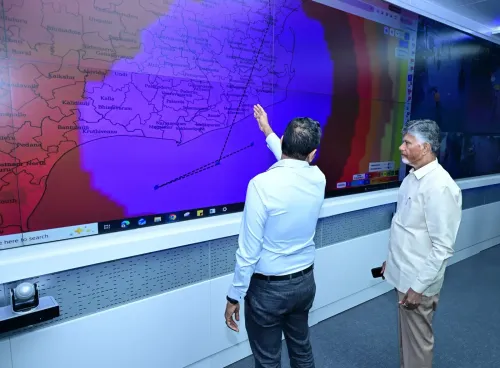
Inter-Ministerial Central Teams (IMCTs) will soon be dispatched to the affected regions. These are multi-ministry expert teams constituted specifically to survey on-ground destruction, validate state government damage reports, and recommend the quantum of central financial and logistical assistance. Their findings directly determine how much relief flows from New Delhi's coffers to state governments. The IMCT mechanism is a well-worn instrument — it has been deployed consistently after every major Bay of Bengal cyclone to ensure that aid is calibrated to actual need, not estimates.
Why Odisha and Andhra are always in this conversation
Both Odisha and Andhra Pradesh sit squarely in the Bay of Bengal's cyclone corridor, making them the most frequently battered states on India's eastern seaboard. Odisha in particular has built some of the country's most robust early-warning and evacuation protocols after the catastrophic 1999 Super Cyclone, and its disaster management machinery is consistently activated ahead of landfall. The inclusion of inland Chhattisgarh alongside coastal states suggests Arnab's rain and wind field extended well beyond the shoreline.
The next critical signal will be the IMCT assessment reports — those findings will determine whether additional central forces, funds, or emergency supplies are mobilised. For the hundreds of thousands of people currently in the storm's path, the machinery is running. Whether it runs fast enough is the only question that matters now.
Point of View
Not just symbolic solidarity. This response fits the BJP-led Centre's broader pattern of visibly asserting federal disaster leadership, using the Home Minister as the operational face of crisis coordination — a role that both builds institutional credibility and keeps the party's disaster-response record front and centre ahead of state-level electoral cycles.
NationPress
29 Oct 2026
Frequently Asked Questions
What is Cyclone Arnab and which states did it affect?
Cyclone Arnab is a cyclonic storm that struck India's eastern and southern coastline, affecting Andhra Pradesh , Puducherry , Odisha , and Chhattisgarh as of October 29, 2026 . Its rain and wind field extended inland, reaching as far as Chhattisgarh.
What is NDRF and what role is it playing in Cyclone Arnab relief?
The National Disaster Response Force (NDRF) is India's central disaster rescue organisation under the Ministry of Home Affairs, created by the Disaster Management Act, 2005. Its teams have been deployed 'on a war footing' for rescue and relief operations in areas hit by Cyclone Arnab.
What are IMCTs and why are they being sent after Cyclone Arnab?
Inter-Ministerial Central Teams (IMCTs) are expert panels constituted by the central government to assess actual damage on the ground after a disaster. Their reports directly determine how much central financial and logistical assistance is released to affected state governments.
Did Amit Shah visit the cyclone-affected states?
Home Minister Amit Shah has so far coordinated response by telephone, speaking with the Chief Ministers of all four affected states on October 29, 2026 . Physical visits or further steps have not been announced at this stage.
What central government help will cyclone-affected people receive?
Immediately, NDRF and SDRF teams are conducting rescue and relief operations. Once IMCTs complete their damage assessment, the Centre will determine additional financial assistance, resources, and support to be provided to Andhra Pradesh, Puducherry, Odisha, and Chhattisgarh .