Cyclone Arnab: Shah assures aid to Andhra, Odisha, 5 dead, 17 districts hit
Synopsis
Cyclone Arnab has killed five people in Andhra Pradesh, battered 17 Odisha districts, and drawn comparisons to the devastating Hudhud of 2014 — even as IMD says the storm is now weakening. Home Minister Amit Shah personally called four Chief Ministers and pledged central teams and NDRF deployment, signalling the government is treating this as a serious multi-state emergency.
Key Takeaways
Home Minister Amit Shah called the Chief Ministers of Andhra Pradesh , Puducherry , Odisha , and Chhattisgarh on 29 October 2026 , assuring full central assistance.
NDRF and SDRF teams are conducting rescue and relief operations; IMCTs to be dispatched for damage assessment.
Five people died in Andhra Pradesh ; Chief Minister N.
Chandrababu Naidu announced a compensation package for affected families, farmers, and fishermen.
At least 17 districts in southern Odisha reported heavy rainfall; the cyclone crossed the Andhra Pradesh coast on Wednesday .
IMD reports Cyclone Arnab has weakened to a deep depression and is expected to further weaken to a low-pressure area by Thursday evening.
Residual rainfall warnings remain in force for Telangana (12 districts), Jharkhand , and parts of Kerala .
Union Home Minister Amit Shah on Thursday, 29 October 2026 said he had spoken with the Chief Ministers of Andhra Pradesh, Puducherry, Odisha, and Chhattisgarh following Cyclone Arnab, assuring each of full central government support to ease the hardships faced by affected populations. The National Disaster Response Force (NDRF) and State Disaster Response Forces (SDRFs) have already launched rescue and relief operations, Shah said.
What Shah Said
In a post on social media platform X, Shah confirmed the Centre's commitment. “NDRF and SDRF teams have sprung into action and are continuing rescue and relief operations on a war footing. IMCTs will soon be sent to assess the impact and further assistance required. The Government of India stands with the people with resolute commitment,” Shah said.
Inter-Ministerial Central Teams (IMCTs) are to be dispatched shortly to conduct on-ground damage assessments and identify what additional federal support may be required.
Casualties and Ground Impact
Five people lost their lives in Andhra Pradesh, prompting Chief Minister N. Chandrababu Naidu to announce a relief and compensation package covering affected families, farmers, fishermen, and businesses. In neighbouring Odisha, at least 17 districts in the southern part of the state reported heavy rainfall triggered by the storm, which made landfall along the Andhra Pradesh coast on Wednesday.
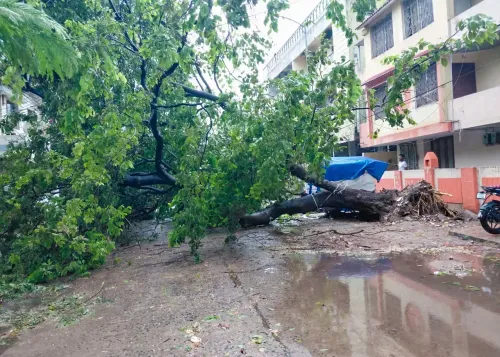
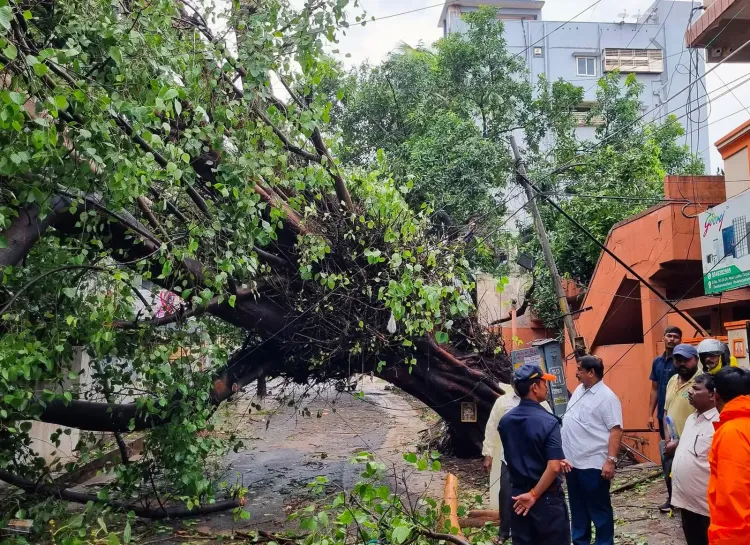
Residents compared the aftermath to Cyclone Hudhud, which devastated the region in October 2014. While Arnab was less severe and did not make a direct city landfall, strong overnight winds caused extensive damage to green cover, uprooted electric poles, and led to prolonged power outages and disrupted mobile connectivity.
IMD Update: Cyclone Weakening
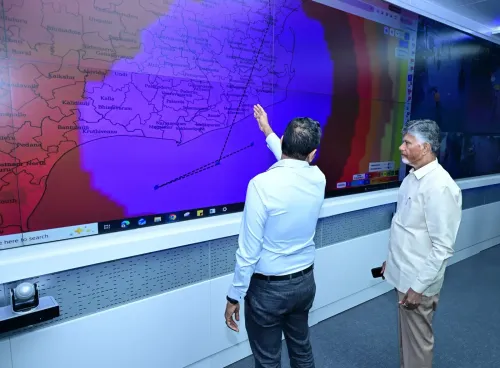
The India Meteorological Department (IMD), in its latest weather bulletin on Thursday, said Cyclonic Storm Arnab had weakened into a deep depression and was likely to further weaken into a depression by Thursday morning, followed by a well-marked low-pressure area by evening. The worst of the storm's direct impact is expected to have passed, though residual rainfall activity will persist across several states.
Wider Rainfall Warning Across States
Rainfall activity is likely to ease considerably across Kerala in the coming days, with daytime temperatures expected to rise. In Telangana, isolated places in 12 districts are likely to experience thunderstorms accompanied by lightning and gusty winds on Thursday. Rainfall is also expected to intensify in parts of Jharkhand and continue until Friday. Gudabanda in East Singhbhum district recorded the highest rainfall at 71.4 mm since Wednesday evening, followed by Manjhari in West Singhbhum district at 64 mm.
As assessments continue and IMCTs prepare to move in, the full extent of agricultural and infrastructure damage across the affected states is yet to be determined.
Point of View
NDRF deployment, and IMCT dispatch — reflects the institutional lessons absorbed after Hudhud 2014 and Fani 2019, when delayed assessments slowed compensation. The real accountability test, however, lies in how quickly the promised relief reaches small farmers and fishermen in Andhra's coastal belt, a constituency historically vulnerable to slow disbursal. With Arnab weakening faster than feared, the political risk for both the Centre and state governments has eased; the administrative risk of underreporting rural damage has not. The Hudhud comparison also serves a reminder that infrastructure hardening in cyclone-prone coastal Andhra remains unfinished work, twelve years on.
NationPress
29 Oct 2026
Frequently Asked Questions
What is Cyclone Arnab and which states did it affect?
Cyclone Arnab is a cyclonic storm that crossed the Andhra Pradesh coast on Wednesday, 28 October 2026, triggering heavy rainfall and damage across multiple states. Andhra Pradesh, Odisha, Puducherry, Chhattisgarh, Telangana, and Jharkhand have all reported impact from the storm or associated rainfall.
What has the central government done in response to Cyclone Arnab?
Home Minister Amit Shah called the Chief Ministers of Andhra Pradesh, Puducherry, Odisha, and Chhattisgarh on 29 October 2026, assuring full central support. NDRF and SDRF teams have been deployed for rescue and relief, and Inter-Ministerial Central Teams (IMCTs) are to be dispatched to assess damage and determine further assistance.
How many people have died due to Cyclone Arnab?
At least five people have lost their lives in Andhra Pradesh due to Cyclone Arnab, according to reports. Chief Minister N. Chandrababu Naidu has announced a relief and compensation package for affected families, farmers, fishermen, and businesses.
What is the latest update on Cyclone Arnab from the IMD?
The India Meteorological Department reported on Thursday that Cyclone Arnab had weakened from a cyclonic storm into a deep depression. It was expected to further weaken into a depression by Thursday morning and into a well-marked low-pressure area by Thursday evening.
How does Cyclone Arnab compare to Cyclone Hudhud?
Cyclone Hudhud struck the same region in October 2014, causing widespread devastation. Arnab is considered less severe and did not make a direct city landfall, but it has still caused uprooted electric poles, power outages, damage to green cover, and disrupted mobile networks — effects that residents say are reminiscent of Hudhud.