PM Modi Hails India's Best-Ever IChO Performance as All Four Win Gold
Synopsis
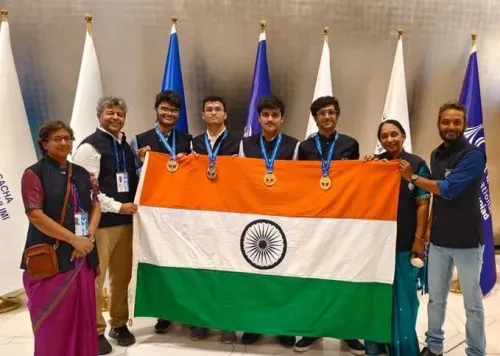
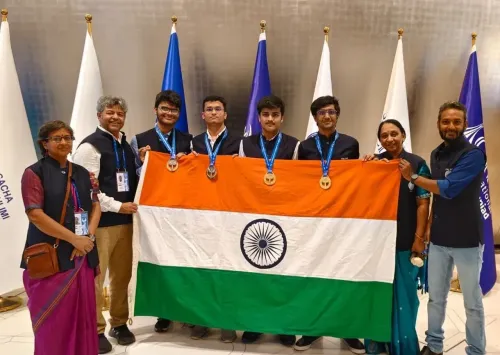
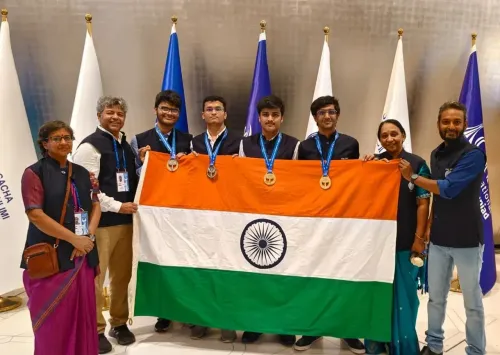
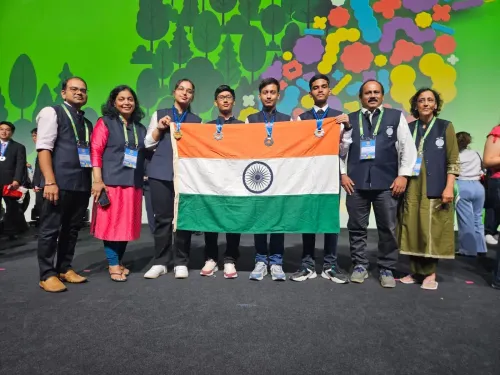
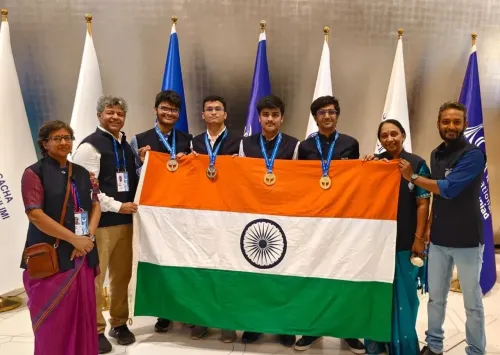
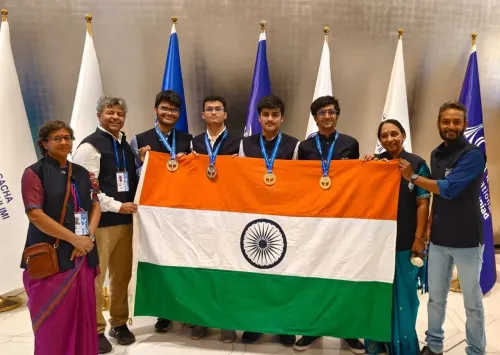
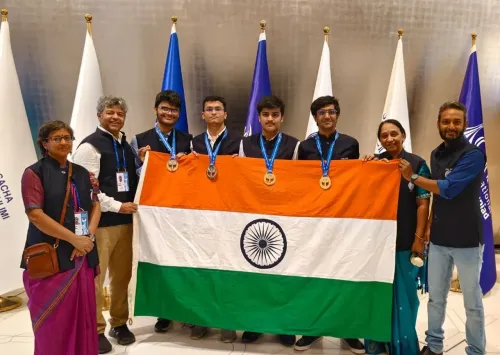
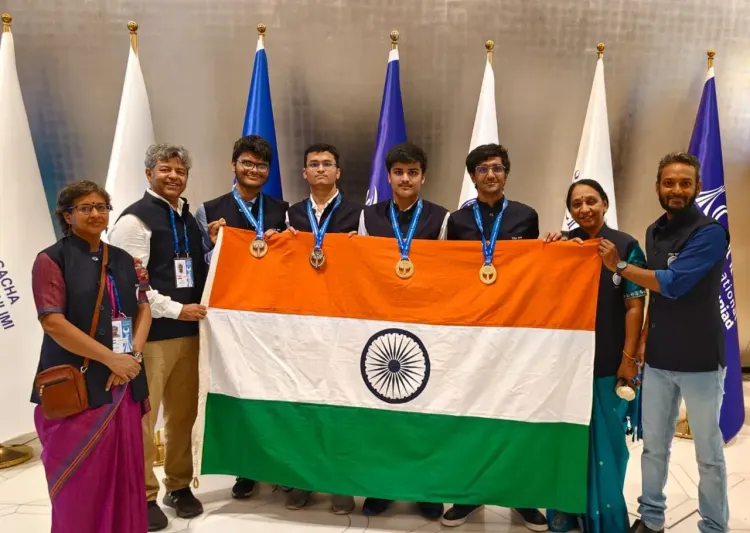
All four members of India's team at the 58th International Chemistry Olympiad won gold medals, marking the country's best-ever performance at the competition. Prime Minister Narendra Modi praised students Debadatta Priyadarshi, Harshit Singhal, Kabeer Chhillar, and Sandeep Kuchi, calling the achievement a source of national pride and an inspiration for young science aspirants.
Key Takeaways
All four Indian students — Debadatta Priyadarshi , Harshit Singhal , Kabeer Chhillar , and Sandeep Kuchi — won gold medals at the 58th International Chemistry Olympiad .
Prime Minister Narendra Modi called it India's best-ever performance at the IChO on 19 July 2026 .
India has participated in the IChO since 1999 , with teams trained by the Homi Bhabha Centre for Science Education (HBCSE) .
The result aligns with the National Education Policy 2020 's emphasis on early science talent identification and research-oriented secondary education.
The government's INSPIRE scheme (launched 2008 ) provides scholarships supporting the pipeline of students who compete in international science olympiads.
The clean sweep may strengthen calls for expanded HBCSE training capacity ahead of the next Union Budget cycle.
Prime Minister Narendra Modi on Sunday, 19 July 2026 congratulated four Indian students — Debadatta Priyadarshi, Harshit Singhal, Kabeer Chhillar, and Sandeep Kuchi — for winning gold medals at the 58th International Chemistry Olympiad (IChO), calling it India's best-ever performance at the prestigious competition.
Context
In his post on X, Modi wrote that India's 'Yuva Shakti' (youth power) 'continues to make a mark globally,' adding that the four students' 'brilliance, dedication and passion for science have made the entire nation proud.' He noted the result would 'motivate countless young minds to study and excel in chemistry.' All four members of India's four-student team returned with gold — a clean sweep that marks the country's strongest showing in the olympiad's history.
The International Chemistry Olympiad is an annual global competition for secondary-school students, held each July and widely regarded as the most rigorous pre-university chemistry contest in the world. India has participated since 1999, with teams selected and trained by the Homi Bhabha Centre for Science Education (HBCSE), a unit of the Tata Institute of Fundamental Research.
Policy Backdrop
HBCSE runs the National Standard Examination in Chemistry and a multi-stage training camp that culminates in the selection of a four-member squad. The programme sits within a broader olympiad ecosystem covering physics, mathematics, biology, and astronomy, all of which have produced incremental medal gains over the past two decades.
The government's INSPIRE scheme, launched in 2008, provides scholarships and mentorship to top-performing school students in science, creating a pipeline that feeds into olympiad preparation. The National Education Policy 2020 further emphasised early identification of talent and research-oriented science education at the secondary level — a framework that directly supports the kind of specialised coaching HBCSE provides.
Stakeholders and Impact
The four gold medallists — Debadatta Priyadarshi, Harshit Singhal, Kabeer Chhillar, and Sandeep Kuchi — are among a small cohort of students who each year undergo months of intensive residential training at HBCSE before representing India on the global stage. Their clean sweep is a milestone for the programme and for Indian science education broadly.
Beyond individual recognition, the result carries institutional weight. A perfect gold-medal haul signals that India's olympiad infrastructure — selection rigour, training depth, and institutional support — has matured significantly. Aspiring researchers across the country, particularly those enrolled in science-focused secondary schools, are likely to view this outcome as evidence that the path from classroom to international podium is achievable.
What's Next
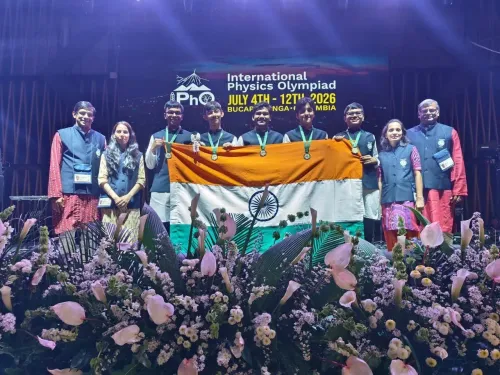
Attention will now turn to parallel performances at the International Physics Olympiad, International Mathematical Olympiad, and International Biology Olympiad in the same season, as India seeks to build on its growing reputation across science disciplines. The 59th IChO will provide the next benchmark for whether this year's clean sweep can be matched or exceeded.
Domestically, the result may strengthen calls for expanded HBCSE training capacity and greater budgetary support for olympiad programmes in the upcoming Union Budget cycle, as policymakers look to institutionalise what has so far been an incremental success story.
Point of View
Built patiently through HBCSE over more than two decades, is now producing world-class results at scale. Modi's public congratulations follow a well-established pattern of using olympiad victories to reinforce the government's 'Yuva Shakti' narrative, linking youth achievement to national ambition. The timing is politically useful: it frames science excellence as a dividend of education reform, particularly NEP 2020, even as that policy's implementation remains uneven across states. Whether the momentum translates into concrete budgetary expansion for HBCSE or the INSPIRE scheme will be the real test of institutional commitment.
NationPress
18 Oct 2026
Frequently Asked Questions
Who won gold medals for India at the 58th International Chemistry Olympiad?
The four Indian gold medallists at the 58th IChO are Debadatta Priyadarshi, Harshit Singhal, Kabeer Chhillar, and Sandeep Kuchi — all four members of India's team returned with gold, marking a clean sweep.
What is the International Chemistry Olympiad?
The International Chemistry Olympiad (IChO) is an annual global competition for secondary-school students, widely considered the most rigorous pre-university chemistry contest in the world. It is held each July, and India has participated since 1999.
Which organisation trains India's IChO team?
The Homi Bhabha Centre for Science Education (HBCSE), a unit of the Tata Institute of Fundamental Research, selects and trains India's teams for international science olympiads, including the International Chemistry Olympiad.
Why did PM Modi call this India's best performance at the IChO?
PM Modi described the 58th IChO result as India's best-ever because all four members of the Indian team won gold medals — a clean sweep that surpasses the country's previous medal tallies at the competition.
How does the government support students who compete in science olympiads?
The government's INSPIRE scheme, launched in 2008, provides scholarships and mentoring to high-performing school students in science. The National Education Policy 2020 also emphasises early talent identification and research-oriented science education, supporting the olympiad pipeline.