Jal Shakti Minister Paatil backs DCPS Peya Jal Samvad drive
Synopsis
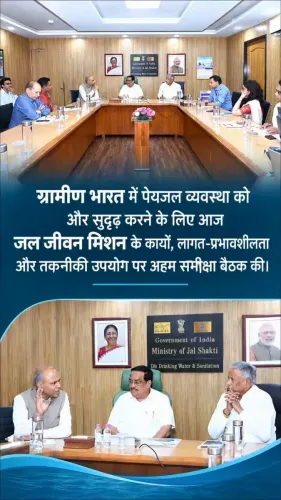
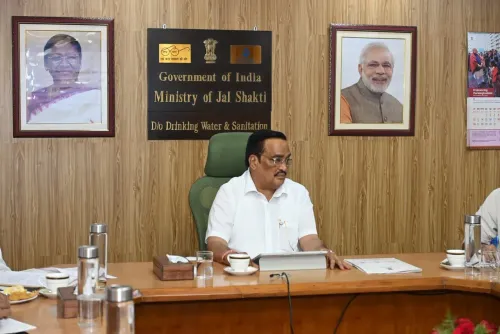
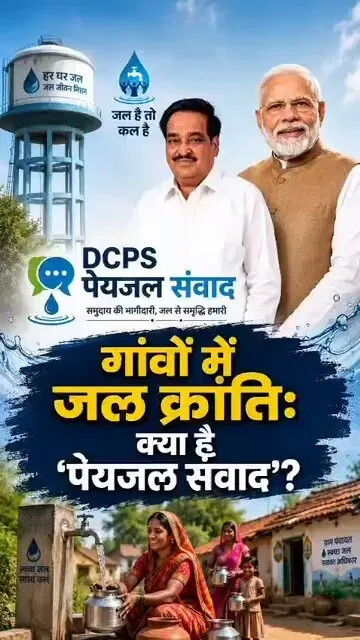
Union Jal Shakti Minister C. R. Paatil on 25 May 2026 backed the DCPS Peya Jal Samvad initiative as a people-driven effort to fulfil PM Modi's 'Har Ghar Jal' vision, stressing village-level awareness on drinking water safety and conservation under the Jal Jeevan Mission framework.
Key Takeaways
Union Jal Shakti Minister C.
Paatil publicly endorsed the DCPS Peya Jal Samvad campaign on 25 May 2026 .
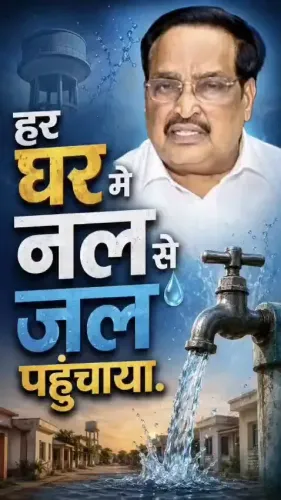
The campaign aims to advance PM Modi 's 'Har Ghar Jal' pledge through community participation at the village level.
Focus areas include drinking water safety , water conservation , and water management awareness in rural India.
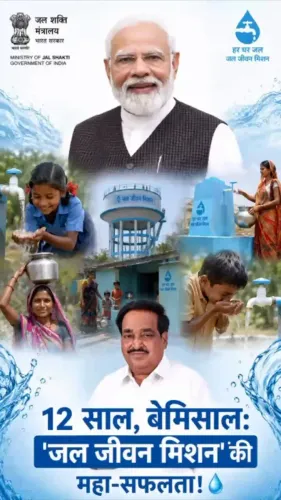
The initiative aligns with the Jal Jeevan Mission , launched in August 2019 to provide tap water to every rural household.
Paatil underscored the slogan 'Jal hai toh kal hai' — 'If there is water, there is tomorrow' — as the campaign's guiding principle.
Village panchayats and local communities are central to last-mile delivery and sustainability of water infrastructure.
Union Jal Shakti Minister C. R. Paatil on Monday, 25 May 2026 endorsed the DCPS Peya Jal Samvad initiative, calling it a vital step toward realising Prime Minister Narendra Modi's 'Har Ghar Jal' vision through active public participation.
Context
In his post, Minister Paatil described the campaign as a meaningful effort to translate the PM's pledge into ground-level action. He wrote: 'Jal hai toh kal hai' — 'If there is water, there is tomorrow' — framing water security as inseparable from the nation's future. The post accompanied a video, signalling a broader outreach push by the Ministry of Jal Shakti.
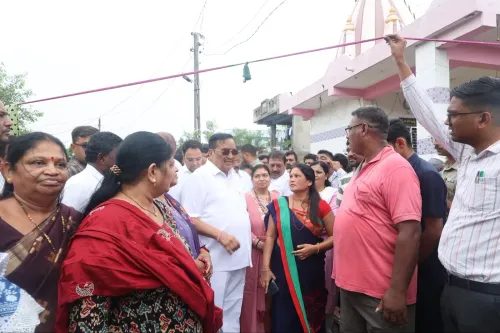
The DCPS Peya Jal Samvad is positioned as a public-dialogue platform aimed at raising awareness about drinking water safety, water conservation, and water management at the village level. Paatil stressed that 'janabhagidari' — people's participation — is central to making the mission succeed.
Policy Backdrop
The campaign sits squarely within the framework of the Jal Jeevan Mission, launched in August 2019 to provide functional household tap connections to every rural home in India. The mission, one of the largest drinking-water infrastructure programmes in the world, has since expanded its focus to include source sustainability and community-led water stewardship.
Complementing the infrastructure push, the government has periodically run awareness campaigns — including the Jal Shakti Abhiyan — that stress conservation, greywater management, and local water budgeting. The DCPS Peya Jal Samvad appears to follow this dual-track approach: hardware (pipes and taps) reinforced by software (behavioural change at the grassroots).
Central-state coordination remains the operational backbone of these efforts. Village panchayats and local water committees are expected to translate national targets into measurable outcomes at the household level.
Stakeholders and Impact
Rural households across India remain the primary beneficiaries of the 'Har Ghar Jal' goal. Tens of millions of families — particularly in water-stressed states — stand to gain from improved access to safe, piped drinking water alongside community knowledge on conservation.
Village panchayats are key institutional actors, responsible for last-mile delivery and maintenance of water infrastructure. Awareness dialogues of the kind Paatil endorsed are designed to build local ownership, reducing dependence on state machinery for day-to-day water management.
The broader public-health dimension is significant: access to clean drinking water directly reduces waterborne disease burden, with women and children disproportionately benefiting from reduced time spent fetching water from distant sources.
What's Next
State-level progress dashboards tracking remaining uncovered rural households are expected to be updated in forthcoming Jal Shakti reviews. Any new guidelines on community-led water-source protection are also anticipated as the mission moves into its sustainability phase.
With Minister Paatil lending his public platform to the DCPS Peya Jal Samvad, the campaign is likely to receive amplified outreach across BJP-governed states where the party's organisational network can mobilise village-level participation. The emphasis on 'janabhagidari' also signals that the Centre intends to measure success not just by tap connections but by community engagement and water-literacy indicators.
Point of View
The Minister signals a shift in accountability metrics — from tap connections alone toward community engagement and water literacy — which could reframe how the mission's success is publicly measured. The timing, ahead of anticipated Jal Shakti reviews, suggests the Centre is preparing a fresh narrative around sustainability rather than just coverage numbers. For Paatil, who built his political base in Gujarat, championing water access carries resonance in a state historically marked by water scarcity and agrarian stress.
NationPress
9 Oct 2026
Frequently Asked Questions
What is the DCPS Peya Jal Samvad campaign?
The DCPS Peya Jal Samvad is a public-dialogue initiative aimed at raising awareness about safe drinking water, water conservation, and water management at the village level, supporting the government's 'Har Ghar Jal' mission.
What is the 'Har Ghar Jal' mission?
'Har Ghar Jal' — meaning 'water for every home' — is PM Narendra Modi's goal of providing piped, safe drinking water to every rural household in India, operationalised through the Jal Jeevan Mission launched in August 2019.
What is the Jal Jeevan Mission?
The Jal Jeevan Mission is a central government scheme launched in August 2019 to deliver functional household tap connections for safe drinking water in rural areas, with an expanded focus on source sustainability and community participation.
Who is C. R. Paatil?
C. R. Paatil is the Union Minister of Jal Shakti in the Government of India and a senior BJP leader who previously served as BJP Gujarat state president.
What does 'Jal hai toh kal hai' mean?
'Jal hai toh kal hai' is a Hindi phrase meaning 'If there is water, there is tomorrow,' used by Minister Paatil to emphasise that water security is fundamental to India's future prosperity.