Shekhawat fires at Congress: 'More launches than Sriharikota'

Synopsis
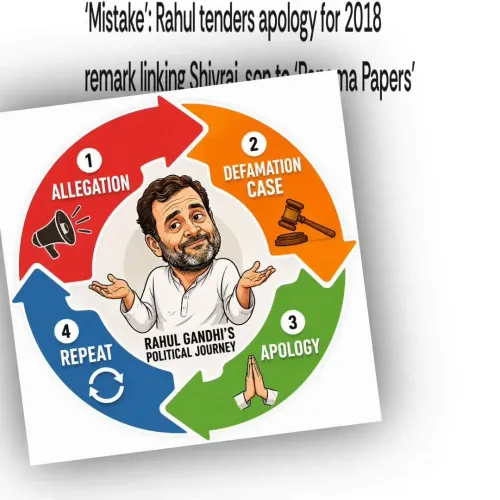
Union Minister Gajendra Singh Shekhawat mocked Congress on X, quipping that fewer rockets are launched from Sriharikota in a year than Congress's failed attempts to project its 'failed product' leader — a pointed dig at Rahul Gandhi's repeated positioning as a national face.
Key Takeaways
Gajendra Singh Shekhawat , Union Minister and BJP MP from Jodhpur , posted a sharp Hindi jibe at Congress on 22 October 2026 .
He compared Congress's repeated attempts to project its leader to rocket launches from Sriharikota , saying the latter are actually fewer in number.
The phrase 'Failed Product' — left in English within the Hindi post — frames Congress's leadership as a rejected consumer brand.
The implicit target is Rahul Gandhi , whom Congress positioned as its national face in both the 2019 and 2024 Lok Sabha elections.
The post follows a sustained BJP pattern of using sharp rhetoric to undermine Congress's leadership credibility between electoral cycles.
A biting one-liner from a senior Cabinet minister landed on Thursday evening, turning India's most celebrated rocket launchpad into a metaphor for opposition politics. Union Culture and Tourism Minister Gajendra Singh Shekhawat took to X on 22 October 2026 to mock what he called Congress's relentless — and repeatedly unsuccessful — attempts to project its leader as a national face.
Posting in Hindi, Shekhawat wrote: 'कांग्रेस कब तक अपने Failed Product की लॉन्चिंग के लिए देश को दाँव पर लगाती रहेगी?' — 'How long will Congress keep staking the country just to launch its failed product?' He then delivered the punchline: 'In a single year, fewer rockets are launched from Sriharikota than the number of times Congress makes its futile attempts to launch its leader.'
The Sriharikota jab — and why it stings
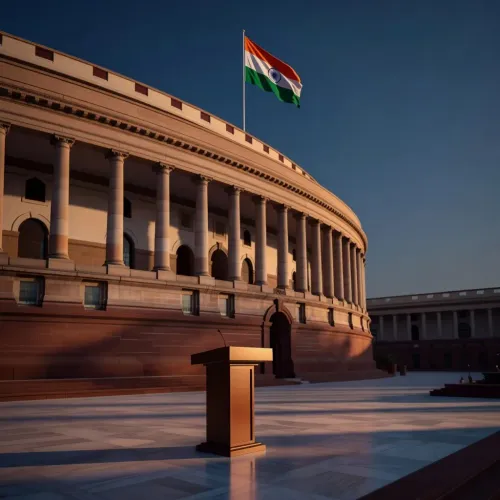
Sriharikota, home to ISRO's Satish Dhawan Space Centre, is one of India's most potent symbols of national achievement. Shekhawat's choice to invoke it was deliberate: by contrasting the precision and infrequency of rocket launches with what he frames as Congress's repetitive, high-noise, low-result leadership campaigns, he sharpens the ridicule. The implied target is widely understood to be Rahul Gandhi, whom the Congress positioned as its primary prime ministerial face in both the 2019 and 2024 Lok Sabha elections.
The phrase 'Failed Product' — kept in English even within the Hindi text — carries particular sting. It borrows the language of marketing and consumer goods to reduce a political leader to a brand that the market has already rejected. In BJP's rhetorical playbook, this is a well-worn but effective device: frame the opposition's core offering as unsellable, then let the metaphor do the work.
BJP's long game on Congress leadership
This is not an isolated barb. Senior BJP figures have, across successive electoral cycles, sought to portray Congress's leadership efforts as both dynastic and cyclical — the same face re-packaged after each defeat. Shekhawat, a Lok Sabha MP from Jodhpur, Rajasthan, has been a consistent voice in that chorus. The timing — mid-electoral-cycle, with state-level contests and organisational churn in the opposition — is characteristic of the BJP's strategy of keeping pressure on Congress's credibility between big elections.
For Congress, the challenge that Shekhawat's post implicitly underlines is structural: every attempt to reboot its national narrative gets met with exactly this kind of counter-narrative, one that frames the reboot itself as evidence of failure. Whether the party's current organisational moves can break that cycle is the real question hanging in the air.
Point of View
A symbol of national pride and precision, he contrasts institutional credibility with what he frames as political desperation, making the metaphor carry ideological freight well beyond the one-liner. The 'Failed Product' phrasing is also notable: it borrows corporate-consumer language to suggest that voters — the 'market' — have already delivered their verdict. This kind of pre-emptive delegitimisation, sustained between big elections, is designed to raise the cost for Congress of any fresh positioning effort long before the next campaign begins.
NationPress
22 Oct 2026
Frequently Asked Questions
What did Gajendra Singh Shekhawat say about Congress on X?
Shekhawat posted that Congress keeps staking the country just to launch its 'failed product' leader, adding that fewer rockets are launched from Sriharikota in a year than Congress's futile attempts to project its leader.
Who is the 'failed product' Shekhawat referred to?
While Shekhawat did not name anyone directly, the reference is widely understood to point to Rahul Gandhi, whom Congress has positioned as its primary national face in multiple elections.
Why did Shekhawat mention Sriharikota?
Sriharikota is India's main rocket launch facility operated by ISRO and is a symbol of national scientific achievement. Shekhawat used it to contrast the precision and rarity of rocket launches with what he called Congress's repeated and ineffective attempts to relaunch its leader.
What is the political context of Shekhawat's attack on Congress?
BJP leaders have consistently used sharp rhetoric to portray Congress's leadership as dynastic and cyclically ineffective. Such attacks often intensify during periods of opposition rebranding or ahead of state and national elections.
Who is Gajendra Singh Shekhawat?
Gajendra Singh Shekhawat is India's Union Minister of Culture and Tourism, a senior BJP leader, and a Lok Sabha MP from Jodhpur, Rajasthan.