Sacks: AI Coding Boom Is Raising, Not Cutting, Tech Jobs
Synopsis
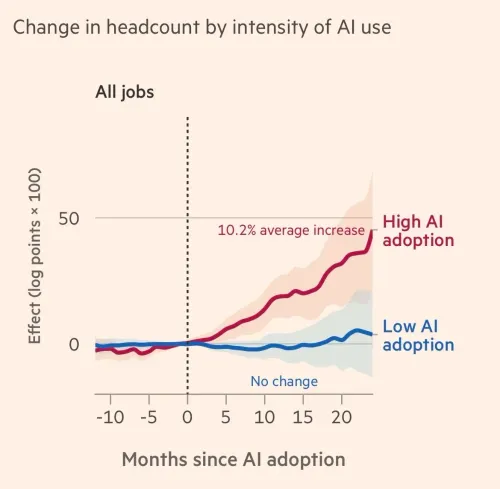
White House AI and Crypto Czar David Sacks has argued that AI is driving a productivity boom that is raising demand for software engineers, pointing to a reported 14x year-on-year surge in GitHub commits and challenging the 'AI will cause mass job loss' narrative.
Key Takeaways
White House AI and Crypto Czar David Sacks posted on 25 May 2026 that AI is increasing, not reducing, demand for software engineers.
Sacks cited a reported 14x year-on-year increase in GitHub commits as evidence of an accelerating productivity boom.
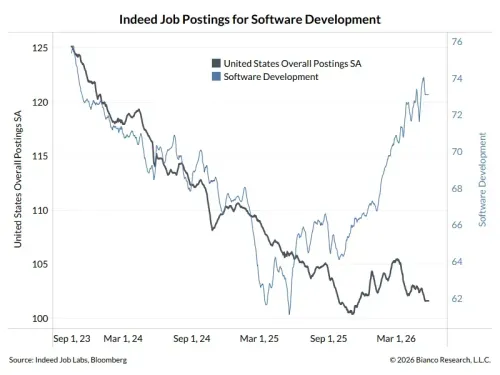
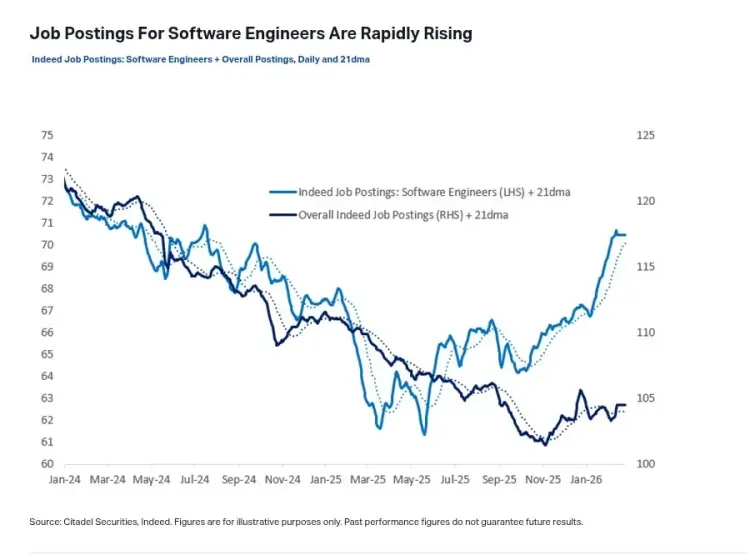
He argued that AI lowering the cost of code has expanded software use 'across far more businesses, applications, and use cases.' Coding is described as 'AI's breakout use case this year,' with job postings for software engineers rising rapidly despite widespread AI automation of coding tasks.
Sacks directly challenged the 'AI will cause mass job loss' narrative, framing rising engineer demand as evidence against it.
Upcoming Bureau of Labor Statistics data on computer and mathematical occupations will be a key test of the claims.
White House AI and Crypto Czar David Sacks argued on Sunday, 25 May 2026 that artificial intelligence is fuelling a surge in software engineering jobs rather than eliminating them, citing a reported 14x year-on-year increase in GitHub commits as evidence of an accelerating productivity boom. Sacks, who also co-hosts the All-In Podcast and leads Craft Ventures, made the remarks in a post on X that has reignited the debate over AI's net effect on employment.
Context
Sacks framed his argument around a straightforward economic logic: AI has 'dramatically lowered the cost of writing code,' so software is now being deployed 'across far more businesses, applications, and use cases' than before. Rather than displacing engineers, he contends, cheaper code generation has expanded the total universe of software that needs to be built and maintained.
He described coding as 'AI's breakout use case this year,' pointing out that job postings for software engineers are rising rapidly even as AI agents automate significant portions of the coding workflow. The post directly challenges what Sacks called the 'AI will cause mass job loss' narrative.
Policy Backdrop
David Sacks was appointed by the Trump administration as the first dedicated White House AI and Crypto Czar, a role created to accelerate American leadership in artificial intelligence and digital assets while reducing regulatory friction. His public commentary on AI employment carries added weight given that role, since White House positions on workforce displacement directly shape potential executive orders and legislative priorities.
The debate Sacks is wading into has deep historical roots. Each major computing wave — from personal computers to the internet to cloud services — initially sparked fears of mass displacement, only for labour markets to absorb and expand around the new technology. US technology policy has consistently prioritised innovation over precautionary restriction, a posture the current administration has doubled down on.
Stakeholders and Impact
For software engineers in India and globally, Sacks's argument offers a counter-narrative to anxieties stoked by high-profile AI coding tools. India's large technology services sector, which employs millions of engineers, has been particularly attentive to signals from Washington and Silicon Valley about where AI investment and hiring are headed.
Tech startups and enterprises adopting AI stand to benefit from the productivity framing: if AI lowers the cost of bespoke software, smaller firms that previously could not afford custom development can now enter the market, theoretically broadening the client base for engineering talent. GitHub, the Microsoft-owned platform used to track developer activity, has become a key proxy metric in this debate, with commit volumes cited as a real-time indicator of how much code is actually being produced.
What's Next
Analysts and policymakers will be watching upcoming occupational employment data from the Bureau of Labor Statistics for computer and mathematical roles, which would provide official verification — or challenge — of the trend Sacks is describing. Any follow-on executive orders addressing AI workforce training from the White House would signal how seriously the administration intends to institutionalise this optimistic view of AI-driven job creation.
The broader implication is significant: if the 'Jevons paradox' dynamic Sacks describes — where efficiency gains increase rather than decrease total demand — holds for AI-assisted coding, it could reshape how governments worldwide frame AI regulation and labour policy for years to come.
Point of View
His framing is not merely punditry; it signals the ideological direction of US AI policy, which leans toward deregulation and innovation-first arguments. The 'Jevons paradox' logic he invokes — that efficiency gains expand rather than contract total demand — is historically credible but contested, and the administration's willingness to lean on it publicly suggests executive orders on AI workforce policy will favour expansion narratives over precautionary safeguards. For India, whose technology sector is acutely sensitive to US AI hiring signals, this framing from a sitting White House official carries real downstream consequence for investment and talent strategy.
NationPress
9 Oct 2026
Frequently Asked Questions
Is David Sacks saying AI will not take away software engineering jobs?
Yes. Sacks argued in his 25 May 2026 post that AI is actually increasing demand for software engineers by lowering the cost of code and expanding the number of applications being built, rather than replacing engineers.
What is the 14x GitHub commits figure David Sacks mentioned?
Sacks cited a reported 14x year-on-year increase in GitHub commits as evidence that far more code is being written and managed than before, which he says is driving demand for more engineers. Note that this specific figure has not been independently verified by official sources.
What is David Sacks's role in the US government?
David Sacks serves as the White House AI and Crypto Czar in the Trump administration , a role created to lead US policy on artificial intelligence and cryptocurrency. He is also co-founder of Craft Ventures and co-host of the All-In Podcast.
How does AI affect software engineering jobs in India?
India's large technology services workforce is closely watching signals from Washington and Silicon Valley . If Sacks's argument holds — that AI expands the total demand for software — Indian engineers could benefit from a broader global market for bespoke software development.
What is the Jevons paradox and how does it relate to AI and jobs?
The Jevons paradox describes how technological efficiency gains often increase total consumption of a resource rather than reduce it. Sacks's argument applies this logic to AI and coding: cheaper code production leads to more software being built overall, which requires more engineers, not fewer.