Sacks Shares WSJ Piece on AI and Job Market Shifts

Synopsis
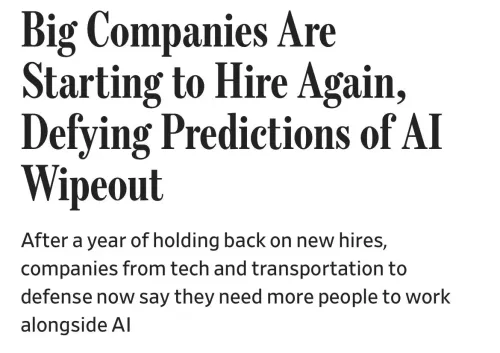
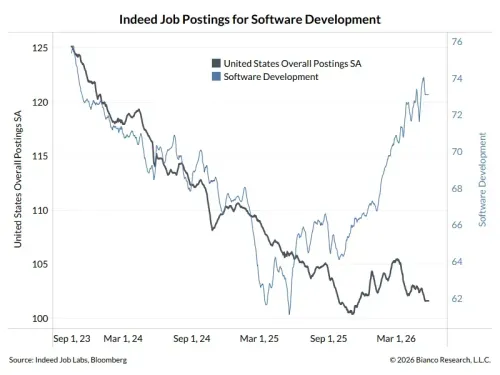
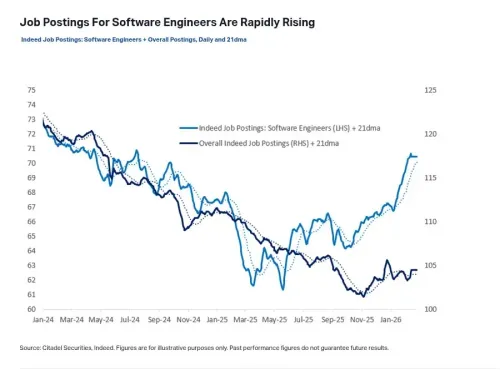
White House AI and Crypto Czar David Sacks amplified a Wall Street Journal report on June 16, 2026, suggesting that a job expected to be automated by AI now requires more human workers than ever — a finding that aligns with the Trump administration's pro-innovation, augmentation-first stance on artificial intelligence.
Key Takeaways
David Sacks , the Trump administration's White House AI and Crypto Czar, shared a Wall Street Journal article on June 16, 2026 about AI's effect on human employment.
The article's central claim is that a role widely expected to be eliminated by AI is instead requiring more human workers than before.
Sacks offered no additional commentary, allowing the reporting to stand as an implicit policy signal from his office.
The Trump administration has consistently favoured light-touch AI regulation and framed the technology as a tool of augmentation, not displacement.
The debate has direct implications for Indian technology professionals , who form a major part of the global AI and software services workforce.
Further White House executive orders and congressional hearings on AI labour impacts are expected in the near term.
White House AI and Crypto Czar David Sacks on Tuesday, June 16, 2026, shared a Wall Street Journal article examining whether artificial intelligence is eliminating or expanding human employment, reigniting a debate that sits at the heart of his policy mandate in the Trump administration.
Context
The article Sacks amplified carries a striking premise: that a job widely expected to be automated away is now requiring more human workers than before. While the exact occupation discussed in the piece cannot be independently confirmed from available information, the thrust aligns with an emerging body of evidence suggesting AI tools are, in several sectors, augmenting rather than replacing human labour. Sacks shared the link without additional commentary, letting the reporting speak for itself.
The share comes from a figure who occupies a uniquely influential position in the AI policy landscape — simultaneously a Silicon Valley venture capitalist, a co-host of the widely followed All-In Podcast, and the Trump administration's point person on artificial intelligence and cryptocurrency.
Policy Backdrop
The question of AI's net effect on employment has shadowed every major policy discussion around the technology. When the first Trump administration launched the American AI Initiative in 2019, it explicitly addressed workforce training alongside research investment, acknowledging that disruption and opportunity would arrive together. The current administration has carried forward a broadly pro-innovation, light-touch regulatory posture, with Sacks as its most visible advocate.
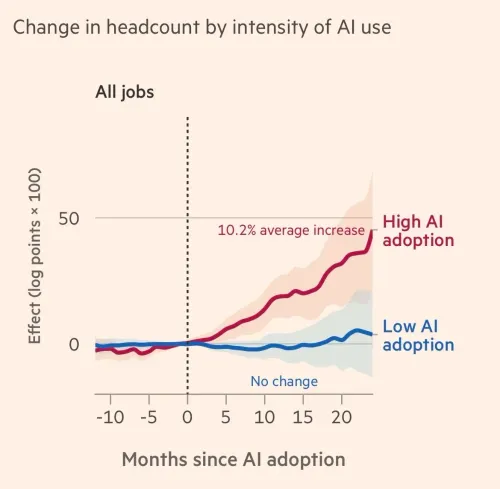
Early predictions of sweeping job displacement — particularly in white-collar and knowledge-work roles — have repeatedly run into a more complicated reality. Demand for human oversight, data curation, prompt engineering, and domain expertise has risen alongside the deployment of generative AI tools, complicating simple narratives of replacement.
Stakeholders and Impact
Tech workers, AI researchers, and investors are the most directly affected audience for this debate. For workers in sectors where AI was expected to automate tasks wholesale, evidence of sustained or growing demand for human roles is consequential. For investors and firms deploying AI, it shapes return-on-investment calculations and hiring strategies. For policymakers like Sacks, it informs decisions on regulation, workforce development funding, and international competitiveness.
Indian technology professionals — a significant share of the global AI and software workforce — are watching these signals closely. The outcome of the US policy debate on AI labour has downstream effects on outsourcing patterns, visa demand, and the broader technology services industry that employs millions in India.
What's Next
The White House AI office is expected to issue further executive guidance on AI governance and workforce adaptation, with congressional hearings on AI's labour market impact also anticipated. Sacks's decision to amplify reporting that challenges the displacement narrative — rather than confirm it — signals the administration's interest in shaping public understanding of AI as a tool of augmentation. How that framing translates into concrete workforce policy will be the critical question to watch in the months ahead.
Point of View
Which could ease political pressure for restrictive AI labour regulation. This fits a consistent pattern: frame AI as a net creator of human opportunity, and the case for heavy-handed oversight weakens. For Indian policymakers and technology sector leaders tracking Washington's posture, the signal is that the US will continue to resist regulatory frameworks that treat AI primarily as a job-killer. The broader arc here is a deliberate effort to shape the public and legislative consensus around AI before more disruptive capabilities arrive.
NationPress
16 Sept 2026
Frequently Asked Questions
What did David Sacks post about AI and jobs?
David Sacks shared a Wall Street Journal article on June 16, 2026, reporting that a job expected to be automated by AI is now requiring more human workers than ever, without adding personal commentary.
Is AI actually creating more jobs than it destroys?
Evidence is mixed, but a growing body of research suggests AI tools are augmenting human roles in several sectors rather than replacing them outright, increasing demand for oversight, data curation, and domain expertise.
What is David Sacks's role in the Trump administration?
David Sacks serves as the White House AI and Crypto Czar in the Trump administration, making him the administration's primary policy voice on artificial intelligence and cryptocurrency.
How does US AI policy affect Indian tech workers?
US AI policy shapes outsourcing patterns, visa demand, and technology services contracts, all of which have significant downstream effects on India's large technology workforce.
What is the Trump administration's stance on AI and employment?
The Trump administration has taken a pro-innovation, light-touch regulatory approach to AI, framing the technology as a tool that augments human capability rather than one that displaces workers.