Sacks Slams Anthropic's AI Regulatory Push as 'Gross'
Synopsis
White House AI and Crypto Czar David Sacks publicly slammed Anthropic on July 24, 2026, calling the fast-growing AI company's push for government AI regulation 'incessant' and 'frankly gross,' framing it as textbook regulatory capture by an industry incumbent.
Key Takeaways
David Sacks , the Trump administration 's AI and Crypto Czar , publicly accused Anthropic of 'regulatory capture' on July 24, 2026 .
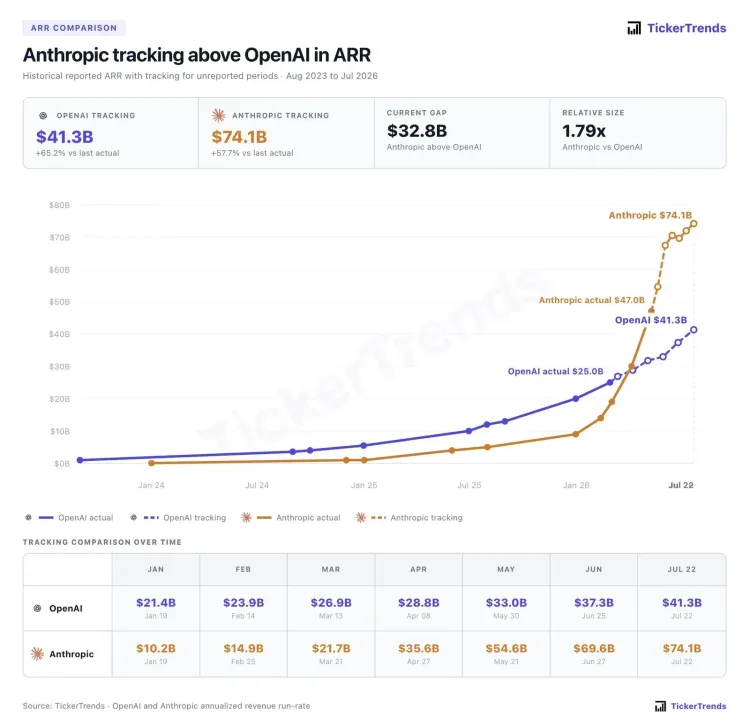
Sacks acknowledged Anthropic 's rapid commercial growth but argued that success makes its regulatory lobbying less defensible, not more.
Anthropic , founded in 2021 by former OpenAI employees, has publicly supported targeted regulation of frontier AI models while competing aggressively in the market.
The rebuke signals the Trump White House may be unreceptive to mandatory AI safety frameworks championed by Anthropic , with implications for federal contracting and legislation.
The dispute reflects a broader Silicon Valley divide between firms advocating formal AI safety mandates and those pushing for light-touch, self-regulatory approaches.
White House AI and Crypto Czar David Sacks publicly rebuked Anthropic on Thursday, July 24, 2026, calling the AI safety company's efforts to shape government regulation of artificial intelligence 'not just unnecessary but frankly gross,' even while acknowledging the firm's rapid commercial growth.
Context
Sacks posted on X that while Anthropic may be 'the fastest growing company that Silicon Valley has ever seen,' that success makes its lobbying posture harder to defend, not easier. His exact words: 'Which is all the more reason their incessant attempts at regulatory capture are not just unnecessary but frankly gross.' The term 'regulatory capture' refers to the phenomenon where an industry player shapes rules in ways that entrench incumbents and block rivals.
Anthropic was founded in 2021 by former OpenAI employees, including Dario Amodei and Daniela Amodei, who left over differences on safety and governance. The company has since built a public identity around responsible AI development and has actively engaged with policymakers in Washington DC and Brussels on frontier-model safety standards.
Policy Backdrop
The debate over AI regulation has intensified since the Biden administration issued Executive Order 14110 in October 2023, directing federal agencies to develop risk assessments and safety standards for AI. The EU AI Act, finalised in 2024, introduced risk-based tiers for AI systems, adding momentum to calls for binding rules on large language models globally.
Anthropic has consistently supported targeted regulation on what the industry calls 'frontier models' — the most powerful AI systems — while simultaneously competing aggressively for enterprise and government contracts. Critics, including investors aligned with the current Trump administration, argue that such regulatory advocacy benefits well-capitalised incumbents by raising compliance barriers that smaller startups cannot easily clear.
Sacks, who serves as the Trump administration's top official on both artificial intelligence and cryptocurrency policy, has been a vocal opponent of heavy-handed tech regulation. His role gives the critique unusual weight: it comes not from a rival company but from the official in Washington DC responsible for shaping the administration's AI policy agenda.
Stakeholders and Impact
The sharpest impact of Sacks' statement falls on Anthropic's Washington strategy. A public rebuke from the sitting AI and Crypto Czar signals that the administration may be unreceptive to the company's preferred regulatory frameworks, potentially complicating its federal contracting and policy-engagement efforts.
For the broader AI startup ecosystem, the statement is a signal that the Trump White House intends to resist mandatory safety mandates that could function as market barriers. Investors and smaller AI firms that have chafed under proposals for licensing regimes or pre-deployment audits are likely to view Sacks' remarks favourably. AI safety advocates, however, warn that light-touch policy leaves significant risks unaddressed.
What's Next
Congressional action on AI-specific legislation remains the key variable. Any bill that incorporates the kind of frontier-model oversight Anthropic has championed would now face headwinds from an executive branch openly hostile to the approach. Sacks' public framing of the issue as 'regulatory capture' could shape how lawmakers and the public evaluate the company's future testimony or lobbying disclosures.
The episode underscores a deepening fault line in Silicon Valley: between firms that see formal safety mandates as a necessary floor and those that view them as a competitive moat dressed up in responsible-AI language. How that divide resolves will determine the architecture of AI governance in the United States for years to come.
Point of View
Indicating that Anthropic's preferred regulatory framework faces executive-branch resistance. The 'regulatory capture' framing is strategically loaded: it recast a safety-focused company as a self-interested incumbent, a narrative that could erode Anthropic's credibility on Capitol Hill. This fits a wider pattern in which the current administration has aligned with deregulatory Silicon Valley voices against safety-first tech governance. The real test will come when Congress moves on AI legislation and must choose between competing industry visions.
NationPress
22 Oct 2026
Frequently Asked Questions
Why did David Sacks criticise Anthropic?
David Sacks criticised Anthropic for what he called 'incessant attempts at regulatory capture,' arguing that the company's efforts to shape AI regulation are unnecessary and self-serving, especially given its rapid commercial growth.
What is regulatory capture in the context of AI?
Regulatory capture occurs when a company or industry shapes government rules in ways that entrench existing players and raise barriers for smaller competitors. In AI, critics argue that large incumbents can use safety mandates to lock out rivals who lack resources for compliance.
What is David Sacks' role in the Trump administration?
David Sacks serves as the White House AI and Crypto Czar in the Trump administration , making him the government's top official responsible for shaping policy on artificial intelligence and cryptocurrency.
What has Anthropic said about AI regulation?
Anthropic has publicly supported targeted regulation of frontier AI models, arguing that the most powerful AI systems require formal government oversight. The company has engaged actively with policymakers in Washington DC and internationally.
How does this affect AI policy in the United States?
A public rebuke from the sitting AI and Crypto Czar signals that the Trump administration is unlikely to support Anthropic 's preferred regulatory frameworks, which could influence Congressional debates on AI legislation and federal AI contracting decisions.