Sacks Says Anthropic's Regulatory Capture Warning Has Been Vindicated

Synopsis
White House AI and Crypto Czar David Sacks declared on June 11 that his earlier warning about Anthropic running a 'regulatory capture strategy based on fear-mongering' — once controversial — is now widely shared. The post sharpens the Trump administration's deregulatory posture against safety-focused AI lobbying.
Key Takeaways
David Sacks posted on June 11, 2026 that his warning about Anthropic 's regulatory capture strategy, made roughly eight months earlier , has since gained broad acceptance.
Sacks described Anthropic 's approach as a 'sophisticated regulatory capture strategy based on fear-mongering.' Anthropic , founded in 2021 , has been a leading voice for stringent AI regulation, citing existential risk concerns under CEO Dario Amodei .
The Trump administration 's AI policy, steered by Sacks, favours deregulation — a sharp contrast to the Biden-era 2023 Executive Order and the EU AI Act of 2024 .
The regulatory capture debate has direct consequences for AI startups that could face compliance costs shaped by larger incumbents.
Forthcoming White House actions on AI licensing and export controls will be closely watched for how this scepticism translates into formal policy.
White House AI and Crypto Czar David Sacks on Thursday, June 11, 2026, declared that his warning — issued roughly eight months ago — that Anthropic was pursuing a 'sophisticated regulatory capture strategy based on fear-mongering' has since gained widespread acceptance, noting that the view was once controversial but is now echoed by many.
Context
Sacks posted on X that his earlier characterisation of Anthropic's regulatory posture — which he described as leveraging existential-risk narratives to shape rules in the company's favour — was initially met with pushback. He now argues that the broader commentary landscape has shifted to align with his position. The post does not cite specific individuals or publications who have come around to the view.
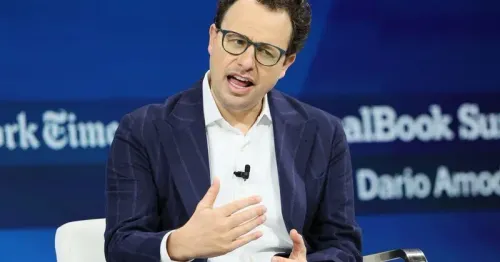
Anthropic, founded in 2021 by former OpenAI researchers including co-founder and CEO Dario Amodei, has been a prominent voice in global AI policy discussions, consistently emphasising the potential for catastrophic risks from advanced AI systems and calling for robust government oversight.
Policy Backdrop
The regulatory capture argument contends that dominant AI incumbents use safety rhetoric to lobby for compliance regimes that are expensive to meet — effectively raising barriers that protect established players while disadvantaging smaller rivals. This pattern has precedents in sectors ranging from fintech to biotechnology.
The policy environment has been in flux. The Biden administration's October 2023 Executive Order directed federal agencies to set AI safety and security standards. The European Union's AI Act, finalised in 2024, established a risk-tiered framework for high-impact AI systems. The current Trump administration, with Sacks at the centre of AI and crypto policy, has signalled a preference for deregulation over prescriptive oversight in both domains.
Stakeholders and Impact
The stakes are significant for AI startups and mid-sized labs that lack the lobbying infrastructure of frontier players. If regulatory frameworks are shaped primarily by the largest safety-focused labs, the cost of compliance could entrench incumbents and slow the pace of open or competitive AI development.
AI safety advocates, for their part, argue that the risks Anthropic and similar organisations highlight are genuine and that framing safety advocacy as regulatory capture dismisses legitimate scientific concern. The tension between these positions is now a defining fault line in Washington DC's approach to AI governance.
What's Next
With Sacks occupying a senior White House role, his public statements carry direct policy weight. Any forthcoming executive actions, congressional hearings on AI licensing requirements, or export-control decisions will be read against the backdrop of this ideological position.
The debate is likely to intensify as the Trump administration moves toward formalising its AI policy framework — a process in which Sacks' scepticism of safety-driven regulation will be a material, not merely rhetorical, input.
Point of View
Sacks is laying ideological groundwork to resist safety-mandated licensing regimes from within the executive branch. The shift he claims in public opinion, if real, suggests the regulatory capture critique is moving from fringe to mainstream in tech-policy circles. For AI companies operating in the Indian market or seeking US partnerships, the direction of American AI governance — deregulatory versus safety-first — will have tangible downstream consequences.
NationPress
26 Oct 2026
Frequently Asked Questions
What did David Sacks say about Anthropic?
David Sacks said that Anthropic is running a 'sophisticated regulatory capture strategy based on fear-mongering,' a warning he first made about eight months before his June 11, 2026 post, and which he says is now widely accepted.
What is regulatory capture in the context of AI?
Regulatory capture in AI refers to the concern that dominant AI companies use safety narratives to lobby for rules that are costly to comply with, which effectively protects incumbents and raises barriers for smaller competitors.
Who is David Sacks and what is his role?
David Sacks is the co-founder and general partner of Craft Ventures , a co-host of the All-In Podcast, and the White House AI and Crypto Czar in the Trump administration , making him the senior US official overseeing AI and crypto policy.
What is Anthropic and why is it involved in AI regulation debates?
Anthropic is an AI safety company founded in 2021 by former OpenAI researchers. It has been a prominent advocate for strict AI oversight, with CEO Dario Amodei frequently citing existential risks — a stance critics like Sacks say serves the company's competitive interests.
How does this affect AI policy in the United States?
Because Sacks holds a formal White House role, his public scepticism of safety-driven regulation signals the Trump administration 's likely direction on AI licensing, export controls, and oversight frameworks — favouring deregulation over the safety-first approach of the prior administration.