Sacks: Software Jobs and AI Code Both Rising Weekly
Synopsis
White House AI and Crypto Czar David Sacks posted on 25 May 2026 that both software job postings and AI-generated code are growing week over week, reinforcing the argument that AI complements rather than replaces software workers — a claim with direct implications for India's IT workforce.
Key Takeaways
David Sacks , the Trump administration's AI and Crypto Czar, posted on 25 May 2026 that software job postings and AI-generated code are both rising weekly.
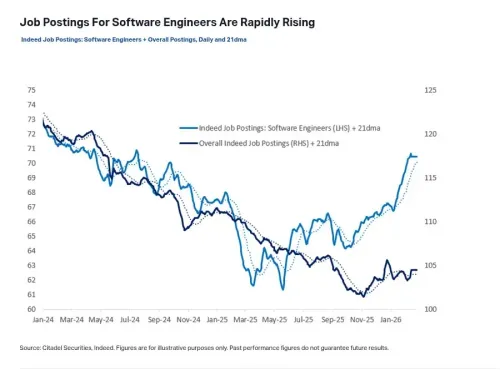
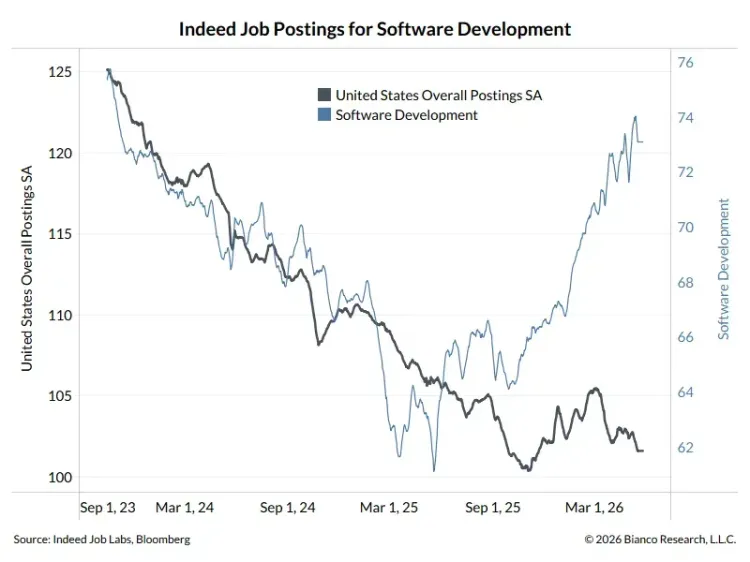
The post was an update to an earlier observation, with Sacks noting the trend line has grown 'even stronger.' The claim supports the 'complementarity' thesis — that AI tools expand software demand rather than eliminate developer roles.
Industry data through 2025 showed mixed but resilient software employment even as AI coding assistants proliferated widely from 2022–2023 onward.
The observation carries policy weight given Sacks's formal role shaping White House AI strategy.
The trend, if sustained, has significant implications for India's large software engineering and IT outsourcing workforce.
White House AI and Crypto Czar David Sacks on Monday, 25 May 2026 posted an update on X reaffirming a strengthening trend: software job postings and AI-generated code are both growing week over week, pushing back against narratives that artificial intelligence is displacing software workers.
Context
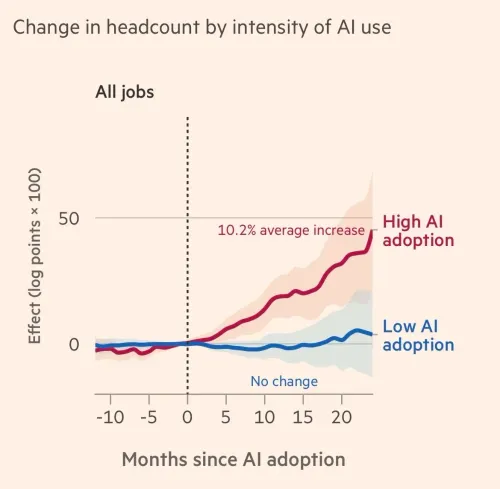
Sacks was responding to an earlier data point and offered a pointed update: 'The trend line is even stronger. Both software job postings and AI-generated code continue to grow by the week.' The post was accompanied by an image, suggesting a chart or data visualisation supporting the claim, though the specific data source was not named in the post itself.
The observation cuts against a widely held concern — particularly acute in India's large IT services sector — that generative AI tools capable of writing, reviewing, and debugging code will erode demand for human software engineers.
Policy Backdrop
Sacks, as the Trump administration's point person on both artificial intelligence and cryptocurrency, has been a consistent voice arguing that AI is a productivity multiplier rather than a net job destroyer in the tech sector. His role gives these observations a policy dimension beyond routine industry commentary.
Since the wave of capable large language models began reaching developers in 2022–2023, industry data through 2025 showed a mixed but broadly resilient picture for software employment: AI coding assistants proliferated while engineering hiring, though volatile, did not collapse. The White House has been attentive to framing AI competitiveness in terms that address workforce anxiety, particularly ahead of any formal AI workforce policy statements.
Stakeholders and Impact
For India, the stakes are significant. The country supplies a substantial share of the global software engineering workforce, both onshore and through its large IT outsourcing industry. A scenario where AI-generated code and software job postings rise together — the 'complementarity' thesis — is the most favourable outcome for Indian developers and IT firms.
If Sacks's trend data holds, it would suggest that AI tools are expanding the overall market for software rather than cannibalising existing roles — a distinction that matters enormously for workforce planning at Indian IT majors and for the millions of engineering graduates entering the job market each year. Software developers, tech firms, and policymakers tracking AI's labour-market effects are the primary stakeholders watching this data closely.
What's Next
Attention will now turn to whether the White House formalises this positive framing into official AI workforce policy guidance, and whether forthcoming labour statistics from private-sector trackers corroborate the weekly trend Sacks cited. Any divergence between administration messaging and ground-level hiring data in the software sector will sharpen the debate considerably.
For India's technology industry and its regulators, the trajectory of US AI policy — shaped in part by officials like Sacks — will continue to set the tone for global conversations about AI's net effect on software employment.
Point of View
Framing AI as an economic accelerant at a moment when job-displacement anxiety is politically charged. By highlighting the simultaneous rise of AI-generated code and software hiring, he is pre-emptively countering legislative or regulatory impulses that might slow AI adoption in the name of worker protection. For India, whose IT sector is deeply enmeshed in global software supply chains, the direction of this framing matters: a US administration that treats AI and software jobs as complements is less likely to pursue policies that would disrupt the offshoring model. The real test will come when official labour statistics either validate or contradict the weekly trend Sacks is citing.
NationPress
10 Oct 2026
Frequently Asked Questions
Is AI replacing software engineers in 2026?
According to White House AI Czar David Sacks, the data shows the opposite trend — software job postings are growing alongside AI-generated code, suggesting AI is complementing rather than replacing software engineers as of May 2026.
Who is David Sacks and what is his role?
David Sacks is the White House AI and Crypto Czar in the Trump administration, responsible for shaping US policy on artificial intelligence and cryptocurrency. He is also co-founder of Craft Ventures and co-host of the All-In Podcast.
What does the rise of AI-generated code mean for Indian IT jobs?
If software job postings continue to grow alongside AI-generated code, as Sacks claims, it would be a positive signal for India's large IT workforce, suggesting AI tools are expanding the overall market rather than eliminating developer roles.
What is the Trump administration's position on AI and jobs?
Senior officials including David Sacks have consistently argued that AI is a productivity multiplier that grows the software sector, not a net destroyer of technology jobs — a position that shapes White House AI workforce policy.
What data is David Sacks referring to in his May 2026 post?
Sacks referenced a trend showing weekly growth in both software job postings and AI-generated code, but did not name the specific data source in his post. The claim is accompanied by an image, likely a chart, but the underlying dataset has not been independently detailed.